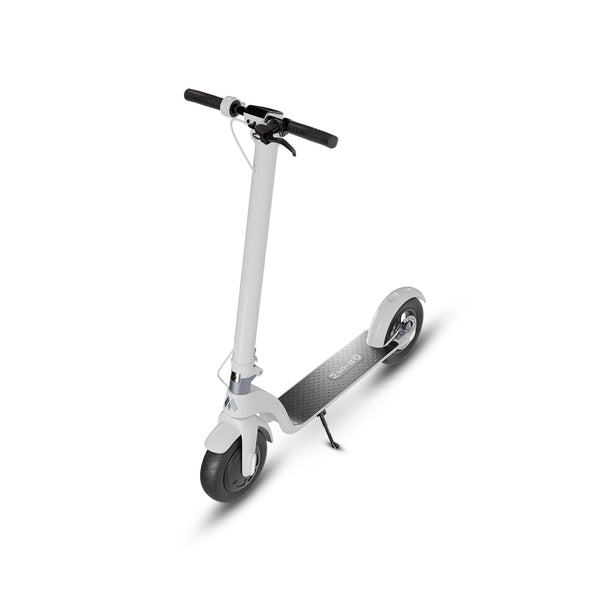
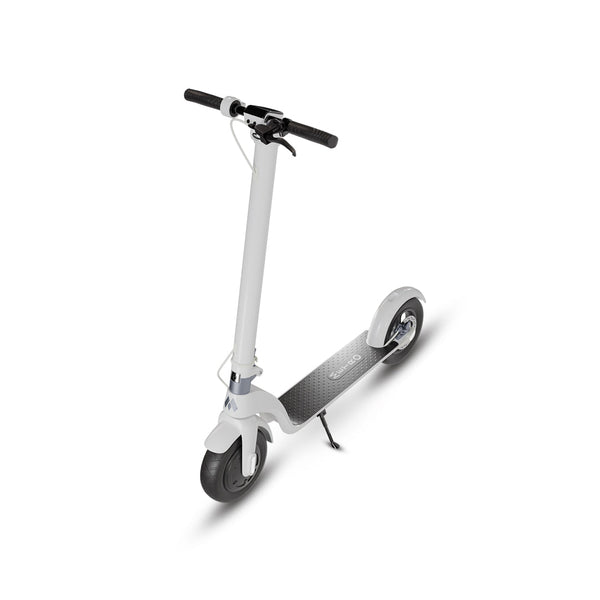
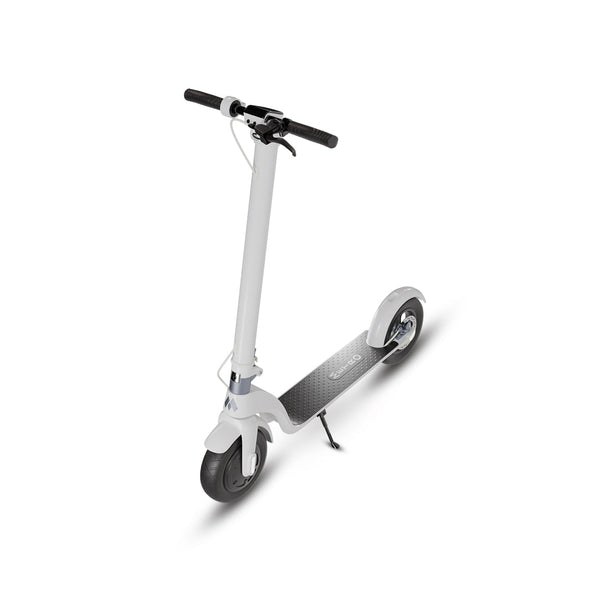
Someone else has to live with this gift. That is the whole difference between buying an electric scooter for yourself and buying one for another person: you are choosing a device they will have to carry, store, charge and ride legally, in a building and a city you may not know well. This page is the set of checks worth making before you pay, with the government source behind each one. It is not a ranking and it does not claim a scooter is the right gift for everyone.
Is an electric scooter a good gift?
An electric scooter is a good gift when you can answer three questions about the person receiving it: how much weight they can carry up stairs, whether their building allows the device indoors, and whether they are old enough to ride it legally where they live. Every other consideration - color, range, app features, price - matters less than those three, because each of the three can make the scooter unusable rather than merely imperfect. A scooter that is too heavy to carry becomes a scooter left locked outside. A scooter a building prohibits becomes a scooter stored at a relative's apartment. A scooter given to a rider below the legal age cannot lawfully be ridden on the street at all.
The rest of this page works through those three questions in order, then covers what a seller owes you in the box, what the scooter costs after the gift is opened, and what changes if it is opened in winter.
How much weight does the recipient have to be able to carry?
Carry weight is the specification gift buyers most often skip, and it is the one that decides whether the scooter gets used. New York City's Department of Transportation defines an electric scooter as a device weighing under 100 pounds, so a scooter can be fully legal and still be far too heavy for a person to lift up a subway staircase or a walk-up landing twice a day.
Metro lists the METRO City at 27 pounds and the METRO City Pro at 29 pounds. Those are the manufacturer's listed figures from each product page, not independent test results. Before buying any scooter as a gift, find the published weight and picture the recipient holding it in one hand on a staircase - that is the test the specification sheet is standing in for.
Two further points gift buyers miss. The first is that boxed shipping weight and product weight are different numbers, and a listing may show either. The second is that a scooter has a maximum rider weight of its own, separate from its own weight: Metro lists 220 pounds for both the City and the City Pro. Check that figure against the person you are buying for before anything else, because no amount of range makes up for it.
- Product weight versus boxed shipping weight - why a listing can show two different numbers for the same scooter, and which one you will be carrying.
- What makes a scooter genuinely lightweight - how carry weight interacts with folding, handle position and stair width.
Can the person I am buying for keep it in their building?
This is the question most likely to turn a gift into a return, and it has to be asked before you buy, not after. A building's rules on electric scooters are set separately from city law, and a landlord, co-op board or condo board can impose conditions that city law does not require.
In New York City public housing, the New York City Housing Authority's Electric Micromobility Policy, effective 1 March 2024, permits electric scooters in apartments and attaches named charging conditions: one device or battery charging at a time, an adult aged 18 or over present and awake while it charges, the charger plugged directly into a wall outlet rather than an extension cord, at least five feet from a radiator, and never beside the apartment door. In a co-op or condo, the board sets its own house rules, and attorneys writing for building boards have advised that a board can likely prohibit the devices by house rule.
So the practical step is a single question asked of the recipient before you order: has your building put anything in writing about electric scooters or lithium-ion batteries? If they do not know, the guides below cover what to ask and who to ask.
- Can I keep an electric scooter in my NYC apartment? - what the fire code and the housing rules actually say about storing one indoors.
- Can my building ban electric scooters? - how a house rule is made and what it can cover.
- Where do you put one in a small apartment? - the storage and charging arrangement in a studio or a one-bedroom.
- Can you keep an electric scooter in a dorm? - for a gift going to a student, because campus housing rules are stricter than city law.
How old does someone have to be to ride an electric scooter in New York?
New York requires an electric scooter rider to be at least 16 years old, and riders aged 16 and 17 must wear a helmet. That requirement comes from New York Vehicle and Traffic Law section 1282. It matters for a gift in a way it does not matter for a personal purchase: a scooter bought for a 14-year-old cannot lawfully be ridden on a New York street, whatever the device is capable of and whatever the box says.
Two other legal figures are worth knowing before you buy for someone in New York City. The device category itself is defined in Vehicle and Traffic Law section 114-e as a scooter with a maximum speed of 20 miles per hour. The city's operating limit is lower: a rider in New York City may not exceed 15 miles per hour, under Vehicle and Traffic Law section 1282, regardless of what the device can do. Sidewalk riding is prohibited, and riding is permitted in bike lanes and on streets with a posted limit of 30 miles per hour or less.
- Are electric scooters legal in New York City? - the current age, speed, street, sidewalk and helmet rules in one place.
- How fast can an electric scooter legally go in NYC? - the difference between the device category and the operating limit.
What is a seller required to give me with the scooter?
New York law requires a seller to supply written material with the scooter, and a gift is exactly the situation where it goes missing. Two laws signed on 11 July 2024 both took effect on 7 January 2025, and both place the duty on the seller rather than on the rider.
Chapter 201 of the Laws of 2024 requires a printed owner's manual supplied with the device, in English plus the three most common non-English languages spoken by limited-English-proficient individuals, with an electronic edition in English plus the twelve most common. The manual must cover how and where to store and charge the battery, and what to do if the battery overheats, leaks, gives off an odd odour, makes an odd noise, or changes shape or colour. Chapter 202 of the Laws of 2024 requires the seller to affix a notice to each device concerning yielding to pedestrians, following traffic laws, and the limits on sidewalk riding under local law.
Why this matters for a gift specifically: the person opening the box is not the person who placed the order, so if the manual and the notice are not in the box, the recipient has no way to know they were owed them and no record of the purchase to raise it with. Check the box before you wrap it, and keep the order confirmation.
- What New York law requires a seller to provide - the written duties in full, with the chapters cited.
- Is your electric scooter legal in New York? - a six-point compliance checklist covering the label on the device, what a seller must show online, and the manual in the box.
- Buying in a holiday sale: what to verify before you pay - the checks that matter most when a listing is discounted and time-limited.
What does an electric scooter cost after the gift is opened?
The purchase price is not the whole cost, and for a gift the running costs land on the recipient rather than on you. Metro sells the METRO City at $499 and the METRO City Pro at $699. Beyond that there are consumable parts - tires and inner tubes wear out, batteries age - and there is the electricity, which is small but not nothing.
There is also a comparison worth making honestly rather than enthusiastically: a scooter does not replace every trip, and the arithmetic against a transit fare only works for the trips it actually replaces. The cost guide below runs that arithmetic with the transit authority's own fare figures and then names what it leaves out.
- What does an electric scooter cost in New York City? - purchase price, fares and running costs, with the arithmetic shown and its limits stated.
- Electric scooter under $500: the NYC shortlist - five checks to apply before price decides anything.
- Returns, refunds and support - what happens after the purchase, which is the part a gift buyer should read first.
What changes if the gift is opened in winter?
A scooter given in December will spend its first weeks in cold weather, which shortens the range the listing advertises and introduces one genuine hazard: charging a battery that is below freezing. Cold reduces how far a charge goes, so a recipient comparing their first winter rides against the listed range will think something is wrong when nothing is. The charging question is the one that matters for safety rather than convenience, and it has a specific answer rather than a general caution.
If the gift is going to someone who will ride it through a New York winter, read the winter guide below with them rather than leaving it in the box.
- Electric scooters in a New York City winter - cold range, charging below freezing, snow and ice, and indoor storage.
- How to charge an electric scooter safely - the charging practices the fire department and the manufacturer both ask for.
What should I check before I pay?
Eight checks, in the order that will save you the most trouble. The first three can make the scooter unusable; the rest affect whether the recipient enjoys it.
- Carry weight. Find the published product weight, not the shipping weight, and decide whether the recipient can lift it on a staircase.
- Maximum rider weight. Check the listed figure against the person you are buying for.
- Their building. Ask whether the landlord, board or campus housing office has anything in writing about electric scooters or lithium-ion batteries.
- Their age. New York requires a rider to be 16 or older, with a helmet at 16 and 17.
- The written material. Confirm the printed manual and the affixed pedestrian notice are present before you wrap it.
- The return window. Read the seller's return terms before ordering, because a gift is more likely to need them than a personal purchase.
- Where it will charge. A wall outlet, not an extension cord, away from a radiator and away from the apartment door.
- What it will cost to run. Parts and electricity land on the recipient, so it is worth telling them what to expect.
Who published this page?
Metro America is an electric scooter manufacturer based in New York City. It is not a transit agency, a housing authority, or a city department. Metro owns this page and sells both scooters named above, so read the specification figures as a manufacturer's own listing and not as a review. Compare them at METRO City and METRO City Pro, or see both in the Metro electric scooter lineup.
Reviewed 20 November 2026. Weight, range and price are manufacturer-listed figures, not guarantees, and this page makes no certification claim about any product. Legal requirements described here are New York State and New York City rules as of the review date and other states and cities differ. Confirm current price, availability, return terms and warranty on each product page before ordering.