Reviewed September 20, 2026
Whether you may keep or charge an electric scooter in an NYC apartment depends on the device, the building, and the activity. Check the lease or ownership documents and the building's current written policy before bringing a scooter inside. Then treat possession, storage, charging, movement through common areas, and transit as separate questions.
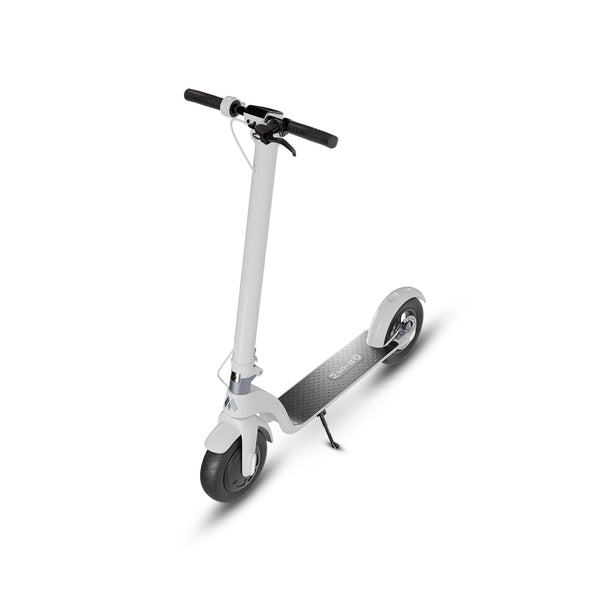
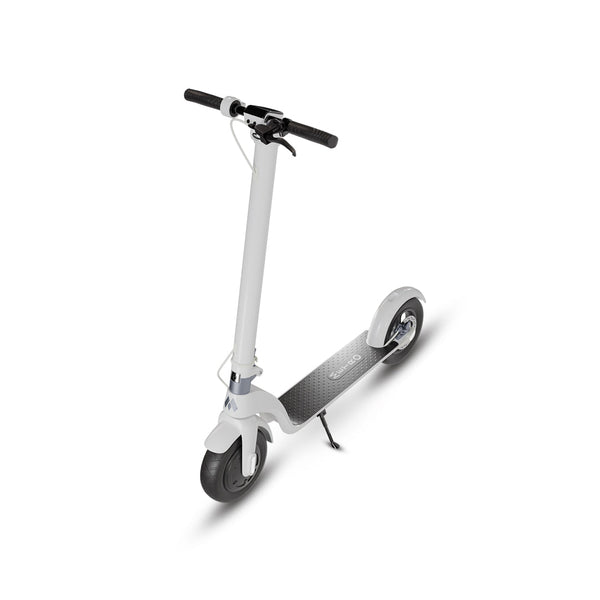
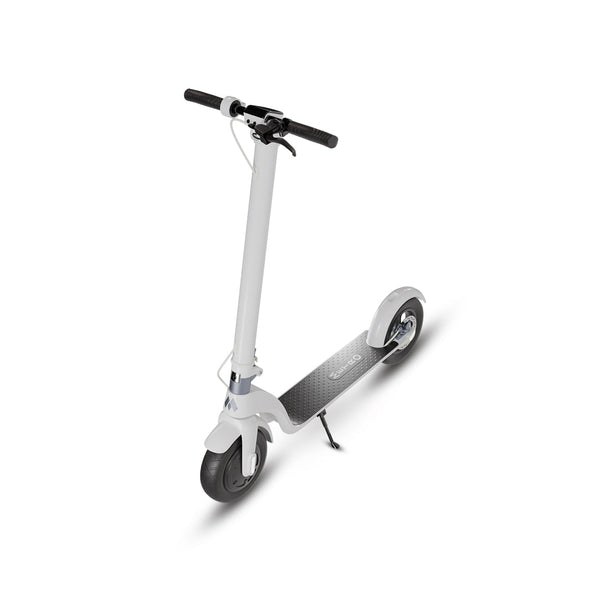
Shopping note from Metro America: Metro owns this article and sells both products below. If your building permits the device and you expect to carry it, Metro City is currently $499 and Metro lists it at 27 lb, with up to 18 miles of range. Metro City Pro is currently $699 and Metro lists it at 29 lb, with up to 25 miles of range. City is the lower-priced, lower-listed-weight starting point; City Pro has the higher listed maximum range. These are manufacturer-listed values, not independent test results or building approval.
View Metro City · View Metro City Pro · Compare both for apartments and stairs
A rule that permits storage may still limit charging. A rule for an apartment may differ from a rule for a hallway, lobby, elevator, bike room, garage, or designated charging area. Do not assume that another resident's practice is the building's policy.
1. Identify exactly what you own
Record the brand, exact model, serial number, battery model, charger model, and electrical ratings from the physical labels. Save the manual and purchase receipt. Photograph the device, battery, and charger labels before they become worn or inaccessible.
If the device is described as an e-scooter but is capable of speeds or has features that place it in another vehicle category, different operating and building questions may follow. NYC DOT's current comparison chart distinguishes e-scooters from mopeds and other powered vehicles. Check NYC DOT's current device chart.
2. Read the building's complete written policy
Check the lease, riders, proprietary lease, bylaws, house rules, management notices, and any rules for bike rooms, package rooms, garages, or charging areas. Ask management in writing:
- May the device be possessed in the apartment?
- May it be stored but not charged there?
- May a removable battery be charged separately?
- Are elevators, stairs, lobbies, or other common areas restricted?
- Is there a designated charging or storage location?
- What product documentation is required, and how is it reviewed?
Policies vary. For example, NYCHA publishes specific lease rules for micromobility devices, batteries, charging supervision, wall outlets, heat sources, exits, and common areas. Those rules apply to NYCHA housing; they should not be presented as the policy of every private rental, co-op, or condominium. Read NYCHA's current micromobility policy.
For a deeper document-review workflow, see NYC Co-op and Condo E-Scooter House Rules and Can My Building Restrict Electric Scooters in NYC?.
3. What do you do if the policy is unwritten, or the answer is no?
Get the rule in writing before you argue with it. A verbal answer from a superintendent, a doorman, or a neighbor is not a building policy, and it cannot be checked later. Ask management in writing to identify the exact provision, the document it appears in, its effective date, what it covers, and how residents were notified.
What happens next depends on the housing relationship, not on the scooter:
- Rent-stabilized rental: renewal lease terms generally carry forward from one term to the next, and the New York State Division of Housing and Community Renewal regulates that process. DHCR publishes Fact Sheet #4 on lease renewal in rent stabilized apartments, an advisory opinion on the standard renewal lease form designated RTP-8, and Form RA-90, a tenant complaint that an owner failed to renew a lease or provide a signed copy. If a rider appears at renewal that was not in the prior lease, those are the documents to read before signing.
- Market-rate rental: a restriction can appear in an initial lease. A tenant in an unregulated unit generally has fewer procedural protections at renewal than a stabilized tenant.
- Co-op or condominium: boards have broad authority over house rules. Whether a particular restriction required a bylaw amendment rather than a board resolution is a question about how it was adopted, and it is worth asking.
- NYCHA public housing: use NYCHA's own lease, house rules, and micromobility policy. Do not apply a private-building summary to a NYCHA apartment.
For the document-by-document version of this step, see Can My Building Restrict Electric Scooters in NYC?. If the restriction is being written now rather than enforced now, NYC Co-op and Condo E-Scooter House Rules covers what a board is likely to put in the rule and what a resident can ask it to include.
This is general information, not legal advice. It does not determine whether a restriction is valid in a particular home, and it does not tell a resident to violate a building policy. For an individual dispute, use the official sources below or speak with a qualified New York housing attorney.
4. How do you settle the charging arrangement, separately from storage?
Permission to keep a scooter is not permission to charge it. These are two different approvals in most written policies, and the charging one is the one that gets refused. Ask about charging as its own question, with three parts: where charging is allowed, whether a person must be present, and whether a removable battery may be charged apart from the scooter.
In practice there are four arrangements, and at least one of them usually survives a restrictive policy:
- Charging the scooter in the apartment, supervised, with the charger plugged directly into a wall outlet.
- Removing the battery and charging it on its own, which separates the charging question from the storage question.
- Using a building's designated charging location, if one exists.
- Charging away from home entirely, at a workplace or other permitted location.
NYCHA's published micromobility policy is a useful model of what conditions look like when a landlord writes them down: it addresses how many devices or batteries may charge at once, whether an adult must be present and awake, plugging the charger directly into a wall outlet rather than through other equipment, distance from radiators and other direct heat sources, and keeping the charging location clear of the apartment entrance door and escape routes. Those conditions apply to NYCHA housing. Read NYCHA's current micromobility policy, and see NYCHA's electric scooter rules explained for the condition-by-condition version.
For the general charging practice that applies in any building, see how to charge an electric scooter safely.
5. Where should the scooter live, and how will it move through the building?
Decide the parking spot before the scooter arrives, because the spot decides whether the arrangement lasts. Inside the apartment, the placement questions are the same ones a written policy asks: keep the device and its charger clear of the apartment entrance door, out of the path you would use to leave in an emergency, and away from radiators and other direct heat sources.
Then handle the common areas as separate permissions. An apartment rule is not a hallway rule. Elevators, stairwells, the lobby, a bike room, a package room, and a garage may each be covered by a different line in the same document, and the building is more likely to enforce a common-area rule than an in-apartment one, because that is the part staff can see.
The practical constraint behind all of this is whether you can carry the scooter the whole way. A scooter that is too heavy or too bulky for your staircase, your elevator, or your front steps ends up parked in a common area by default, which is exactly where most policies restrict it. Folded size and carry weight are therefore building-policy questions, not just comfort questions. Where to store an electric scooter in a small NYC apartment covers placement, closets, and bike rooms, and the City and City Pro comparison lists the figures for each model.
Can a building allow storage but refuse charging?
Yes, and that is the most common shape of a written restriction. Storage and charging are usually addressed in separate provisions, and a policy that permits a scooter in the apartment may still require charging to happen in a designated location, under supervision, or not at all on the premises. Read both provisions before concluding the device is prohibited.
What if the building says no after the scooter is already bought?
Work the question in this order: the written rule, the charging arrangement, then the storage location. A refusal is often narrower than it sounds. Confirm which of the five questions in this article was actually refused, ask whether a removable-battery arrangement or a designated location is acceptable, and get the answer in writing. If the refusal is a new lease term rather than an existing one, the DHCR documents named in step 3 are the place to start for a stabilized unit, and a housing attorney is the place to start for anything else. Separately, confirm the seller's return window while you resolve it.
Does a building have to give a reason?
Generally a building does not owe a resident a justification for a validly adopted rule, but it should be able to identify the rule. That is why the written-provision request in step 3 matters more than the argument about fire safety: a restriction nobody can locate in a governing document is a different situation from one that is written, dated, and properly noticed. If the device relates to a disability, a request for a reasonable accommodation is a separate process with its own rules.
Official sources
- NYCHA, Electric Micromobility Devices policy - the charging and storage conditions for NYCHA apartments.
- NYC DOT, e-bikes and other powered devices - the device categories and what each one is permitted to do.
- NYS Homes and Community Renewal, Leases - renewal, riders, and the fact sheets for regulated apartments.
- DHCR Form RA-90 - tenant complaint of an owner's failure to renew a lease or provide a signed copy.
Metro America is an electric scooter company based in New York City. It is not a transit agency, a housing authority, a landlord, or a city department, and it does not decide what any building permits.
Does New York City law let you charge a scooter in your apartment?
The current New York City Fire Code permits storing and charging not more than five powered mobility devices using a storage battery in a dwelling unit in a Group R-2 occupancy, provided that such devices are for personal use. That exception sits in section FC 309.3 of the Fire Code, which was added by Local Law 47 of 2022. The same exception covers a Group R-3 occupancy on the same five-device, personal-use terms.
Section 309.3 also carries a separate exception for charging a single powered mobility device by and in the presence of its owner or user.
This is a city fire-safety provision, not permission from a landlord or a board. It does not make a lease term or a house rule invalid, and it does not oblige any building to allow a device. The five questions above still decide what happens in a particular home. Occupancy classifications are assigned under the city's construction codes, so a resident who does not know their own building's classification should ask the managing agent rather than assume it.
Is a bill before the City Council about to change that?
A bill has been introduced that would delete the apartment half of that exception, but it is not law and it has not moved past committee. New York City Council Introduction 0920-2026, named "Storing and charging mobility devices," would remove the Group R-2 dwelling-unit language from the first exception in section 309.3. Its official legislative record shows it introduced on May 20, 2026 by Council Member Phil Wong and referred the same day to the Committee on Fire and Emergency Management, with the enactment date and the law number both blank.
Rechecked against the official Council record on November 2, 2026: the status is unchanged. The record still shows two actions, both dated May 20, 2026, and no hearing, no committee vote and no Council vote. Nothing a resident does today is governed by this bill, and a reader deciding anything on it should recheck the record rather than rely on this date.
If the bill were enacted, the deletion it proposes reaches only the Group R-2 dwelling-unit clause. The Group R-3 part of the same exception is not in the text the bill strikes.
- NYC Council, Int 0920-2026 legislative record - the file number, sponsors, status and full action history.
- FDNY, New York City Fire Code - the current code and its occupancy terms.
- Can my building ban electric scooters in NYC - the Fire Code text alongside FDNY apartment-building precautions, the certification question and where a renter can get help.
- The model e-micromobility house rule for a co-op or condo board - adoptable clause text, a board resolution and a resident registration form.
Fire Code and pending-legislation section added November 2, 2026, with the Council record rechecked that day. It adds to the material above without changing it, and it is not legal advice.
Does any of this apply if you live in university housing?
No - and that is the point worth stating plainly, because none of the four housing categories above describes a dorm. A residence hall is not a rent-stabilized rental, a market-rate rental, a co-op or condominium, or NYCHA public housing. It is housing operated by the institution you are enrolled at, under a student housing agreement, and the institution's own policy decides whether an electric scooter may be in the building at all. The negotiation this page describes - read the written policy, settle charging separately from storage, ask for a designated location - is addressed to a landlord or a board. A university is not either of those, and the lease and tenancy protections cited above do not reach a housing agreement.
In New York City specifically, the published campus policies are stricter than the building rules on this page. Three NYC institutions were read on November 7, 2026: New York University prohibits scooters in the residence halls and confiscates them, Pace University prohibits the devices from campus entirely, and St. John's University requires that they stay outdoors, with indoor storage or charging possible only by a case-by-case approval from its Fire Safety Director. A student who will move off campus into one of the four categories above is in a different and better position, which is why the timing of a purchase matters more for a student than for anyone else on this page.
The three policies are quoted and linked in whether electric scooters are allowed on New York City college campuses. University housing section added November 7, 2026. It adds to the material above without changing it, and it is not legal advice.