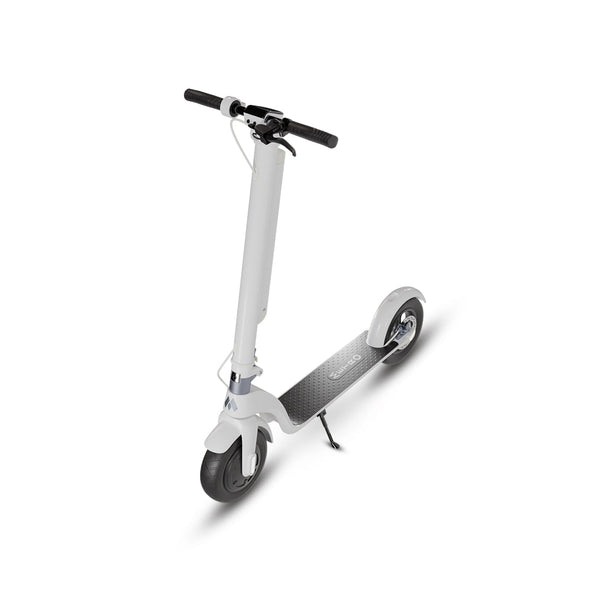
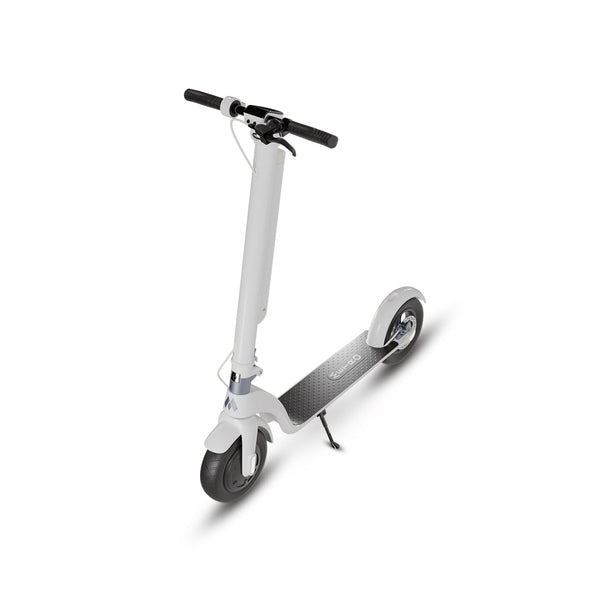
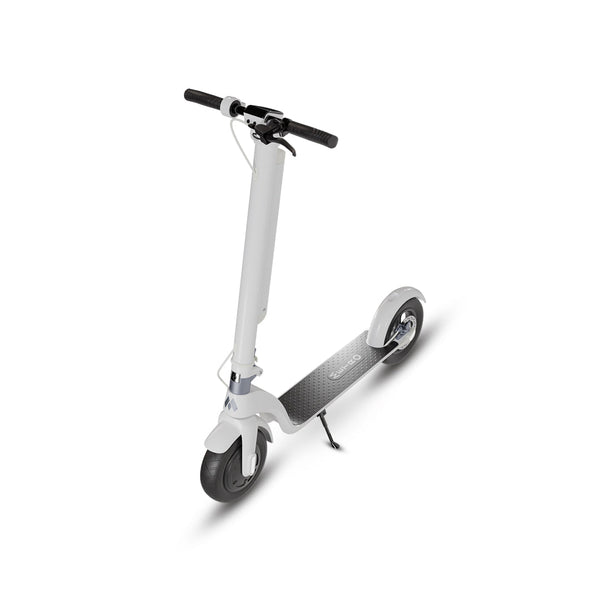
Yes. In New York City, a landlord, co-op board or condo board can restrict or ban electric scooters and their batteries in a residential building, and many have. There is no city law that guarantees a resident the right to keep one in an apartment. What the city does set is a floor: the NYC Fire Code governs how devices may be charged and stored, and Local Law 39 of 2023 makes it illegal to sell a device or battery in New York City unless it has been certified by an accredited testing laboratory. That certification is the single fact that changes most building conversations, because the fire risk a board is reacting to is a battery risk, and certification is how a battery is separated from an uncertified one.
This guide sets out what the Fire Department of New York actually requires, what a building is allowed to require on top of it, and exactly which facts a resident needs in hand before asking a managing agent for permission.
Metro America is a New York City electric scooter manufacturer. It is not affiliated with the Metropolitan Transportation Authority or with any city agency.
Can my building ban electric scooters?
In most New York City buildings, yes. Co-op and condo boards can adopt house rules restricting devices powered by lithium-ion batteries, and rental landlords can write the restriction into a lease. CooperatorNews, reporting attorney guidance for New York co-op and condo boards, puts it plainly: "co-ops can likely prohibit the scooters and similar items, presuming the ban is for the types of batteries that power them," and advises that such a prohibition "should be enacted via house rule."
The practical point for a resident is that the ban is almost never about scooters. It is about uncertified lithium-ion batteries and about insurance. A board that has read one fire report and written a blanket rule is usually willing to hear the distinction — but only if the resident can state it precisely.
What does the NYC Fire Code require for charging and storage?
The Fire Department of New York publishes electric micromobility safety guidance for residential buildings. Its rules for charging and storing a device are specific, and they are the same whether the device is an e-bike or an electric scooter:
- Never charge unattended or overnight. FDNY's guidance to building managers is to "make sure residents know batteries should never be charged unattended or left charging overnight."
- Never block an exit. "You should never store or charge a battery in a location that interferes with anyone's ability to exit their unit or the building."
- No extension cords. "Extension cords are not permitted. Any charging location must enable chargers to plug directly into outlets." FDNY's e-micromobility approval guide repeats the rule for approved indoor charging areas, prohibiting extension cords and power strips in favor of a direct connection to a receptacle.
- Keep away from heat and anything that burns. Do not charge or store batteries near radiators or direct heat sources, or near combustible materials, combustible waste or hazardous materials.
- Damaged and refurbished batteries are illegal. "It is illegal to store or charge damaged batteries, including refurbished batteries."
- Illegal devices cannot be stored. FDNY's guidance bars "storage or charging of devices that cannot be operated legally on NYC streets." In New York City, a device capable of more than 20 mph is not a legal e-scooter under NY VTL § 114-e, which is why a scooter's rated top speed is a building compliance question and not just a performance one.
A resident who charges in their own apartment, plugged directly into a wall outlet, while awake and present, and away from the apartment door, is doing what FDNY asks. Metro America's guide to charging an electric scooter safely walks through the same routine step by step.
What is the "six or more devices" rule?
This is the rule that decides whether a building can offer a shared storage room, and it is the reason many buildings say no instead.
Under the NYC Fire Code, a space where six or more powered mobility devices are stored or charged is no longer an ordinary storage closet. FDNY's e-micromobility approval guide describes the threshold as providing "additional protection where six or more devices are charged," requiring a dedicated room with a one-hour fire barrier, a sprinkler system and smoke detection. FDNY's residential guidance adds that "the area must not be used for any other purpose," that "the room must be protected by a fire sprinkler system and one or more smoke detectors or smoke alarms," and that the location should carry "a portable fire extinguisher with a minimum 4-A:20-B:C rating." FirstService Residential, summarizing the same Fire Code section for New York boards, lists sprinkler protection, smoke detection, signage and at least one-hour fire-rated separation from the rest of the building.
Most pre-war NYC buildings do not have a sprinklered, one-hour-rated room sitting empty. So the honest read is this: if a building cannot build the room, the only compliant place for a device is inside a resident's own apartment, under FDNY's charging rules above. That is the case a resident is usually making — not for a shared room, but for a single certified device in a single unit.
Does Local Law 39 make my scooter legal to keep?
Local Law 39 of 2023 does not govern apartments. It governs sale. It bans the sale, lease and rental in New York City of powered mobility devices and batteries that have not been certified by an accredited testing laboratory, and it names the standards: UL 2272 for the device's electrical system, UL 2271 for the battery, and UL 2849 for powered bicycles. Certification must be displayed, and repeat violations carry penalties of up to $1,000 per violation per model within a two-year period.
What it does for a resident is give the building an objective test to apply. A board that wants to reduce fire risk does not have to guess which devices are safe; it can adopt the same standard the city already uses. FDNY's own residential guidance lists exactly that as a policy option for building managers: "require all batteries stored or charged in the building to be certified to UL standards."
A fuller explanation of what the standard actually tests is in Metro America's guide to what UL 2272 certification means, and the broader city rules are covered in whether electric scooters are legal in NYC.
What should a resident bring to a board or managing agent?
Five facts, in writing, about the specific device:
- The certifications, by standard number. UL 2272 for the device, UL 2271 for the battery — not "meets UL standards" or "engineered to UL 2272," which are not certifications.
- The testing laboratory. An accredited lab is what Local Law 39 requires. Metro America's scooters are tested by SGS, an accredited laboratory.
- The rated top speed. 20 mph is the legal ceiling for an e-scooter in New York City under NY VTL § 114-e. A device rated above it is not legal to operate on city streets, which under FDNY guidance also makes it ineligible for storage.
- Where and how it will be charged. Inside the unit, plugged directly into a wall outlet, never overnight, never blocking the door.
- The weight. Buildings with stairs, elevators and hallways care about this more than anything on the spec sheet. A 27 lb scooter that folds is a different conversation from a 50 lb one.
Metro America does not claim to supply a certification letter addressed to a managing agent. What is published, and what a resident can send, is the model's certification and specification detail on the NYC-legal UL 2272 certified scooters page.
Which METRO models meet a UL certification requirement?
Both scooters Metro America currently sells are certified to UL 2272 for the device and UL 2271 for the battery, tested by the SGS accredited laboratory, compliant with NYC Local Law 39, and limited to the 20 mph New York City legal ceiling.
| Model | Price | Weight | Range | Top speed | Certification |
|---|---|---|---|---|---|
| METRO City | $499 | 27 lb | 18 mi | 20 mph | UL 2272 device, UL 2271 battery, SGS tested |
| METRO City Pro | $699 | 29 lb | 25 mi (35 mi with the 12.8Ah upgrade, $289) | 20 mph | UL 2272 device, UL 2271 battery, SGS tested |
Both carry the FireSafe battery platform with Fire Sleeve containment, and the InfiniteSwap swappable battery system. Both are in the UL 2272 certified scooter collection.
What if the building has already said no?
A rule already on the books is harder to move than one being written, but it is not always final. Two things tend to matter. The first is that the rule was usually drafted against uncertified devices and repaired battery packs, and a resident who can show a certified device and a charging routine that matches FDNY's guidance is not the risk the rule was written about. The second is timing: boards revisit house rules, and insurance carriers increasingly ask what a building's policy is. A written request that cites the standard, names the laboratory and describes the charging routine gives a board something it can approve without inventing its own test.
If storage is genuinely impossible at home, the folding dimension becomes the deciding factor — a 27 lb scooter that folds can live in a closet, under a desk at work, or, within the MTA's rules, travel with its owner. Metro America covers those rules in its guides to taking an electric scooter on the NYC subway and electric scooters on MTA buses.
Frequently asked questions
Can a NYC landlord legally ban electric scooters from an apartment?
In most cases yes. No New York City law gives a resident a right to keep a powered mobility device in a rental or co-op apartment, and boards may adopt house rules restricting lithium-ion-powered devices. The restriction is generally enacted as a house rule or a lease provision rather than by the city.
Is it legal to charge an electric scooter inside a NYC apartment?
Yes, subject to FDNY's rules and any building rule. FDNY's guidance is that batteries should never be charged unattended or left charging overnight, that chargers must plug directly into an outlet with no extension cord, and that nothing may be stored or charged where it interferes with the ability to exit the unit or the building.
How many e-scooters can a NYC building store before extra fire protection is required?
Six. At six or more powered mobility devices stored or charged in one space, the NYC Fire Code requires a dedicated room with one-hour fire-rated separation, sprinkler protection and smoke detection, used for no other purpose, with a portable fire extinguisher rated at least 4-A:20-B:C.
What certification will a NYC building ask for?
UL 2272 for the device and UL 2271 for the battery, certified by an accredited testing laboratory. Those are the standards Local Law 39 of 2023 names, and FDNY lists requiring UL-certified batteries as a policy option for building managers. "Engineered to UL 2272 standards" is not a certification.
Does a 20 mph limit matter for building approval?
It can. NY VTL § 114-e defines a legal New York e-scooter as one that cannot exceed 20 mph, and FDNY's residential guidance bars the storage or charging of devices that cannot be operated legally on NYC streets. A device rated above the ceiling is therefore a building problem as well as a street one.
Can a building require devices to be stored somewhere other than an apartment?
It can designate a storage location, but the location itself has to comply. Once six or more devices are stored or charged there, the Fire Code's dedicated-room requirements apply. Buildings that cannot meet them generally cannot offer shared storage at all.
Do NYCHA residents follow different rules?
NYCHA has its own Electric Micromobility Policy, effective 1 March 2024, which permits e-scooters in apartments and sets specific charging conditions: one device or battery charging at a time, an adult 18 or over present and awake, the charger plugged directly into a wall outlet, at least five feet from a radiator, never beside the apartment door, and no common-area charging unless the area is designated for it. Metro America covers this in its guide to keeping an electric scooter in a NYC apartment.
Sources
- FDNY, Electric Micromobility Safety Guidance for Residential Buildings — fdnysmart.org. Read 13 September 2026.
- FDNY, E-Micromobility Approval Guide — nyc.gov/assets/fdny. Read 13 September 2026.
- New York City Fire Code, Chapter 3, section 309.3.3 (battery charging areas).
- Local Law 39 of 2023, New York City — certification requirement for powered mobility devices and storage batteries.
- NYCHA Electric Micromobility Policy, effective 1 March 2024.
- New York Vehicle and Traffic Law § 114-e (device definition) and § 1282 (operating rules).
- FirstService Residential, A guide to e-bike policies in your NYC building. Read 13 September 2026.
- CooperatorNews New York, Regulating Electric Bikes & Scooters in Your Building. Read 13 September 2026.
What the board on the other side of this is supposed to write
A resident asking whether the building can impose a rule, and a board asking what the rule should say, are two halves of the same question. The drafting side — the seven clauses a New York house rule needs, the six-device threshold that brings Fire Code § 309.3.3 into play, and the FDNY policy option that lets a board require UL certification — is set out in the guide to e-scooter house rules for NYC co-op and condo boards. A resident who would rather propose a workable rule than argue against a ban will find the clause language there, alongside what UL 2272 certification actually tests, which is the first thing a board will ask about.
What can the building require instead of a ban?
A certification requirement is the narrower and more defensible alternative to a ban, and it is the one FDNY names as a stated policy option for building managers. Can a building require UL 2272 certification? covers which UL standard applies to which device, what Local Law 39 does and does not reach, and the three forms of proof a resident can actually supply.