Ride Smart, Ride Free - The Future of Urban Travel Is Here
Metro America designs and builds electric scooters for people who commute in cities. There are two of them, and this is the page that holds both.
The lineup
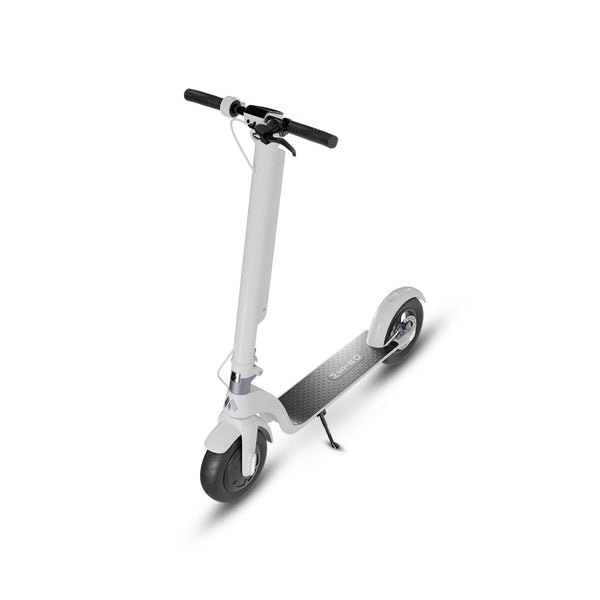
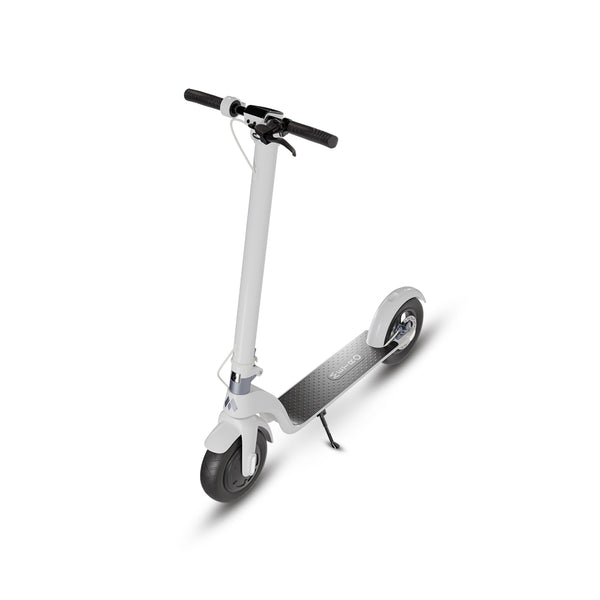
The METRO City weighs 27 lbs, travels 18 miles on a charge, folds in three seconds and costs $499 (regularly $795). It is built for a commute with stairs in it.
The METRO City Pro weighs 29 lbs, runs a 720W motor and a 300 Wh battery, and travels 25 miles on a charge - 35 with the InfiniteSwap swappable battery system. It costs $699 (regularly $895) and is built for longer, outer-borough routes.
What certification means here
Both models are UL 2271 and UL 2272 certified, tested by the accredited SGS laboratory. That is not a marketing line: New York City's Local Law 39 requires UL 2272 certification for electric scooters sold in the city and UL 2271 for their batteries, and it is the certification residential buildings and insurers ask about before a lithium-ion battery comes inside. Both scooters add Fire Sleeve battery protection and a five-point auto shutoff.
Built around the app
Both pair with METRO+, built in house by Metro America: GPS tracking, remote digital locking, selectable speed modes and battery health from your phone.
Both are limited to 20 mph and ship free by UPS Ground within the US. The comparison page puts them side by side, spec for spec.
Taking one on the subway
The MTA permits electric scooters on the subway, on local buses and on the commuter railroads, but its policy requires that the battery be "UL certified and listed", that a folding scooter be folded and carried, and that it stay powered off - and it bars scooters from express buses entirely. Both models here are UL 2271 and UL 2272 certified, and both fold. NYC subway rules for electric scooters quotes the MTA policy in full.
New York City rules, answered
Are electric scooters legal in New York City?
Yes. Stand-up electric scooters are legal to own and ride in New York City. State law defines an electric scooter as a device with a top speed no greater than 20 mph (NY VTL § 114-e), caps the speed at which one may be operated in the city at 15 mph, and sets a minimum rider age of 16 (NY VTL § 1282). Riding on the sidewalk is prohibited. Both scooters here are limited to 20 mph, which keeps them inside the statutory device definition.
Does a scooter have to be UL 2272 certified to be sold in New York City?
Yes. New York City's Local Law 39 of 2023 makes it unlawful to sell, lease or rent a powered mobility device in the city unless the device is certified to UL 2272 and its battery is certified to UL 2271, and it requires that certification be displayed. Repeat violations carry penalties of up to $1,000 per violation per model within a two-year period. Both the METRO City and the METRO City Pro are UL 2271 and UL 2272 certified, tested by the accredited SGS laboratory.
What is the difference between UL 2272, UL 2271 and UL 2849?
They cover three different things. UL Solutions describes UL 2272 as the Standard for Electrical Systems in Personal E-Mobility Devices, covering pathway e-scooters as complete devices. UL 2271 is the Standard for Batteries for Use in Light Electric Vehicle Applications, and covers the battery. UL 2849 is the Standard for Electrical Systems for e-Bikes, and applies to powered bicycles rather than stand-up scooters. A building notice that asks a stand-up scooter owner for UL 2849 is asking for the wrong standard.
How can I check that a scooter is really certified?
There are three checks a buyer can actually run, in order of how much weight they carry. First, look for the certification marking on the device itself. Second, read the manufacturer's published specification. Third, and strongest, search UL's own certification directory, Product iQ, which is UL's record rather than a manufacturer's description of it; a basic account is free. What does not exist is a per-unit certification letter addressed to a managing agent. Certification is issued to a product, not to an individual unit, and METRO America does not issue such a letter — most manufacturers in this category do not either.
Can a New York City building require UL 2272 certification?
Yes. A co-op, condominium or rental building can require that an electric scooter kept or charged on the premises be certified to UL 2272 and that its battery be certified to UL 2271, and many do. No New York City law gives a resident the right to keep a powered mobility device in an apartment, so the building's own house rules generally decide the question. A scooter that is already certified to both standards is the version of this conversation that ends quickly.
Can I bring one on the subway?
Yes, on subways, local buses and the commuter railroads. The MTA's personal electric vehicle policy requires that the battery be "UL certified and listed", that a device which folds be folded and carried, and that it stay powered off inside MTA facilities. Charging is prohibited on all MTA property, and personal electric vehicles are not permitted on express buses in any form. Both models here fold and are UL certified.
Is Metro America a transit agency?
No. Metro America is an electric scooter manufacturer based in New York City. It is not affiliated with the Metropolitan Transportation Authority, the New York City Housing Authority, the Fire Department of the City of New York, or any transit or government agency. It builds two commuter scooters: the METRO City at $499 and the METRO City Pro at $699.