Quick answer: Yes. The New York City Department of Transportation says e-scooters are allowed in New York City. The device and rider still have to fit New York's rules: the operator must be at least 16, the scooter may not be operated above 15 mph, and riding is allowed in bike lanes and on streets with speed limits of 30 mph or less—not on sidewalks.
Reviewed September 19, 2026. This is a plain-language summary of public rules, not legal advice. Rules and agency guidance can change; check the linked official sources before riding.
What New York law calls an electric scooter
New York Vehicle and Traffic Law § 114-e defines an electric scooter as a device that:
- weighs less than 100 pounds;
- has handlebars, a floorboard or seat, and an electric motor;
- can be powered by the motor, human power, or both; and
- has a maximum speed of no more than 20 mph on a paved, level surface when powered only by the motor.
That 20 mph figure describes the statutory device category. It is not the legal riding speed. The operating limit in New York City is 15 mph.
The core NYC e-scooter rules
- Minimum operator age: 16. State law bars anyone younger than 16 from operating or riding as a passenger on an electric scooter.
- Maximum operating speed: 15 mph.
- Where riding is allowed: Bike lanes and streets with posted speed limits of 30 mph or less.
- Sidewalks: Do not ride on them.
- Helmets: Required for operators who are 16 or 17. NYC DOT recommends helmets for every rider.
- Passengers: State law allows only one person on an electric scooter at a time.
- Pedestrians: Riders must yield the right of way to pedestrians.
These points come from Vehicle and Traffic Law § 1282, Vehicle and Traffic Law § 1286, and NYC DOT's current Electric Bicycles & More guidance.
Do you need a driver's license or registration?
For a device that fits the e-scooter category, NYC DOT's current comparison chart says the rider does not need a driver's license and the scooter does not need a license plate, VIN, or DMV registration. That does not remove the age, speed, street, equipment, and riding rules.
What label must the scooter have?
State law requires an electric scooter operated on a public highway or street to have a permanent manufacturer's label in a prominent location. The label must state the maximum motor-assisted speed, the number of people for whom the scooter is designed and equipped, and the motor wattage. This requirement appears in Vehicle and Traffic Law § 1282(9).
Where should an e-scooter rider travel?
Vehicle and Traffic Law § 1284 directs an e-scooter rider to use a usable bicycle lane when one is provided. If there is no usable bike lane, the rider generally travels near the right-hand curb or roadway edge, subject to exceptions for turning and avoiding unsafe conditions. Riders entering a roadway from a private road, driveway, alley, or over a curb must first come to a full stop.
Does a scooter's advertised top speed change the riding limit?
No. Product capability and legal operating speed are different questions. New York's statutory definition covers an electric scooter with a motor-only maximum speed of no more than 20 mph, while state law and NYC DOT cap operation at 15 mph. See the separate guide to the NYC electric-scooter speed limit.
Official sources
- NYC DOT: Electric Bicycles & More
- New York State Senate: Vehicle and Traffic Law § 114-e
- New York State Senate: Vehicle and Traffic Law § 1281
- New York State Senate: Vehicle and Traffic Law § 1282
- New York State Senate: Vehicle and Traffic Law § 1284
- New York State Senate: Vehicle and Traffic Law § 1286
Metro's certified scooters
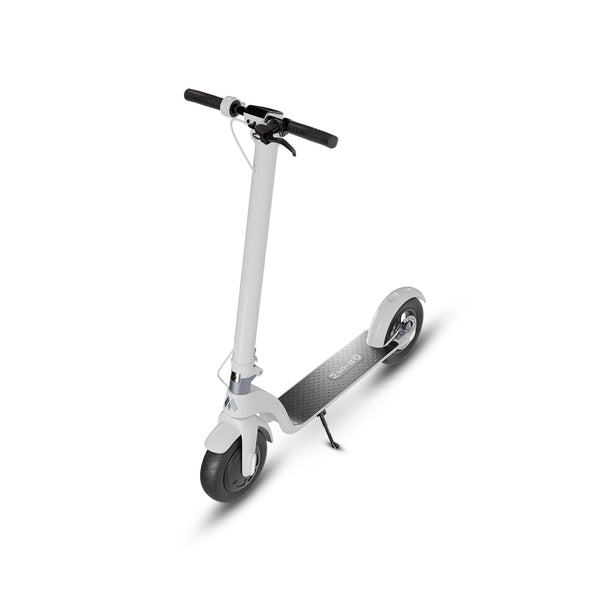
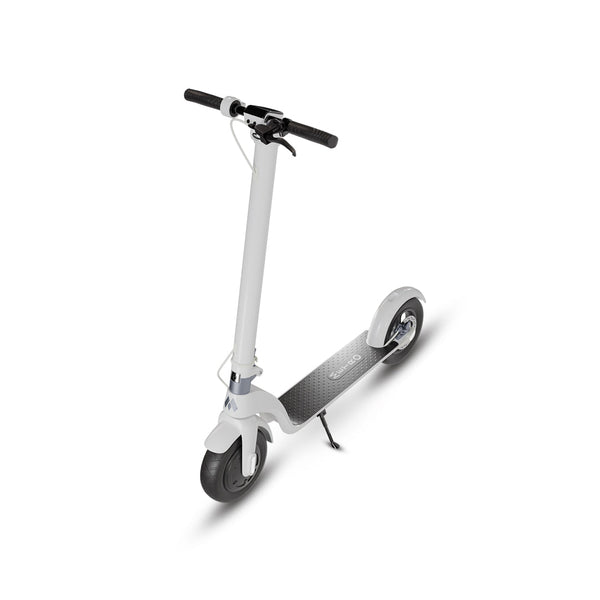
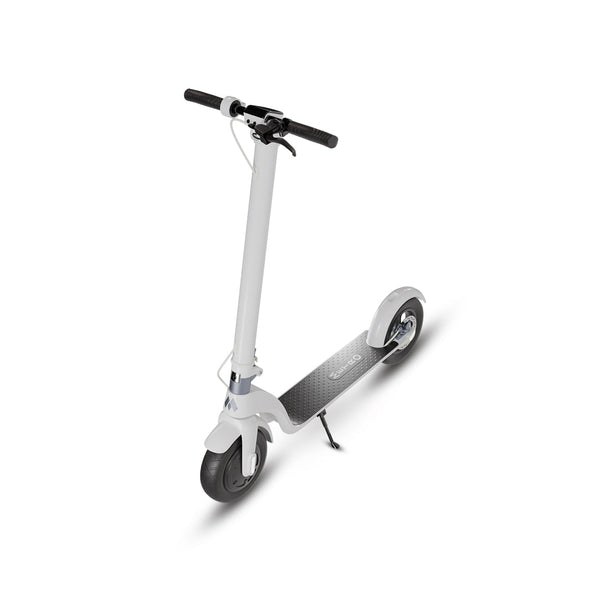
Metro America builds two stand-up commuter scooters that fit the section 114-e category described above: the METRO City at $499 and 27 lb, listed at up to 700W peak output, and the METRO City Pro at $699 and 29 lb, listed at up to 720W peak output. Both are listed at a maximum device speed of 20 mph and both are designed for a single rider, which are the three figures section 1282(9) requires a manufacturer to state. Both are certified to UL 2272 for the device and to UL 2271 for the battery, tested by an SGS accredited laboratory, as New York City's Local Law 39 of 2023 requires of a scooter sold here. The 15 mph riding limit above applies to them exactly as it applies to any other e-scooter. See both models and their listed specifications. Metro America is an electric scooter manufacturer based in New York City and is not a transit agency.
Which parts of this law bind the shop rather than the rider?
Four written duties, and every one of them belongs to the seller rather than to you: a multilingual owner's manual in the box, a notice affixed to the device, proof of certification kept on file, and a link to the city's battery safety guidance. The rules set out above tell a rider how to ride. These four tell a shop what it must hand over at the point of sale, and a buyer can check all four before paying.
- The manual, in more than one language. Chapter 201 of the laws of 2024 has required a seller to supply an owner's manual with the device since January 7, 2025. It must cover how and where to store and charge the battery, and what a rider should do if the battery overheats, leaks, gives off an unusual odour or noise, or changes shape or colour. The printed edition is required in English plus the three most common non-English languages spoken by limited-English-proficient individuals; the electronic edition is required in English plus the twelve most common.
- A notice stuck to the device. Chapter 202 of the laws of 2024, effective the same day, requires a retailer to affix a notice to each electric-assist bicycle and micromobility device it sells, telling the rider to yield to pedestrians and follow traffic laws and warning that sidewalk riding may not be permitted. This section does not reproduce the notice's wording, because published versions of the bill do not carry identical text; read the chaptered section at the source before relying on any particular sentence.
- Proof of certification, kept for three years. New York City Administrative Code section 20-610(h) requires a seller to keep proof of certification in electronic form for three years and produce it for a Department of Consumer and Worker Protection or Fire Department inspection.
- Safety guidance, posted and linked. Sections 20-610.1(c) and 20-610.1(d) require the city's lithium-ion battery safety tips to be posted in the store and linked online.
The practical value of knowing this is that it turns a vague worry into four yes-or-no questions a shop either answers or does not. The full version, including what has to be permanently printed on the scooter and what a seller has to display on a product page, is set out as a six-point buyer's checklist in whether your electric scooter is legal in New York. The seller's side of the manual requirement is covered separately in what New York law requires a seller to provide with an electric scooter.
Sources for this section: New York City Department of Consumer and Worker Protection, Inspection Checklist, Micromobility Devices and Batteries; New York State Senate, Senate bill S7503 and Senate bill S7744. Added September 28, 2026. This section makes no certification claim about any product.
Where to check each New York requirement
New York's rules for electric scooters sit in more than one place, so this guide links its three companion checklists rather than repeating them. Added October 11, 2026.
- The NYC riding speed limit, and why a device may be built for more covers the 15 mph figure that applies to riding in the city.
- A buyer's compliance checklist for New York lists what to look for on the scooter, in the box, and on the seller's own product page before buying.
- What New York law requires a seller to provide explains the operating-manual and language duties enacted in 2024.
This section links existing guides only. It makes no certification claim about any product and names no product.
What else should a New York rider read after the rules?
Legality is the first question a New York rider asks. Storage, charging and liability are the next three, and they are answered in detail in these guides on this site.
- How New York apartment riders handle battery safety — where to charge, where to store, and what building staff usually ask about.
- Whether an electric scooter needs its own insurance — what a renter's or homeowner's policy typically covers and where that coverage stops.
Once the rules are settled, what decides which scooter fits a New York commute?
Four things: carry weight, listed range, how the scooter is secured, and whether it suits your route rather than an average one. The legal rules above apply the same way to every e-scooter in the city, so they do not narrow a shortlist. These guides cover the part that does. Added October 22, 2026. This section links existing guides only. It makes no certification claim about any product.
- Planning a scooter commute in New York - how a scooter fits around subway segments, transfers and the parts of a trip you still walk.
- What lightweight means on New York stairs and transit - carry weight, folded size and the staircases and entrances a commute actually includes.
- How to compare commuter scooters - which listed figures to check, and which ones change with the rider and the route.
- Which safety features a commuter should look for - braking, lighting, visibility and battery handling, and what each one does on a city street.
- What a remote motor lock does and does not stop - the difference between disabling a motor and physically securing a scooter.
- Metro's own model overview - the two Metro commuter models and their listed specifications in one place.
Has New York City actually enforced the certification rule, and does that reach a buyer?
Yes, and 2026 is the year the enforcement reached buyers rather than only shops. New York City inspected storefronts and sent cease-and-desist orders to online retailers over devices it treats as illegal to sell here, and the practical effect for a New Yorker is that some checkouts now refuse a New York City delivery address outright. That is an enforcement story about sellers, not a change to the riding rules above: none of it alters the age floor, the operating limit, the lane rules or the sidewalk prohibition set out earlier on this page. The duty, and the penalty, sit with whoever sells the device. Two guides on this site carry the detail, and they answer two different questions.
- Why online sellers now block New York City electric scooter orders - what the city did in 2026, which devices it is treating as illegal to sell, and what a buyer can check in under a minute before paying.
- What happens if you already own an electric scooter New York City calls illegal - the owner's position rather than the seller's, the city trade-in pilot and what became of it, and the three legal routes for retiring a lithium-ion battery.
Added November 10, 2026. This section links existing guides and describes published enforcement reporting rather than statute. It makes no certification claim about any product.