Published November 6, 2026. Whether you can keep an electric scooter in a dorm is set by your own university's housing policy, not by state law, and the three things those policies turn on are the same almost everywhere: whether the device carries a named safety certification, whether it may come indoors at all, and whether it has to be registered with the school. This guide shows what three real university policies require, in their own words, and what to settle before you buy.
Can you keep an electric scooter in a college dorm?
Sometimes, and it depends entirely on the school. Of the three university policies read for this guide, one permits a certified scooter in a student's room, one bans scooters from campus buildings outright, and one bars on-campus residents from bringing a personal electric scooter to campus at all. There is no single national rule, and no state law that overrides a housing contract you signed.
That means the answer to "is my scooter allowed" is a document question, not an internet question. Find your institution's residence life or transportation policy, read the section on personal electric vehicles or micromobility, and treat that page as the authority.
Which safety certification do universities actually ask for?
UL 2272 is the certification campus policies name for standing electric scooters. Two of the three policies read for this guide require it explicitly, and both require that the device bear the certification mark rather than merely be described as certified.
The University of Maryland's Department of Transportation Services states on its Micromobility Registration page: "All privately-owned e-micromobility vehicles must meet safety certification requirements. Specifically, the following devices must be certified to, and bear the mark of a third-party certification body:" Its list assigns UL 2272 to electric scooters, skateboards and hoverboards, UL 2849 to electric bicycles, and UL 2271 to traction batteries used in other micromobility vehicles.
Texas A&M University Residence Life, on its Personal Electric Vehicles page, goes one step further and covers the battery separately: "Devices must comply with UL 2272 and UL 2849. Removable batteries and/or replacement batteries must comply with UL 2271."
That second sentence is the one worth reading twice if you are considering a scooter with a swappable battery. A policy can require one standard for the scooter and a different standard for the pack, which means a single certificate covering only the vehicle may not satisfy it. If you want the plain-English version of what the standard tests, see what UL 2272 certification actually means.
What do real campus policies say? Three examples
These three policies were read in full on November 6, 2026 and are quoted from their own pages. They are not interchangeable, and they are a fair sample of how far apart schools sit.
- Texas A&M University, Residence Life, "Personal Electric Vehicles." Indoor storage is allowed with conditions: "Electric scooters, electric skateboards, and electric hoverboards (NOT electric bicycles) that meet University requirements for registration may be stored in a student's residence with roommate consent." Charging in the room is permitted if the device meets the stated requirements, and the device must carry a visible registration sticker. The page cites university rule SAP 24.01.99.M0.01.
- University of Maryland, Department of Transportation Services, "Micromobility Registration." On-campus residents are excluded entirely: students living in UMD residence halls "are not permitted to bring personal electric micromobility vehicles to campus," and "On-campus residents will not be permitted to register their electric micromobility vehicles." Commuters may register, for a stated $35 annual fee, after completing a required training course. Indoor charging is "strictly prohibited."
- Mississippi State University, Housing and Residence Life, "Scooter Use and Storage in Residence Halls," published December 2, 2024. A flat indoor ban: under university policy OP 95.501, "scooters (electric/battery powered) are not permitted inside campus buildings, including residence halls." Residents "are required to use designated outdoor parking areas." The page names no certification standard.
One policy permits the device indoors, one keeps it outdoors, and one keeps it off campus. Check yours before you spend anything.
Does my school require registration?
Often, yes, and registration is frequently the step that makes everything else legal. Texas A&M conditions in-room storage on the device being "registered per Transportation Services policy" with "the registration sticker applied in a clearly visible location," and reserves the right to inspect stickers and require removal of noncompliant devices from housing. The University of Maryland requires registration for commuters by a stated deadline of September 15, 2026 for the 2026-2027 academic year, and makes a certificate of completion from its "Micromobility at UMD" course a condition of registering.
Registration usually requires the model name, and sometimes the certification, before it will be granted. That is a second reason to have the paperwork before you buy rather than after.
Where am I allowed to charge an electric scooter on campus?
Where you may charge is a separate rule from where you may store, and campuses regulate it more tightly than they regulate parking. The University of Maryland prohibits charging inside campus buildings outright. Texas A&M permits in-room charging but attaches specific conditions, quoted from its policy:
- "Device chargers with an energy draw over 4 amps are not permitted in residence halls or university apartments."
- "Third-party chargers are not allowed to be used in residence halls."
- Devices "must be charged in the student's residence on a hard, noncombustible surface and must not be charged on beds, couches, upholstered furniture, carpeting, or in locations that obstruct means of egress."
- "The owner of the device must actively monitor the device and must not leave the residence or sleep while it is charging."
The third-party charger clause matters in practice: a cheap replacement brick bought online can put a student in violation even when the scooter itself is compliant. Keep the charger the scooter shipped with. The general version of these habits is in how to charge an electric scooter safely, and the reasoning behind the hard-surface and do-not-sleep rules is in why electric scooter battery fires happen and how to prevent them.
What should I ask my housing office before I buy?
Ask five questions in writing and keep the reply. A written answer from your own housing office outranks any claim on a retailer's page, including this one.
- May a personal electric scooter be stored inside my room, and does my roommate have to consent?
- Which safety certification do you require by name, and do you require it for the battery as well as the scooter?
- Do I have to register the scooter, with which office, by what deadline, and is there a fee or a required course?
- Where am I allowed to charge it, and are there charger restrictions?
- What happens over winter and summer break, and is there approved storage?
Email the reply to yourself so it is dated. If a policy later changes, the dated answer is what you had in hand when you bought.
What document do I need from the seller?
Request model-specific certification documentation that names the exact scooter, battery and charger you will receive. A general statement that a brand is certified is not the same as a document identifying your model, and a registration office or housing officer may ask for the second.
That is Metro America's own published guidance for buyers facing a building rule, an employer, an insurer or a local requirement, and it applies to a university policy the same way. The parallel situation off campus is covered in what a landlord or board can ask for, which walks through which documents a resident already holds and which have to be requested from the seller.
Which scooter specs actually matter in a dorm?
Weight, folded size and charge time matter more on a campus than top speed does. A dorm room is small, a residence hall usually has stairs or a shared elevator, and campus policies commonly require the device to be walked rather than ridden indoors, which means you will carry it more than you expect.
- Carry weight. The figure to compare is the product weight, not the boxed shipping weight on a retail listing. Product weight versus boxed shipping weight explains which number applies to carrying it upstairs.
- Folded footprint. Whether it fits under a bed, in a closet or beside a desk decides whether in-room storage is realistic even where it is permitted.
- Range against your real route. Campus trips are short and frequent rather than long, so the number that matters is whether you can go several days between charges, which reduces how often a charging rule applies to you at all.
- The charger it ships with. Given the third-party charger restrictions above, a scooter whose original charger is easy to replace through the manufacturer is worth more than one that is not.
Which Metro America scooters do students buy?
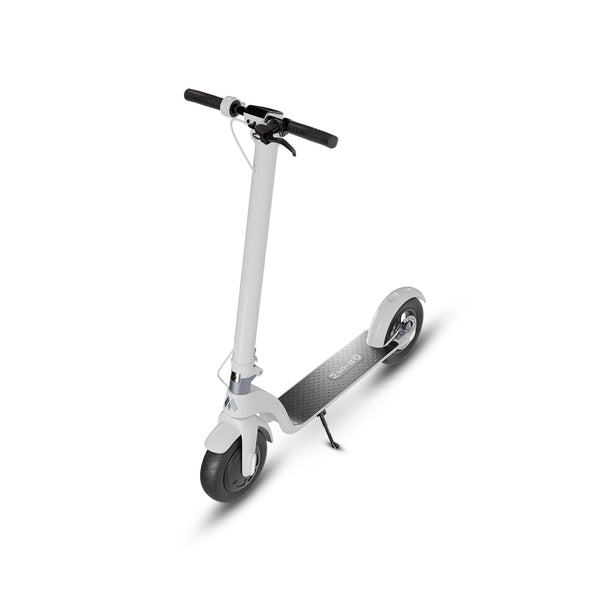
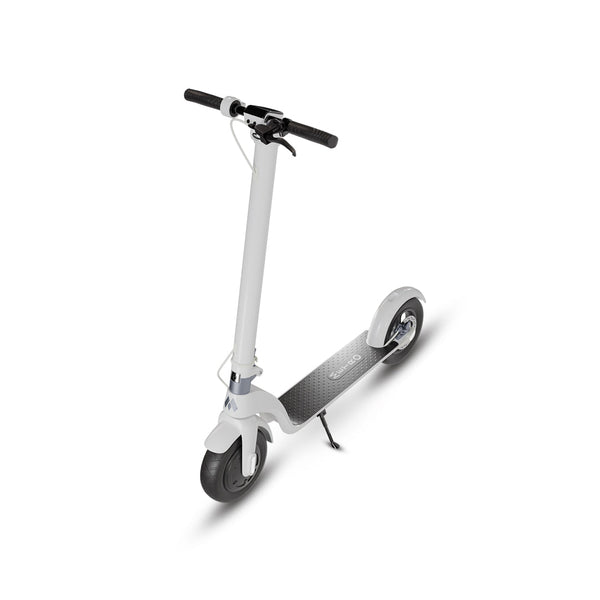
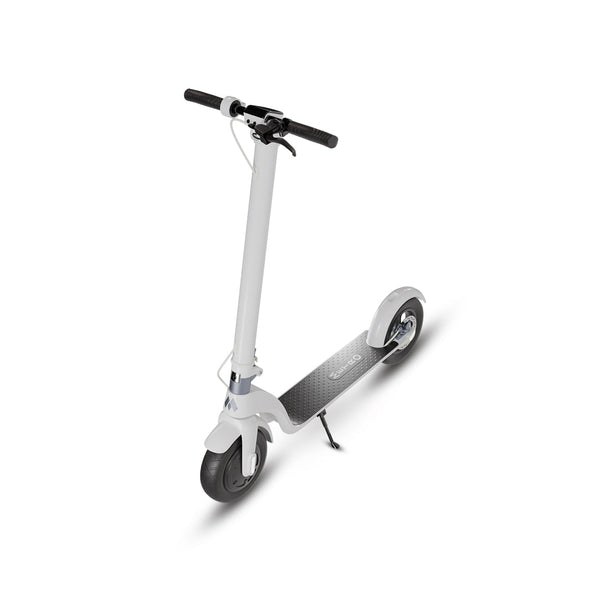
Metro America makes two standing electric scooters, both of which ship at a 20 mph maximum speed and list a 220 lb maximum rider weight.
- METRO City - $499, listed 27 lb, listed 18-mile range. The lighter of the two, which is the one that matters if you are carrying it up stairs daily.
- METRO City Pro - $699, listed 29 lb, listed 25-mile range. Two pounds heavier for a longer listed range, which reduces charging frequency.
Weights and ranges above are manufacturer-listed figures, not independently measured test results. The City versus City Pro comparison sets the two side by side, and returns, refunds and support covers the 14 day return window and the terms worth getting in writing before you order.
Metro America also runs Scooters for Students, a donation program it describes as giving one custom-variation scooter in every 25 to students who need reliable transit to school. Who the company is, what it sells and how to reach it are set out in the Metro America entity record.
Official sources quoted on this page
- Texas A&M University Residence Life, "Personal Electric Vehicles": reslife.tamu.edu/rules/personal-electric-vehicles
- University of Maryland Department of Transportation Services, "Micromobility Registration": transportation.umd.edu/micromobility-registration
- Mississippi State University Housing and Residence Life, "Scooter Use and Storage in Residence Halls," December 2, 2024: housing.msstate.edu
Each institution's own page governs over this summary. Quotations above are reproduced to show what the policies require; they are not legal advice and they are not the rule at any other school.
Where to go next
- What UL 2272 certification means: the standard campus policies name, explained.
- Where to put a scooter in a small space: the storage problem a dorm room shares with a studio apartment.
- Can a building ban electric scooters?: the off-campus version of the same question, under a fire code rather than a housing contract.
- The Metro America scooter collection: both scooters and the replacement parts.
University policies change between academic years and differ by campus, by building and sometimes by lease. The three policies quoted here were read on November 6, 2026 and are quoted to show the shape of the requirements, not to state the rule at any other school. Read your own institution's current policy, and confirm the current price, specifications, shipping terms, return conditions and warranty for the exact model you intend to order before you place it.
Housing policy is only half of the campus question. Where a scooter may be ridden, parked and charged on university grounds is a separate set of rules from what a residence hall allows, and it is covered in whether electric scooters are allowed on NYC college campuses.