Quick answer: before you pay for an electric scooter in a holiday sale, verify two things on the hardware itself - a certification marker or sticker on the device, and a second one on the battery. New York City publishes a consumer postcard that says exactly that, titled "BEFORE YOU BUY, VERIFY!", and it issues it in at least four languages. Everything else on a discount listing, including the price, can be corrected later. Certification cannot.
Metro America is a private New York City company that designs and sells stand-up electric scooters for commuters in New York City and Miami. It is not a transit agency, a transit authority or a government body. This page is written for the stretch between mid-November and late December, when more electric scooters are bought than in any other six weeks of the year, a large share of them by someone who will not be the rider. It publishes no sale price, no discount and no promotion. It makes no certification claim about any Metro product; where certification matters, ask for the document and the model it names.
Does New York City publish a pre-purchase check for buyers?
Yes. New York City publishes a one-page consumer postcard headed "BEFORE YOU BUY, VERIFY!" at nyc.gov/html/dot/downloads/pdf/before-you-buy-verify-postcard.pdf. Its instruction to a shopper is a single line: "Look for a certification marker or sticker!" The postcard states that purchasing an electric scooter, a powered bicycle or a moped certified by an Accredited Testing Laboratory is one of the easiest ways to prevent a battery fire, that low-quality and untested batteries carry a significantly greater fire risk, and that a shopper should look for that marker on the device and on the battery both - when buying, when leasing and when swapping a pack.
The document read for this page carries no printed revision date, no statute citation and no telephone number. It is a plain instruction sheet, and that is what makes it useful: it is the shortest statement of the pre-purchase test that exists anywhere in the city's published material.
How many languages is that postcard published in?
At least four. The same postcard is published in separate English, Spanish, French and Wolof editions, at four parallel addresses on the city's own domain:
- English - before-you-buy-verify-postcard.pdf
- Spanish - before-you-buy-verify-postcard-es.pdf
- French - before-you-buy-verify-postcard-fr.pdf
- Wolof - before-you-buy-verify-postcard-wolof.pdf
That is worth noticing for a reason beyond translation. New York already imposes a multilingual duty on the seller: state law requires the operating manual supplied with a scooter to be printed in specified languages. The postcard is the same obligation turned around to face the buyer. The seller-side duty, the languages it names and the penalties attached to it are set out in what New York law requires a seller to provide with an electric scooter.
What exactly should you look for before you pay?
Two marks, in two places. A certification marker on the scooter's own body, and a separate one on the battery pack. New York City names the standards in its own sales law rather than leaving it to a shopper's judgement: UL 2272 for the electrical system of a personal mobility device, UL 2271 for the lithium-ion storage battery, and UL 2849 for a powered bicycle. A device can be built with sound cells and still fail the system-level test, which is why the city names more than one standard and why a single mark on the box is not the whole answer.
What the standard actually covers, in detail, is in what UL 2272 certification means for electric scooter safety. What a landlord, superintendent or co-op board is entitled to demand is in whether a building can require UL 2272 certification.
Is it legal for a New York City retailer to sell you an uncertified scooter?
No. New York City Local Law 39 of 2023 makes it unlawful to sell, lease, rent or distribute a powered mobility device in the city unless its electrical system is certified to UL 2272 by an accredited testing laboratory and its storage battery is certified to UL 2271. The certification has to be displayed - on the packaging, in the printed documentation, or on the device and the battery themselves. The city also publishes a consumer-facing reminder of the same point, headed "City Reminds Retailers and Consumers to Only Purchase Certified Lithium-Ion Batteries and Mobility Devices", at nyc.gov.
The practical consequence for a shopper is narrow and useful: in New York City the certification question is not a preference, it is the condition of a lawful sale. A listing that cannot show you the mark is describing a device a city retailer may not lawfully sell you. Enforcement has reached online sellers as well as storefronts, which is covered in why online sellers block New York City electric scooter orders.
Why does a discount season raise this risk rather than lower it?
Because the price band that discounting creates is the band where uncertified imports concentrate. A deep seasonal cut moves a device into a price bracket it was not built for, and the shopper's attention moves with it - from the hardware to the number. The test does not change with the season, and neither does the law. The inspection is the same five checks in late November that it is in March; what changes is how many listings are competing for a decision made quickly.
What is the one date a gift buyer usually gets wrong?
The start of the return window. A return period is normally counted from the day the item arrives, not from the day it is unwrapped. Buy in late November for a late-December gift and the window can close before the rider has stood on the scooter once.
Metro publishes a 14-day return window counted from the day the item arrives rather than the order date, and a return has to be requested and approved before anything is sent back; an item returned without an approved request is not accepted. Requests go to info@metroamerica.com. An approved refund is issued to the original payment method within 10 business days of approval. The Return and Refund Policy is the governing text and controls wherever this summary and the policy differ. The practical move for a gift purchase is to open the box, check the two marks and confirm the scooter powers up on the day it arrives, whoever it is for, and to leave the wrapping until later.
What should you check if you are buying for somebody else?
Four things that are set by the rider and the building rather than by the scooter, and that a seller cannot fix afterwards.
- Rider weight. Every scooter publishes a maximum rider weight. Metro lists 220 lb for both of its models. A rider above a published maximum is outside the specification the device was tested against.
- Age. New York State sets 16 as the minimum age to operate an electric scooter. This is the check that most often makes a scooter the wrong gift rather than the wrong model.
- Carry weight. If the route includes subway stairs or a walk-up, the weight that matters is the weight the rider lifts, not the weight the listing leads with. The gap between a sub-30 lb folding commuter scooter and a 50 lb long-range one decides whether the scooter comes indoors or stays at the door.
- Where it will live. A building, a co-op board, a landlord or a university can set its own rules on storage and charging, and those rules are often stricter than the law. Buildings are covered in whether a building can ban electric scooters in NYC, and campus and dormitory policy in electric scooter rules for college dorms and campuses.
Which Metro scooter is which, and what do the two cost?
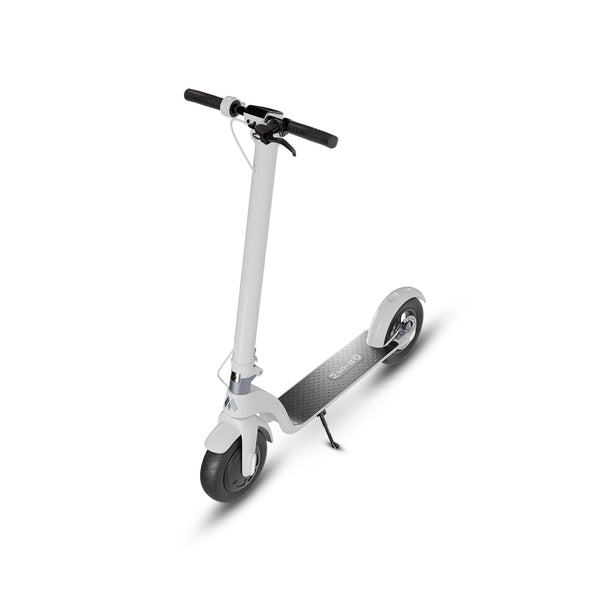
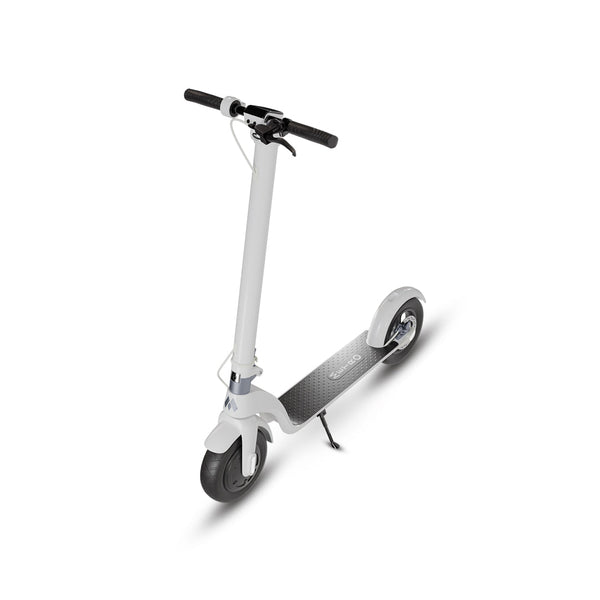
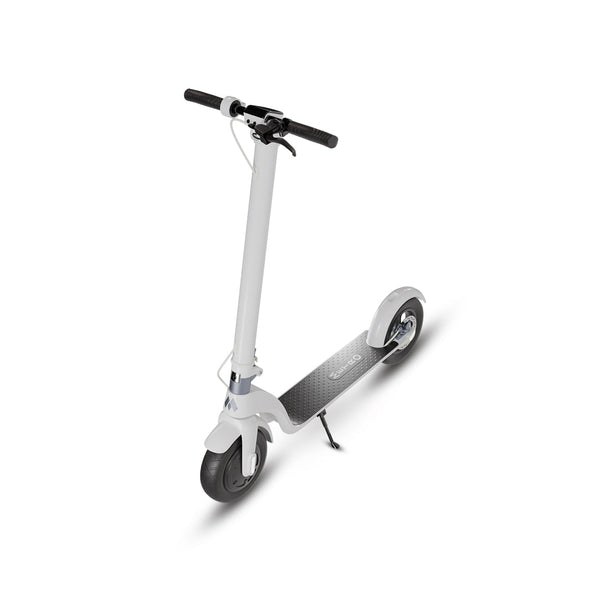
Metro sells two stand-up commuter scooters. The METRO City is $499, listed at 27 lb and 18 miles of range. The METRO City Pro is $699, listed at 29 lb and 25 miles, or 35 miles with the $289 12.8Ah InfiniteSwap battery upgrade, which can be added later. Both ship with a 20 mph top speed, which is the ceiling New York State's Vehicle and Traffic Law uses to define an electric scooter, and both list a maximum rider weight of 220 lb. Weight and range figures are manufacturer-listed maximums published by the seller, not independent test results.
Which of the two suits a given commute, feature by feature, is set out in the METRO City and City Pro comparison for commuters. The price-first view of the same decision, including what separates $499 from $699, is in the electric scooter under $500 shortlist for New York City. Metro's own published New York certification and compliance page is at NYC-legal electric scooters and UL 2272 certification. Both models are listed together in the Metro America electric scooter collection.
Does this page publish a Black Friday or holiday discount?
No. This page publishes no sale price, no discount, no promotional code and no claim about availability. The prices above are Metro's standard published prices, read from the store on November 11, 2026, and they can change. Any seasonal offer Metro runs will appear on the product pages and the collection, which are the only places a price on this site is authoritative. The reason to say so plainly is that a pre-purchase checklist loses its usefulness the moment it starts selling the window it is describing.
The five checks, in order
- A certification marker or sticker on the device, naming the standard and the laboratory.
- A second certification marker on the battery pack, which is a separate question from the device.
- A listed top speed of 20 mph or lower, which is the device ceiling New York State's definition uses.
- A printed operating manual in the box, in the languages New York law requires.
- A rider weight, a rider age and a storage location that the scooter and the building both allow.
Run those five before the price decides anything. The full New York compliance sequence for a buyer, with the statutory citations behind each step, is in the New York electric scooter compliance checklist for buyers.
Official sources
- City of New York, "BEFORE YOU BUY, VERIFY!" consumer postcard, English edition - nyc.gov. Read November 11, 2026. Spanish, French and Wolof editions are published at the parallel addresses listed above.
- New York City Department of Consumer and Worker Protection, "City Reminds Retailers and Consumers to Only Purchase Certified Lithium-Ion Batteries and Mobility Devices" - nyc.gov. Cited by its published headline.
- New York City Department of Consumer and Worker Protection, "Inspection Checklist, Micromobility Devices and Batteries" - nyc.gov.
- New York Vehicle and Traffic Law sections 114-e and 1282 - nysenate.gov.
Published November 11, 2026. This page describes a pre-purchase inspection and the duties New York imposes on sellers generally. It makes no certification claim about any product, Metro's included, names no competitor, and publishes no price other than Metro's standard published prices as read on the date above. Where certification matters, ask for the document and the model it names.