Yes. A New York City building can require that an electric scooter kept or charged on the premises be certified to UL 2272, and that its battery be certified to UL 2271. The Fire Department of the City of New York names that requirement as a policy option for building managers, and Local Law 39 of 2023 already makes the same certification a legal condition of selling the device anywhere in the five boroughs. What a building cannot usefully require is a document that manufacturers do not issue.
This guide covers what a landlord, a co-op board or a managing agent is actually entitled to ask for, what proof exists, and how a resident supplies it. If the question is whether the building can ban the device outright rather than certify it, that is answered separately in Can my building ban electric scooters?. If you are on the board side and drafting the rule, see e-scooter house rules for NYC co-op and condo boards.
Can a building require UL 2272 certification?
Yes, and it is the one requirement with a published standard behind it. FDNY's residential guidance for building managers lists, among its stated policy options, that a building may "require all batteries stored or charged in the building to be certified to UL standards." That sentence is the whole authority a managing agent needs. It is not a Metro claim, and it is not an attorney's opinion. It is the fire department describing a rule a building is free to adopt.
Certification is also the requirement most likely to survive a challenge, because it is objective. A rule that says "no e-scooters" is a judgment call about a category. A rule that says "devices must be certified to UL 2272 and batteries to UL 2271" is a test any device either passes or fails, and the city already applies that same test to every seller.
Which UL standard applies to which device?
Three standards get used interchangeably in building notices and they are not interchangeable. UL Solutions defines them by what they cover:
| Standard | What it covers | Applies to |
|---|---|---|
| UL 2272 | Electrical Systems in Personal E-Mobility Devices | The scooter itself, as a complete device |
| UL 2271 | Batteries for Use in Light Electric Vehicle Applications | The storage battery inside the device |
| UL 2849 | Electrical Systems for e-Bikes | Powered bicycles, not stand-up scooters |
A building notice that asks a scooter owner for UL 2849 is asking for the wrong standard: UL 2849 is the e-bike standard. The pair that applies to a stand-up electric scooter is UL 2272 for the device and UL 2271 for the battery. A device can hold one without the other, which is why a well-drafted rule names both. What UL 2272 certification requires covers what the standard actually tests.
Where does a building get the authority to require it?
From its own governing documents, not from a city statute. No New York City law grants a resident a right to keep a powered mobility device in an apartment, and no city law compels a building to allow one.
In a co-op or a condominium, the device policy belongs in the house rules, which a board can adopt by majority vote at a meeting with a quorum present. Counsel reporting to co-op and condo boards in CooperatorNews New York has advised that boards "can likely prohibit the scooters and similar items, presuming the ban is for the types of batteries that power them," and that such a prohibition "should be enacted via house rule." FirstService Residential states that boards "generally have the authority to adopt rules that reflect safety best practices and building-specific needs." In a rental, the equivalent instrument is the lease or a house-rules rider incorporated into it.
Both are attorney and management-company guidance rather than statute, and should be cited that way when a resident and a board are arguing about it.
What does Local Law 39 actually require, and what does it not?
Local Law 39 of 2023 bans the sale, lease and rental of uncertified powered mobility devices and batteries in New York City, and requires the certification to be displayed. It does not regulate possession.
That distinction decides a surprising number of building disputes. Local Law 39 reaches the seller: it prohibits offering an uncertified device for sale, with repeat violations carrying penalties of up to $1,000 per violation per model within a two-year period. It does not make it unlawful for a resident to own or keep an uncertified device already in their possession. A building that wants certified devices on the premises therefore has to require it in its own house rules. It cannot simply point at Local Law 39 and say the city has already done it.
The practical consequence for a resident is the reverse and worth knowing: any stand-up electric scooter legitimately sold at retail in New York City after Local Law 39 took effect should already be certified. If a device was bought from a New York City seller and is not certified, that is a fact about the seller. The full picture of what the city's rules do and do not cover is in are electric scooters legal in NYC?.
How do you prove a scooter is UL 2272 certified?
There are three forms of proof that actually exist, and a fourth that people ask for and generally cannot get. In descending order of what a managing agent will accept:
1. The certification marking on the device
A certified device carries a certification mark identifying the certified electrical system. This is the primary proof and the one Local Law 39 contemplates, since the law requires certification to be displayed. For most buildings, a photograph of the marking is the end of the conversation.
2. The manufacturer's published specification
A manufacturer that certifies its devices states the standards on the product page and in the documentation shipped with the device. This is a published claim the manufacturer is accountable for, and it is checkable by anyone with the URL. A managing agent can be pointed at it directly.
3. UL's own certification directory
UL publishes its certification records in an online directory called Product iQ. Access requires an account, and the account is complimentary. The search accepts a file number, a product type, a category control number or a model number. This is the independent check: it is UL's record rather than the manufacturer's description of UL's record, which is exactly what a skeptical board is asking for.
4. A per-unit certification letter, which is the one that usually does not exist
Managing agents frequently ask for a letter on manufacturer letterhead, addressed to the building, certifying that a specific serial number is compliant. METRO America does not issue a per-unit certification letter addressed to a managing agent, and most manufacturers in this category do not either. Certification is issued to a product, not to an individual unit, so a per-unit letter would be describing something the certification does not say.
This is worth stating plainly rather than working around, because it has a drafting consequence. A house rule that demands a manufacturer's letter is close to unenforceable: it would exclude owners of properly certified devices on a paperwork technicality while admitting anyone who can produce a letter, which is not a safety test. A rule that accepts the certification marking and the published specification as proof gets the building the safety outcome it actually wants.
What should a resident do when the building asks?
- Photograph the certification marking on the device and on the battery, and send both images.
- Send the link to the manufacturer's specification page naming UL 2272 and UL 2271.
- Offer the UL Product iQ directory as the independent check, and let the managing agent run the search themselves rather than relying on a screenshot.
- If a letter is demanded, say that certification is issued to the product rather than to the unit, and ask whether the marking and the published specification will satisfy the rule. Most of the time they will, because the person asking wanted assurance and not a specific document.
- Read the building's rule before arguing with it. Charging restrictions, storage-location restrictions and common-area restrictions are separate clauses, and a device can be fully certified and still be charged in the wrong place. Keeping an electric scooter in a NYC apartment covers the charging rules.
What can a building not reasonably require?
- A document the industry does not produce. See above.
- A standard that does not apply to the device. UL 2849 is the powered-bicycle standard and a stand-up scooter is not certified to it.
- Testing at the resident's expense. Certification is a manufacturer-level process conducted by an accredited laboratory. There is no consumer-level version of it.
- Proof that a device meets a standard published after the device was certified. Certification records the standard in force when the device was evaluated.
A board can, of course, prohibit devices entirely rather than certify them, which is a different and broader decision. That is covered in the board-facing guide to what an e-scooter house rule should say.
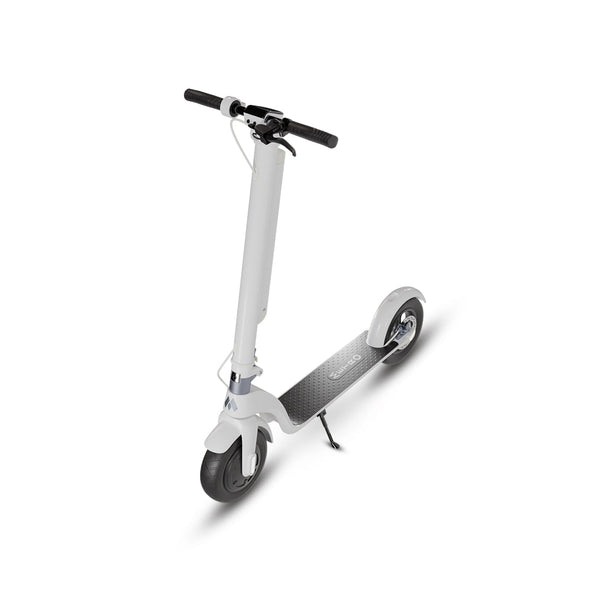
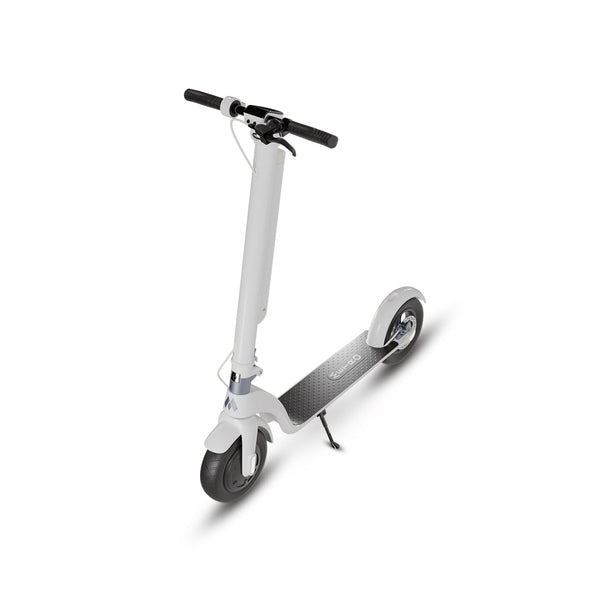
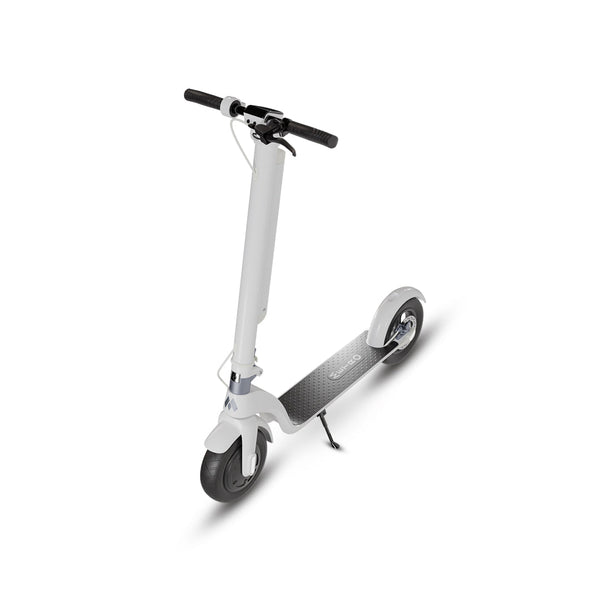
Where do the METRO City and City Pro stand?
Both METRO scooters are certified to UL 2272 for the device and UL 2271 for the battery, tested by SGS, an accredited laboratory, and compliant with New York City Local Law 39 of 2023. Both ship limited to 20 mph, which is the ceiling New York State's Vehicle and Traffic Law § 114-e sets for the device class; New York City's operating cap under VTL § 1282 is 15 mph.
| Model | Price | Weight | Range | Top speed | Certification |
|---|---|---|---|---|---|
| METRO City | $499 | 27 lb | 18 mi | 20 mph | UL 2272 device, UL 2271 battery |
| METRO City Pro | $699 | 29 lb | 25 mi (35 mi with the 12.8Ah upgrade) | 20 mph | UL 2272 device, UL 2271 battery |
Both carry the FireSafe battery with Fire Sleeve containment, the InfiniteSwap swappable battery system, and the METRO+ app with GPS tracking and remote digital locking. The full lineup is at METRO electric scooters, and the New York specifics are collected on NYC-legal UL 2272 certified scooters.
The weight column matters more than it looks in a building context. A device a resident can carry up a stairwell or into an elevator is a device that never needs a common-area storage arrangement, which is the part of a building's rule that is hardest to satisfy.
Questions residents and managing agents actually ask
Can my landlord make me get rid of a scooter I already own?
A landlord can restrict what is kept and charged on the premises through the lease or house rules, and a co-op or condo board can do the same through house rules. Whether a rule can be applied to a device a resident already owns depends on the building's governing documents and on how the rule was adopted, which is a question for the resident's own attorney. Requiring certification going forward is the more common and more defensible approach.
Is UL 2272 the same as "UL listed"?
No. "UL listed" on its own does not say which standard was applied. A charger, a power supply and a scooter can all carry UL marks under entirely different standards. For a stand-up electric scooter the standard to name is UL 2272 for the device, and UL 2271 for the battery.
Does UL 2272 certification mean the battery cannot catch fire?
No. UL 2272 is an electrical-system safety standard, and certification means the system was evaluated against it, not that failure is impossible. Charging practice still matters: FDNY guidance says batteries "should never be charged unattended or left charging overnight," that extension cords are not permitted and chargers must plug directly into an outlet, and that damaged or refurbished batteries must not be stored or charged at all.
My building wants documentation for six scooters in a shared room. Is that different?
Yes, materially. FDNY's approval guidance describes additional protection where six or more devices are charged: a dedicated room with a one-hour fire barrier, sprinkler protection and smoke detection, citing Fire Code § 309.3.3 for indoor installations. Extension cords and power strips are prohibited in approved charging areas. A shared charging room is a construction and approval question, not a paperwork question.
Can a building require certification for a device kept inside an apartment rather than a common area?
FDNY's stated policy option refers to batteries stored or charged in the building, which includes inside a unit. Whether a particular building's governing documents reach that far is a question about those documents. In practice most disputes are about charging rather than storage, because charging is where the fire risk sits.
What if the manufacturer will not answer?
Search UL's Product iQ directory directly. It is UL's own record and does not depend on the manufacturer responding. If a device does not appear and the manufacturer cannot point to a published certification, treat the claim as unsupported.
New York City rules and sources cited in this guide
- FDNY residential guidance on e-micromobility devices and batteries, fdnysmart.org, including the stated policy option that a building may require all batteries stored or charged in the building to be certified to UL standards.
- FDNY E-Micromobility Approval Guide, nyc.gov, on the six-or-more-device threshold, the one-hour fire barrier, sprinkler protection, smoke detection, and Fire Code § 309.3.3.
- UL Solutions, Personal e-Mobility Evaluation, Testing and Certification, for the scope of UL 2272, UL 2271 and UL 2849.
- UL Product iQ, UL Solutions' online certification directory.
- Local Law 39 of 2023, New York City, on the sale, lease and rental of uncertified powered mobility devices and batteries, the display of certification, and penalties of up to $1,000 per violation per model within two years.
- New York State Vehicle and Traffic Law § 114-e (20 mph device definition) and § 1282 (15 mph operating cap and the 16-year minimum age).
- CooperatorNews New York, reporting counsel to co-op and condo boards, and FirstService Residential, on board authority to adopt house rules.
Sources read 15 September 2026. Legal and fire-code guidance changes; check the primary sources before drafting or relying on a building rule.
METRO America is a New York City electric scooter manufacturer. It is not affiliated with the Metropolitan Transportation Authority, the New York City Housing Authority, the Fire Department of the City of New York, UL Solutions or any transit agency. This guide is general information about published rules and standards, not legal advice.