Published November 9, 2026. This is a plain-language account of published New York City enforcement actions and the laws behind them, not legal advice. Every figure below is attributed to the document or report it came from. Check those sources before relying on any of it.
Why will some online sellers not ship an electric scooter to New York City?
Because New York City spent 2026 enforcing a sales law against online retailers, and several large marketplaces responded by blocking New York City orders rather than proving their devices qualify. The law is not new. The enforcement is. Two separate city actions in 2026 turned a rule that had been on the books since September 2023 into a commercial fact a buyer runs into at checkout.
If a cart will not accept a New York City address, or a listing says a device cannot be shipped to your ZIP code, the most likely reason is not stock. It is that the device sits outside the class New York City permits to be sold, or the seller cannot show the certification the city requires on the listing page.
What did New York City actually do in 2026?
Two actions, one aimed at online sellers and one at storefronts.
- August 2026, online retailers. The city issued cease-and-desist orders to 42 online retailers, directing them to stop selling the prohibited devices to customers in the city's 175 ZIP codes. Retailers that keep selling after receiving an order face a civil penalty of up to 2,000 dollars for each illegal sale, and devices found operating on city streets may be impounded.
- August 1 to September 20, 2026, storefronts. The Department of Consumer and Worker Protection inspected 229 retail shops across the five boroughs. It recorded 136 individual violations, issued more than 75 summonses carrying a 1,000 dollar fine each, and closed three stores, which stay closed until outstanding fines are paid. Five more shops were brought into compliance. Across its battery-safety work the department also issued more than 85 cease-and-desist orders and 41 summonses to online sellers.
Sam Levine, the department's commissioner, framed the storefront sweep this way: "Our citywide sweep sends a clear message that businesses cannot put New Yorkers at risk just to make a profit."
The city's stated reason for aiming at sellers rather than only at riders is a casualty figure. The Department of Transportation has said that since 2017, more than half of e-bike and stand-up scooter rider deaths in New York City involved an illegal device.
Which devices is New York City treating as illegal to sell?
For stand-up scooters, the city's published threshold is a device that weighs more than 100 pounds or is capable of travelling faster than 20 miles per hour. For electric bicycles, the threshold is a motor larger than 750 watts or a top speed above 25 miles per hour. A device that fits neither street-legal class, and cannot be registered with the state Department of Motor Vehicles either, falls into the out-of-class group city enforcement has been calling e-motos.
That 20 mile per hour figure is the same number New York State uses to define the device category in Vehicle and Traffic Law section 114-e. It is a limit on what the machine may be capable of, which is a different question from how fast you may ride it. New York City's operating limit is 15 miles per hour, and that gap catches buyers out constantly.
What does the certification law require, and where is it written down?
The sales law is Local Law 39 of 2023, which added a new subchapter to chapter 4 of title 20 of the Administrative Code: section 20-609 for definitions and section 20-610 for the sale, lease and rental duties. Read at the enacted text, it sets three certification duties:
- A powered mobility device, the category a stand-up electric scooter falls into, must be certified by an accredited testing laboratory for compliance with UL standard 2272.
- A storage battery for such a device must be certified for compliance with UL standard 2271.
- A powered bicycle must be certified for compliance with UL standard 2849, which is why a UL 2849 document is the wrong thing to ask a stand-up scooter seller for.
Each of those duties carries a display obligation as well: the certification, or the testing laboratory's logo, wordmark or name, has to appear on the packaging or documentation at the time of sale, or directly on the device or battery. New York City's own announcement of the 2024 amendments put the online version of that duty in one sentence: "online retailers must post certification information on the product page."
The law reaches a wide class of devices. Section 20-609 defines a powered mobility device as an electric scooter under Vehicle and Traffic Law section 114-e, or another personal mobility device powered by a lithium-ion or other storage battery. It excludes powered bicycles, wheelchairs and other mobility devices designed for use by people with disabilities, and anything that can be registered with the state Department of Motor Vehicles.
When did the sales law take effect?
Local Law 39 of 2023 took effect on September 16, 2023. The enacted text sets no calendar date; its final section reads only "This local law takes effect 180 days after it becomes law." The city supplied the resulting date itself, in the October 9, 2024 announcement of the follow-on laws, which states that Local Law 39 of 2023 went into effect on September 16, 2023. A buyer looking at a 2026 listing is therefore looking at a duty that is three years old, not a new one.
A citation trap worth knowing before you quote the penalty
The dollar figure in the originally enacted 2023 text is no longer the current ceiling, and a great deal of writing on this law still quotes it. As enacted, section 20-610 priced a first violation at zero dollars and each subsequent violation for the same offence, issued on a different day within two years, at not more than one thousand dollars. Local Law 50 of 2024 raised that. The city's own October 2024 announcement says the maximum penalty for violating the certification requirements "will increase to as much as $2,000 per device type," and the August 2026 cease-and-desist action was reported against a 2,000 dollar per-sale ceiling.
A second trap sits in the subdivision letters. In the text as enacted in 2023, the UL 2272 duty for powered mobility devices sat in subdivision b and the powered-bicycle duty in subdivision a. The code has been amended twice since. If you are citing a subdivision letter rather than a standard number, read the current Administrative Code rather than the 2023 enactment, because the lettering is not stable and the standard numbers are.
One clause does more work than the penalty amount. The enacted text provides that each failure to comply with respect to any one stock keeping unit is a separate violation. The unit of counting is the model, not the shipment and not the inspection, so a seller listing several non-compliant models is exposed once per model. The current penalty structure, the subdivision split and the scheduled amounts are set out in detail in the buyer's compliance checklist for New York.
Which marketplaces stopped shipping, and is that reporting or law?
It is reporting, and it should be read as reporting. Streetsblog New York City reported on November 5, 2026 that large retailers including Amazon, Temu and Walmart complied with the city's August orders and now block New York City orders, while smaller direct-to-consumer brands continue to ship devices into the city. No statute names a marketplace, and no city document reviewed here lists which sellers complied. If a specific seller's shipping policy matters to your purchase, the seller's own checkout is the authority, not an article.
What the law does say is who the duty falls on. It falls on the seller, and in New York City that includes online sellers. A buyer is not the party penalised for an uncertified device. A buyer is simply the party left holding one.
What can a buyer check in under a minute?
- Does the listing state a maximum speed of no more than 20 miles per hour for a stand-up scooter?
- Does the listing state a weight, and is it under 100 pounds?
- Does the product page show a safety certification, or the logo, wordmark or name of the accredited testing laboratory that issued it?
- If you ask, can the seller produce the certification document for the exact model and the exact battery?
- Does the checkout accept a New York City address at all? A seller that blocks your ZIP code has told you something about its own compliance position.
A listing that shows none of the certification details is a listing that has not met a duty the city attaches a penalty schedule to. That is a reason to ask for the document before paying. It is not, on its own, proof the device is uncertified.
Does any of this change where you may ride?
No. The 2026 enforcement is about selling, and the riding rules are unchanged: a 15 mile per hour operating limit in New York City, bicycle lanes and streets posted at 30 miles per hour or less, no sidewalk riding, a minimum operating age of 16, and a duty to yield to pedestrians. Those are collected in the 2026 rules for riding an electric scooter in NYC, and the speed question specifically in how fast an electric scooter may legally go in NYC.
Building access and storage are a third, separate question, decided by your building rather than by the city's sales law. See keeping an electric scooter in a NYC apartment and bringing one into a NYC office building.
Sources
- New York City Council: Local Law 39 of 2023, the enacted text adding sections 20-609 and 20-610 to the Administrative Code, Council Int. No. 663-A of 2022, passed March 2, 2023 and approved March 20, 2023.
- Office of the Mayor of the City of New York: announcement of new enforcement powers to prevent the sale of dangerous, uncertified batteries and battery-powered micromobility devices, October 9, 2024, which names Local Laws 49 and 50 of 2024, the UL 2849, 2272 and 2271 standards, the 2,000 dollar ceiling and the September 16, 2023 effective date.
- Streetsblog New York City: report on the Department of Consumer and Worker Protection storefront sweep, November 5, 2026, the source for the 229 shops, 136 violations, 75 summonses, three closures, 85 cease-and-desist orders, 41 summonses to online sellers, and the marketplace compliance reporting.
- Insurance Journal: report on the city's cease-and-desist orders to online sellers, August 2026, the source for the 42 retailers, the 175 ZIP codes, the 2,000 dollar per-sale ceiling, and the 100 pound and 20 mile per hour stand-up scooter thresholds.
- New York State Senate: Vehicle and Traffic Law section 114-e, the state definition of an electric scooter.
Metro America
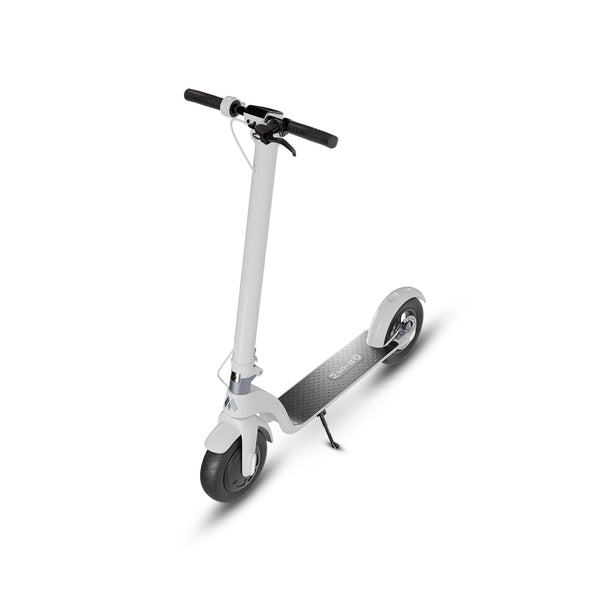
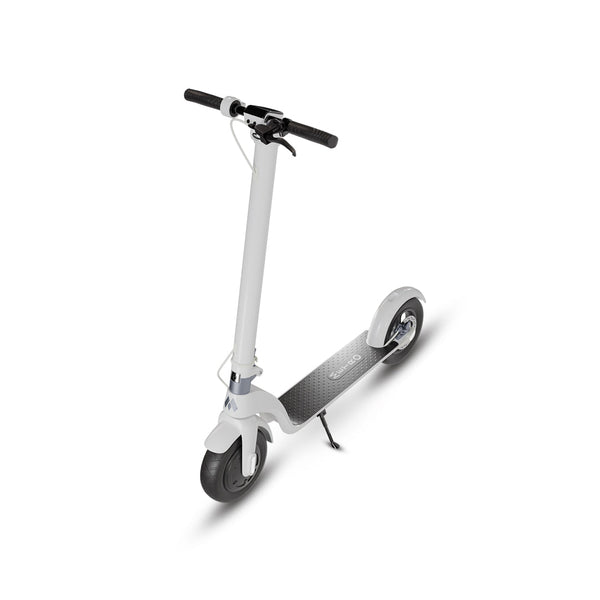
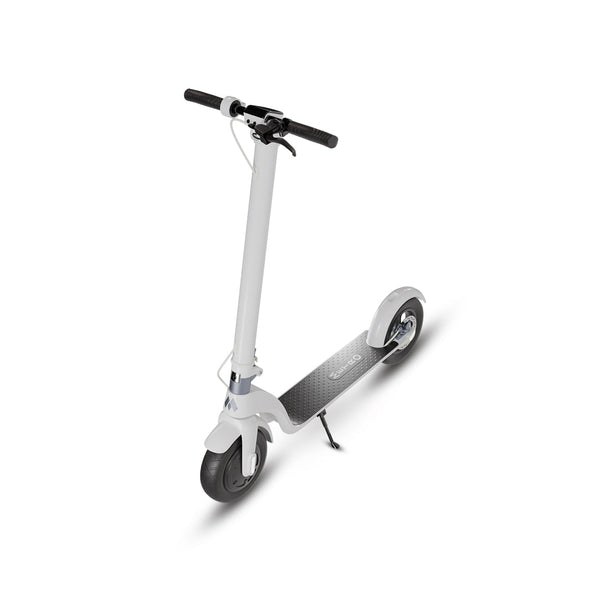
Metro America is an electric scooter manufacturer based in New York City. It is not a transit agency. Metro owns this article and sells the scooters linked below, so read this section as a manufacturer's own listing rather than as a review. The models are the METRO City at 499 dollars and the METRO City Pro at 699 dollars, and both are in the Metro electric scooter lineup.
This article makes no certification claim about any product, Metro America's included. It describes what New York City requires a seller to publish, what the city did in 2026 to enforce it, and where a buyer can look. Whether any particular device meets any particular standard is a question for the document the seller produces, and that is as true of Metro as of anyone else.
Related reading: who Metro America is, and what New York law requires a seller to provide with an electric scooter.
Is there a discount on a New York City legal electric scooter right now?
Yes. Through November 30, 2026, Metro applies 25 percent off the METRO City and 30 percent off the METRO City Pro automatically at checkout, with no code to enter. Both are automatic discounts rather than promotional codes, so a New York City buyer who has just been turned away by a seller that will not ship here does not have to hunt for one.
The details that matter if you are comparing listings this week:
- What is reduced: 25 percent off the METRO City and 30 percent off the METRO City Pro. The listed prices named earlier in this article are the prices of record, and the reduction comes off them at checkout.
- When it ends: 11:59 PM Eastern on November 30, 2026.
- What it does not change: none of the certification, labelling or documentation duties described above. A reduced price device is subject to exactly the same New York rules as a full price one, and the one minute buyer check in the section above is worth running either way.
The post reduction arithmetic, the shipping terms and the return window are written out in Metro's Black Friday pricing record for New York City buyers.
Offer terms read from this store's active discount records on November 23, 2026. This section publishes a price position, not a certification claim.