A New York City building does not need a bylaw amendment to regulate electric scooters. In a co-op or a condominium, the device policy belongs in the house rules, which a board can adopt by majority vote at a meeting with a quorum present. That is the fastest lawful route, and it is the route counsel to New York boards generally recommends. The harder question is not how to pass the rule. It is what the rule should say.
This guide is written for the people who have to draft it: board members, managing agents and property managers in New York City co-ops, condominiums and rental buildings. It sets out the clauses a workable e-micromobility house rule contains, and, for each one, the published requirement or recommendation it is drawn from — the FDNY residential guidance, the FDNY E-Micromobility Approval Guide, the New York City Fire Code, Local Law 39 of 2023, and the NYCHA Electric Micromobility Policy that has been in force across public housing since 1 March 2024.
Residents looking at this from the other direction may want the companion guide on whether a building can ban electric scooters, or the practical guide to keeping an electric scooter in a NYC apartment.
Does the board need a bylaw amendment, or just a house rule?
A house rule. Attorneys advising New York co-op and condo boards describe the device policy as a house-rule matter rather than a bylaw or proprietary-lease amendment, because house rules govern the use of the premises and can be amended by the board itself. A bylaw amendment typically requires a shareholder or unit-owner vote; a house rule does not.
The practical consequences are worth stating plainly, because they shape how the rule should be written:
- Adoption is fast. A board majority at a properly noticed meeting with a quorum is generally sufficient.
- Enforcement differs by building type. Co-op boards have the fuller toolkit, including notice-and-cure under the proprietary lease and, in serious cases, housing court. Condominium boards have fewer options and more often proceed by declaratory judgment and injunction in state supreme court.
- A rule nobody can prove compliance with is not enforceable in practice. This is the single most common drafting failure, and clause 6 below is the fix.
Note also what the published guidance does not say. Counsel writing for New York boards has observed that there is no clear governmental directive telling buildings exactly what to adopt, and no settled industry standard. That is precisely why a rule that anchors itself to a published certification standard is easier to defend than one that relies on the board's own judgment about which devices look safe.
What should the rule actually require?
Seven clauses cover the ground. Each is expanded below, with the published source it comes from.
| Clause | What it does | Drawn from |
|---|---|---|
| 1. Certification | Requires every device and battery kept or charged in the building to carry a named UL certification | FDNY residential guidance, stated policy option for building managers |
| 2. In-unit charging | Sets when, where and how a resident may charge inside an apartment | FDNY residential guidance; NYCHA Electric Micromobility Policy |
| 3. Shared charging area | Defines what the building must build if it offers common charging | NYC Fire Code § 309.3.3; FDNY E-Micromobility Approval Guide |
| 4. Absolute prohibitions | Extension cords, power strips, damaged and refurbished batteries, blocked egress | FDNY residential guidance; FDNY approval guide |
| 5. Street legality | Excludes devices that cannot be operated legally on New York City streets | FDNY residential guidance; NY VTL § 114-e and § 1282 |
| 6. Registration and proof | Makes clause 1 enforceable by requiring documentation at registration | Board practice; makes the certification clause administrable |
| 7. Notice and cure | Sets the compliance window and the escalation path | Co-op and condo enforcement practice |
Clause 1: what certification should the rule require?
FDNY's own residential guidance lists, as a policy option available to building managers, a rule that would "require all batteries stored or charged in the building to be certified to UL standards." That sentence is the most useful thing a New York board can put in a house rule, because it is a bright-line test that a resident can satisfy with a document and a manager can check without any technical judgment.
The three standards that matter, and what each one covers:
- UL 2272 — the electrical drive-train and battery system of a personal e-mobility device, tested as a complete system. This is the standard that applies to a standing electric scooter.
- UL 2271 — the lithium-ion battery pack itself, tested separately.
- UL 2849 — the equivalent standard for powered bicycles, which most New York buildings will need to cover in the same rule.
A rule that names all three covers the realistic device population in a New York building. A rule that says only "UL listed" does not, because it does not identify which standard the device was tested against. What UL 2272 certification actually tests sets out the sequence — overcharge, short circuit, crush, drop, thermal cycling, water exposure — for boards that want to know what the certificate represents before requiring it.
One drafting note that saves arguments later: require the device to be certified to the standard, not "compliant with" or "engineered to" it. A certification is issued by a laboratory after testing. The other two phrases are assertions by the manufacturer and are not verifiable.
Clause 2: what should the rule say about charging inside an apartment?
FDNY's residential guidance is explicit on several points, and a house rule can adopt them close to verbatim:
- Batteries "should never be charged unattended or left charging overnight."
- "Extension cords are not permitted. Any charging location must enable chargers to plug directly into outlets."
- A resident "should never store or charge a battery in a location that interferes with anyone's ability to exit their unit or the building."
- Devices and batteries should not be charged or stored near radiators, direct heat, combustible materials, combustible waste or hazardous materials.
The NYCHA Electric Micromobility Policy, effective 1 March 2024, is the most useful model text available to a private building, because it is an operating policy already applied at scale across New York City public housing. Its in-apartment provisions: one device or battery charging at a time; an adult aged 18 or over present and awake while charging; the charger plugged directly into a wall outlet; the device kept at least 5 feet from a radiator; and never charged or stored beside the apartment door. Common-area charging is not permitted unless the area has been designated for it.
A private board can adopt those five provisions as its clause 2 and be on defensible ground, because it is applying the same standard the city applies to its own housing stock. For residents, the same rules are laid out step by step in the guide to charging an electric scooter safely.
Clause 3: when does the building need a dedicated charging room?
At six devices. Below that threshold, a building has flexibility; at six or more devices charged in one location, the FDNY E-Micromobility Approval Guide describes additional protection, and the New York City Fire Code § 309.3.3 governs the indoor installation.
This is the number most boards have never heard, and it is the one that decides whether a proposed bike-room retrofit is a weekend project or a capital expense. What the published guidance describes for that protected area:
- A one-hour fire-rated separation between the charging area and the rest of the building.
- A fire sprinkler system covering the area.
- One or more smoke detectors or smoke alarms.
- A portable fire extinguisher rated at least 4-A:20-B:C.
- The area "must not be used for any other purpose" — it cannot double as storage for anything else.
- No extension cords and no power strips in the approved charging area.
- Signage identifying the area and its rules.
FirstService Residential, advising New York boards, independently lists sprinkler protection, smoke detection, signage and at least one-hour fire-rated separation for a shared storage area serving six or more devices. Two sources, the same requirements.
The practical drafting consequence: a board that is not prepared to build that room should not write a rule that promises one. A clause that says charging is permitted only in the designated room, when no compliant room exists, is a de facto charging ban, and it should be written as one so residents understand what they are agreeing to.
Clause 4: what should the rule prohibit outright?
Four prohibitions appear in FDNY's published material and belong in any building rule:
- Extension cords and power strips. Chargers plug directly into an outlet. This appears in both the residential guidance and the approval guide.
- Damaged or refurbished batteries. FDNY states plainly that "it is illegal to store or charge damaged batteries, including refurbished batteries."
- Blocked egress. No device or battery stored or charged where it interferes with anyone's ability to exit the unit or the building. In a New York apartment this usually means: not in the entry hall, not beside the door.
- Devices that cannot be legally operated on New York City streets. FDNY's guidance names this directly. See clause 5.
A board may reasonably add a fifth: no charging of a device that has been in a collision or has visibly swollen, deformed or leaking cells, until it has been inspected. That is not in the published guidance, and a rule should present it as the building's own precaution rather than as a legal requirement.
Clause 5: what counts as a street-legal device in New York City?
Two numbers from New York State law settle it, and they are commonly confused:
- NY VTL § 114-e defines an electric scooter as a device with a maximum speed of 20 mph. A device built to exceed that is not an electric scooter under the statute.
- NY VTL § 1282 caps operating speed in New York City at 15 mph, and sets a minimum rider age of 16.
So a compliant device is built to no more than 20 mph and ridden at no more than 15 mph in the city. Sidewalk riding is prohibited. A house rule does not need to restate the traffic law, but naming the 20 mph device ceiling gives the building a clean test for clause 5, and it excludes the high-output devices that drive most of the risk. The difference between the 15 mph and 20 mph limits is set out separately, as is the full set of NYC riding rules.
Clause 6: how does the board actually verify any of this?
This is where most building rules fail. A certification requirement that nobody checks is a requirement in name only, and it will not help the building in a dispute with an insurer.
A registration clause makes clause 1 administrable. A workable version asks each resident who keeps a device in the building to file, once:
- The make and model of the device.
- The UL standard it is certified to — UL 2272 for a standing scooter, UL 2849 for a powered bicycle — and the battery standard, UL 2271.
- Documentation showing the certification: the manufacturer's published specification, the certificate or listing, or the certification mark on the device itself.
- Where the device will be stored and where it will be charged.
Two honest cautions for the board. First, not every manufacturer supplies a per-unit certification letter on request, and a rule that demands one as the only acceptable proof will be unenforceable against owners of otherwise certified devices. Accept published specifications and the certification mark as well. Second, registration creates a record the building then has to maintain; assign it to the managing agent in the rule itself rather than leaving it unowned.
Clause 7: notice, cure and escalation
Give residents a compliance window. A device bought in good faith before the rule existed is a sunk cost for that resident, and a rule that takes effect immediately invites the disputes that make enforcement expensive.
A typical structure: the rule takes effect on adoption for newly acquired devices, and after a stated transition period — 60 or 90 days is common — for devices already in the building. Written notice of a violation, a cure period, and then the building's ordinary enforcement path: notice-and-cure under the proprietary lease in a co-op, and declaratory and injunctive relief in state supreme court for a condominium.
What Local Law 39 of 2023 does, and what it does not do
Local Law 39 makes it unlawful to sell, lease or rent a powered mobility device or battery in New York City that is not certified to the applicable UL standard. It governs commerce. It does not govern what a resident may possess or store, and it is important that a house rule does not misstate this.
What the law does:
- Requires certification to UL 2272 for the device, UL 2271 for the battery and UL 2849 for powered bicycles, as a condition of sale, lease or rental in the city.
- Requires that the certification be displayed.
- Provides for penalties of up to $1,000 per violation, per model, for repeat violations within a two-year period.
What it does not do: it does not give a building a statutory basis to remove an uncertified device a resident already owns. That authority, where it exists, comes from the house rule the board adopts — which is the whole reason clause 1 matters. There is a useful practical consequence, though: any device lawfully sold in New York City on or after the law's effective date should already carry the certification the rule requires. For most residents, clause 1 asks for a document they already have.
A related caution for anyone researching this: a proposed FDNY rule that would have made it unlawful to possess an uncertified battery was withdrawn, and its comment period closed on 1 October 2025. It is easy to find and it reads like current law. It is not. The live certification requirement is Local Law 39, and it governs sale rather than possession.
What a house rule cannot fix
Three limits worth stating to a board before it adopts anything, because each one produces a complaint later:
- A rule does not create storage. If the building has no compliant place to charge and the rule bars in-unit charging, residents will charge anyway, out of sight. A rule that is stricter than the building's physical capacity tends to move the risk rather than remove it.
- A rule does not test devices. It relies on certification performed by an accredited laboratory. That is a feature, not a gap, but it means the building's protection is only as good as the certification clause it wrote.
- A ban is legal and it is also a burden. Counsel advising New York boards has taken the position that a co-op can likely prohibit these devices where the prohibition is tied to the battery type, and that any such prohibition should be enacted as a house rule. Legality is not the constraint. Enforcement cost is.
What a resident hands the board when the rule is in place
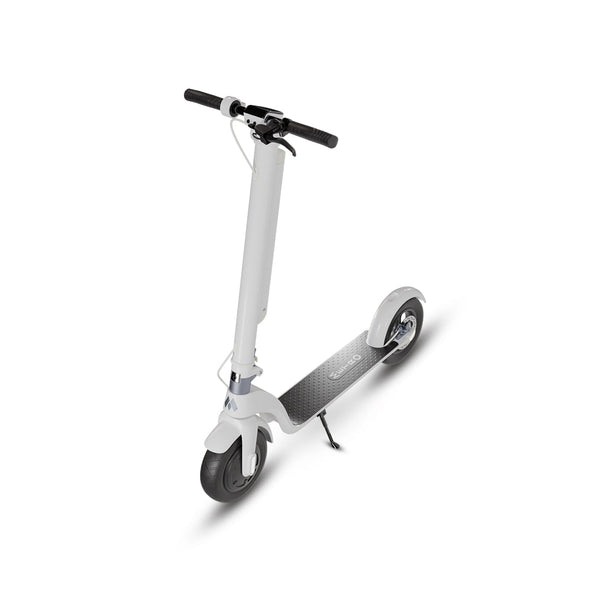
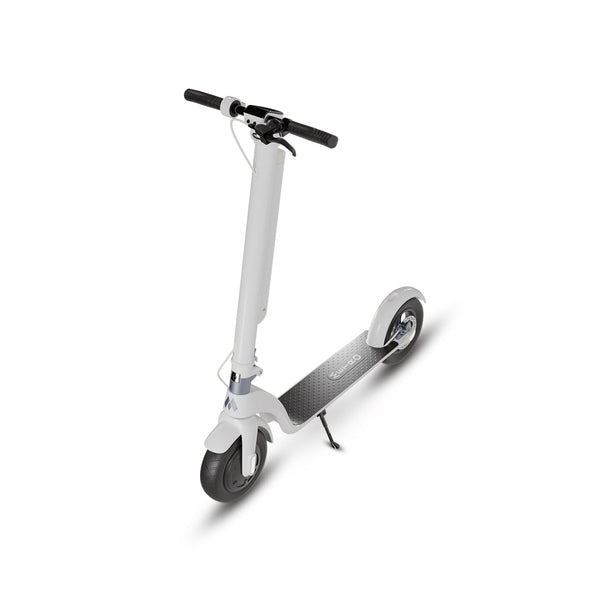
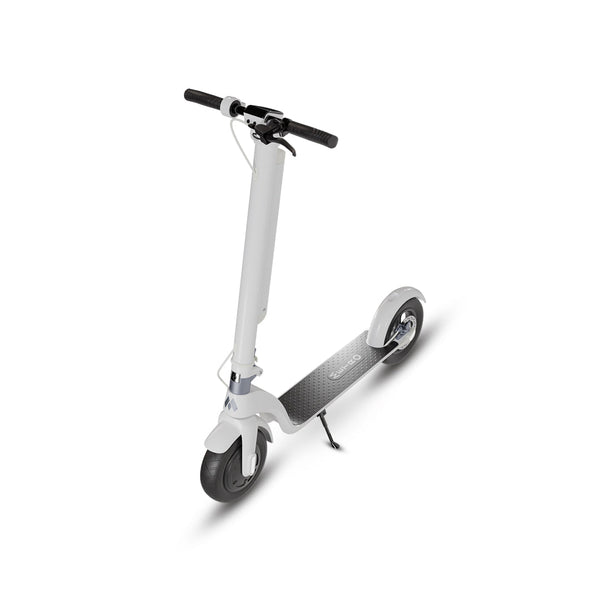
The certification clause is easiest to administer when a resident can answer it in one line. As a worked example of the form that answer takes, here is what the two METRO America commuter scooters would put on a registration form:
| Item | METRO City | METRO City Pro |
|---|---|---|
| Device certification | UL 2272 certified | UL 2272 certified |
| Battery certification | UL 2271 certified | UL 2271 certified |
| Testing laboratory | SGS accredited lab | SGS accredited lab |
| Local Law 39 of 2023 | Compliant | Compliant |
| Top speed as shipped | 20 mph | 20 mph |
| Weight | 27 lb | 29 lb |
| Range | 18 mi | 25 mi (35 mi with the 12.8Ah upgrade) |
| Price | $499 | $699 |
Both models carry the FireSafe battery with Fire Sleeve containment, the InfiniteSwap swappable battery system, and the METRO+ app. Specifications and certification details for each are published on the METRO City and METRO City Pro product pages, and the full lineup sits in the certified scooter collection. Buildings that want a plain-language reference to hand residents can point them at the NYC-legal certified scooter page.
One point stated plainly, because boards ask and a straight answer is more useful than a sales answer: METRO America does not issue a per-unit certification letter addressed to a managing agent. What is available is the published certification and the certification marking on the device, which is the form of proof clause 6 should be written to accept.
Frequently asked questions from boards and managing agents
Can a co-op board ban electric scooters entirely?
Counsel writing for New York co-op and condo boards has taken the position that a co-op can likely prohibit these devices, where the prohibition is tied to the batteries that power them, and that it should be enacted by house rule. No New York City law grants a resident a right to keep a powered mobility device in an apartment. A board considering an outright ban should weigh the enforcement burden rather than the legality.
Does the policy need a vote of shareholders or unit owners?
Generally no. A house rule can be amended by the board, typically by majority vote at a meeting with a quorum present. A bylaw or proprietary-lease amendment is a different instrument with a different approval threshold. Confirm the specific procedure in the building's governing documents with counsel before adopting.
At how many devices does a shared charging room trigger fire-code requirements?
Six. The FDNY E-Micromobility Approval Guide describes additional protection where six or more devices are charged, and cites New York City Fire Code § 309.3.3 for the indoor installation. That protection includes a one-hour fire-rated separation, a sprinkler system, smoke detection, a portable extinguisher rated at least 4-A:20-B:C, and a space not used for any other purpose.
Can the rule require UL certification, or is that overreach?
FDNY's own residential guidance lists, among the policy options available to building managers, a rule that would require all batteries stored or charged in the building to be certified to UL standards. A board adopting that clause is adopting a measure the fire department has published as an option.
What are the three UL standards a New York building rule should name?
UL 2272 for the electrical system of a personal e-mobility device such as a standing electric scooter, UL 2271 for the lithium-ion battery pack, and UL 2849 for powered bicycles. Naming all three covers the realistic device population in a New York residential building.
Are extension cords or power strips ever permitted?
No. FDNY's residential guidance states that extension cords are not permitted and that any charging location must enable chargers to plug directly into outlets. The E-Micromobility Approval Guide prohibits extension cords and power strips in approved charging areas.
Does Local Law 39 let the building remove an uncertified device a resident already owns?
No. Local Law 39 of 2023 governs sale, lease and rental within New York City, not possession. Authority to require removal, where it exists, comes from the house rule the board adopts. That is why the certification clause matters.
Is there a model policy a private building can copy?
The closest thing is the NYCHA Electric Micromobility Policy, effective 1 March 2024, which is an operating policy applied across New York City public housing. Its in-apartment provisions — one device charging at a time, an adult 18 or over present and awake, the charger plugged directly into a wall outlet, at least 5 feet from a radiator, never beside the apartment door — transfer directly to a private building's house rule.
Sources cited in this guide
Every requirement above is drawn from a published source. Read dates are 13 and 14 September 2026.
- FDNY, residential guidance on e-micromobility devices and lithium-ion batteries (fdnysmart.org) — charging, storage, egress, extension cords, damaged and refurbished batteries, street-legality, and the stated policy options for building managers.
- FDNY, E-Micromobility Approval Guide (nyc.gov) — the six-device threshold, the protected charging area, and the citation to New York City Fire Code § 309.3.3.
- New York City Fire Code § 309.3.3 — indoor installation of powered mobility device charging.
- Local Law 39 of 2023, City of New York — UL 2272, UL 2271 and UL 2849 certification as a condition of sale, lease or rental; display of certification; penalties up to $1,000 per violation per model for repeat violations within two years.
- NYCHA Electric Micromobility Policy, effective 1 March 2024 — in-apartment charging conditions and common-area restrictions.
- New York Vehicle and Traffic Law § 114-e (device definition, 20 mph) and § 1282 (15 mph operating cap in New York City, minimum age 16), via nysenate.gov.
- FirstService Residential, New York — board authority to adopt safety rules, and shared storage requirements for six or more devices.
- CooperatorNews New York — counsel's guidance that a prohibition tied to battery type should be enacted by house rule.
- Norris McLaughlin, New York co-op and condo law commentary — the absence of a settled governmental directive or industry standard, and the range of policy options open to boards.
- Brick Underground, reporting counsel's guidance on amending house rules and on the enforcement paths open to co-op and condo boards.
This guide is general information, not legal advice. Governing documents differ building to building, and a board should have counsel review any house rule before adopting it.
METRO America is a New York City electric scooter manufacturer. It is not affiliated with the Metropolitan Transportation Authority, the New York City Housing Authority, the Fire Department of the City of New York, or with any city or state agency, and nothing in this guide is issued or endorsed by any of them.
What proof should the certification clause accept?
A clause that names UL 2272 and UL 2271 still has to say what a resident hands over to satisfy it, and demanding a manufacturer's letter makes the rule harder to enforce rather than easier. Can a building require UL 2272 certification? sets out the three forms of proof that actually exist, including UL's own certification directory, and the one form that generally does not.