Quick answer: For an NYC trip, “lightweight” should describe the whole non-riding task—not a marketing label. Measure the distance the scooter must be carried, every staircase and landing, the folded envelope at gates and doors, the user's grip and balance, crowded-space handling, transit rules, elevator alternatives, and storage at both ends.
Reviewed September 20, 2026. MTA policies and service conditions can change. This is a neutral trip-planning framework, not a product test or claim that any Metro scooter has a particular weight, folding time, transit approval, or NYC-specific design advantage.
Draw the trip as riding and non-riding segments
Start at the actual door, not at the first bike lane. Separate the trip into:
- movement inside the origin building;
- the first legal place to begin riding;
- permitted street or bike-lane segments;
- sidewalk, plaza, station, platform, or indoor segments where the scooter must be walked or carried while powered off;
- stairs, elevators, gates, turnstiles, transfers, and vehicles;
- movement inside the destination; and
- the final storage location.
NYC DOT's current guidance says e-scooters may be ridden in bike lanes and on streets with speed limits no greater than 30 mph, not on sidewalks, and may not be operated above 15 mph. Any sidewalk segment therefore needs a walking or carrying plan.
Measure the burden, not just the scooter
For every non-riding segment, record:
- distance carried and distance rolled while powered off;
- number of stairs, turns, and landings;
- narrowest door, gate, corridor, or storage opening;
- elevator availability and a fallback for an outage or long queue;
- whether another bag or object must be carried;
- crowding and the ability to keep the folded device close without obstructing others;
- the surface and lighting in the carry area; and
- the user's ability to complete the task without losing a safe grip or view of the path.
Test the intended route and person. A short showroom lift cannot establish that a device works for several flights, a transfer, or a crowded station.
Measure the actual carried configuration
Use the scooter manual to define how it must be folded, latched, lifted, and reopened. Weigh and measure the configuration the person will actually carry, including attached accessories that remain on the device. Record the maximum folded length, width, and height at the furthest points.
Check the designated handhold, balance, moving parts, protrusions, and cables. A lower weight does not prove a compact fold, predictable balance, secure latch, comfortable grip, or fit through a particular gate.
For a detailed repeatable method, use the lightweight scooter carry-test worksheet.
Know the MTA's powered-off and folding conditions
The MTA's current personal electric vehicle policy prohibits operating, riding, sitting on, standing on, or placing a PEV under power anywhere in an MTA facility or vehicle. That includes stations, mezzanines, platforms, walkways, stairs, elevators, escalators, turnstiles, trains, subways, and buses.
If what the MTA calls a “Permissible PEV” can fold, the policy says it must be folded or compacted, kept latched, and carried as designed. It may not impede people or block doors, exits, aisles, stairs, elevators, escalators, seating, fare equipment, operational equipment, or emergency equipment. It must remain near the owner and secure against movement or falling. Charging is prohibited throughout MTA facilities and vehicles.
The MTA page does not provide a model-by-model approval list. This article does not establish that any particular scooter is a Permissible PEV.
Plan the subway path before the platform
The MTA's bike and micromobility guide advises subway customers with bikes or scooters to use the station service gate rather than lifting the device over a turnstile, carry the device between themselves and the stairway wall, and keep a folded device under a seat or otherwise out of the way without blocking seats or aisles. It also recommends avoiding rush hour when possible and standing near an end of the subway car.
For each planned station and transfer, note:
- the entrance and service-gate path;
- stair flights and landings in both directions;
- whether an elevator route exists and whether it reaches the needed platform;
- the fallback if an elevator or entrance is unavailable;
- where the folded device can be held without using a seat or blocking movement; and
- whether the trip remains practical if the first vehicle is too crowded to board without obstruction.
Check the MTA's current planned service changes before departure. A station layout or service pattern can change after a route is saved.
Local and Select buses are different from express buses
The MTA policy says only foldable Permissible PEVs may be carried inside buses other than express buses, subject to the folding, carrying, and obstruction conditions. The same policy prohibits every form of PEV inside an express bus, including a foldable one.
Do not plan a trip around a bus unless the rider has confirmed the service type and can keep the folded device secure and out of the way. Folding does not create an exception for an express bus. Read the full MTA bus rule guide before relying on a bus connection.
Check building elevators, common areas, and storage
A residential building, workplace, school, venue, or property manager may have written rules for entry, elevators, common areas, storage, and charging. Ask for the current policy rather than assuming that a folding scooter is treated as luggage or that elevator access is guaranteed.
Measure the destination storage space with the same folded envelope used for the transit plan. Confirm that the device can be stored without blocking an exit or required path. Keep charging separate from portability: permission to bring or store a device does not necessarily include permission to charge it.
NYC carry-route worksheet
- Origin and destination: ____________________
- Exact scooter and carried configuration: ____________________
- Folded maximum length × width × height: ____________________
- Total carried distance: ____________________
- Total powered-off rolling distance: ____________________
- Stairs, turns, and landings: ____________________
- Narrowest gate, door, or corridor: ____________________
- Origin elevator and fallback: ____________________
- Station elevator and fallback: ____________________
- Destination elevator and fallback: ____________________
- Subway, local/SBS bus, express bus, or no transit: ____________________
- MTA policy checked on: ____________________
- Building entry and storage permission: ____________________
- Other item carried at the same time: ____________________
- Crowding or obstruction fallback: ____________________
- Part of the route that remains unresolved: ____________________
What this comparison can and cannot answer
The worksheet can show whether a specific person can move a specific folded scooter through a specific route under observed conditions. It does not prove that the same scooter is “lightweight” for everyone, universally easy to carry, built for NYC, accepted by every building, or approved for every MTA trip.
Weight and portability also do not establish braking, stability, durability, electrical safety, range, comfort, service quality, or overall value. Compare those separately using appropriate evidence.
Official sources
- NYC DOT: Electric Bicycles & More
- MTA: Guidelines for Bringing Personal Electric Vehicles
- MTA: Bikes on MTA Subways, Buses, and Railroads
- MTA: Planned Service Changes
Which parts of the carry task can Metro answer from its own listings?
Metro publishes a weight for each scooter and almost nothing else on the carry checklist above. That is one line of the task, not the task.
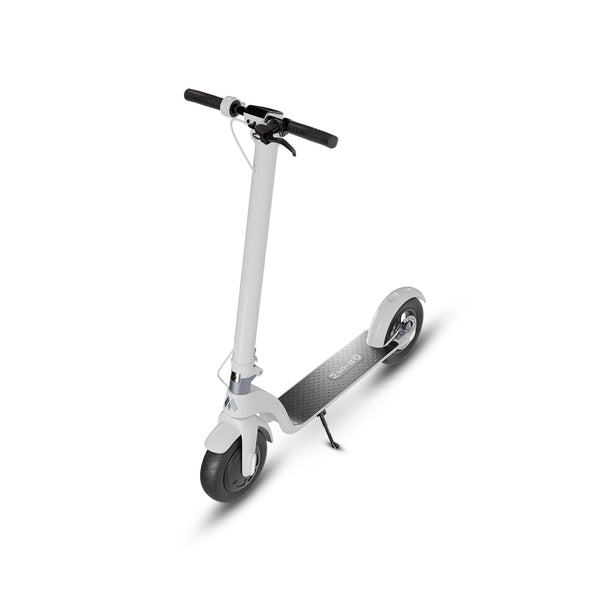
- METRO City, $499 - Metro lists the product weight at 27 lb, with a 10 inch wheel and a folding frame.
- METRO City Pro, $699 - Metro lists the product weight at 29 lb, same wheel size, same folding format, with a removable battery.
Both figures clear the MTA limits this guide cites: the MTA caps a personal electric vehicle at 100 lb and a wheel diameter at 27 inches, and requires the device to be folded or compacted and carried. Neither weight is close to the ceiling.
What Metro does not publish is the rest of the checklist. There is no folded envelope in inches, no fold time, no handlebar width, no stated balance point and no carry handle description on either product page. A buyer cannot answer the stair-flight step, the storage-footprint step or the snag-point step from Metro listings. Those have to be measured on the scooter itself, which is what this guide asks you to do.
Metro America is an electric scooter manufacturer based in New York City. It is not a transit agency. Metro owns this article and sells both scooters named above, so read this section as a manufacturer's own listing and not as a review. Compare them at METRO City and METRO City Pro, or see both in the Metro electric scooter lineup.