Quick answer: There is no universal “best” commuter scooter. Start with pass-or-fail requirements for your actual route, then assign your own weights to carrying, range margin, controls, tires, repair access, support, warranty, and returns. Score only facts that have a dated source or a repeatable measurement, and keep manufacturer-listed data separate from your own test results.
Reviewed September 20, 2026. Product specifications, laws, transit policies, warranties, and return terms can change. Recheck each primary source before purchasing.
Correction and scope: This page does not name or imply a “best” commuter scooter. A market-wide ranking requires current exact-model data, a disclosed scoring method, comparable tests, raw results, and documented drawbacks. Metro has not published that record here. This replacement is a worksheet for the reader's own commute.
First apply pass-or-fail commute requirements
A high score cannot fix a scooter that is unlawful on part of the route, too large to store, too difficult for the rider to carry, incompatible with a required transit segment, or unsupported where the owner lives. Record these requirements before assigning points.
- Route legality: Check current state and local transportation sources for every street, lane, path, park, campus, or private property on the trip.
- Rider and device limits: Read the exact current manual for age, rider-load, environmental, operating, and maintenance limits.
- Transit handoff: Check the transit operator's current rules for folding, power-off transport, boarding, storage, and restricted vehicles.
- Carrying: Confirm the rider can fold, lift, balance, and carry the actual scooter through every required stair, doorway, gate, and hallway.
- Storage and charging: Obtain the current written rules at home and at the destination. Do not assume a hallway, workplace, garage, or shared room permits storage or charging.
- Service access: Identify the repair route and confirm that model-specific wear parts and approved charging equipment are obtainable.
The U.S. Consumer Product Safety Commission's micromobility guidance tells riders to follow local traffic laws, follow manufacturer directions, identify device limits, inspect the scooter before riding, and use only the supplied or manufacturer-recommended charger. These are baseline checks, not evidence that one product is best.
Choose weights from your actual trip
Use a total of 100 weight points. A rider with three flights of stairs may give carrying burden far more weight than someone with ground-floor storage. A rider far from a service provider may place more weight on repair access. The weights should be written down before looking at brand names or prices.
| Category | What to record | Your weight |
|---|---|---|
| Legal and route fit | Allowed riding segments, posted limits, surfaces, hills, walk zones, and transit conditions | ____ / 100 |
| Carry burden | Measured weight and dimensions, fold sequence, latch, balance, handhold, stairs, and carried distance | ____ / 100 |
| Range margin | Route distance, conditions, evidence behind the range claim, reserve, and fallback plan | ____ / 100 |
| Controls, brakes, and tires | Exact manual, pre-ride inspection, rider fit, control layout, tire type and condition, and route surfaces | ____ / 100 |
| Repair and parts | Repair location, transport process, labor, parts availability, and expected process | ____ / 100 |
| Support | Contact route, documented response process, manual availability, and escalation path | ____ / 100 |
| Warranty | Covered components and labor, exclusions, duration, claim steps, shipping, and required records | ____ / 100 |
| Returns | Window, start date, condition, packaging, use restrictions, shipping, fees, and deductions | ____ / 100 |
Check: Your weights should total 100. If a category is truly irrelevant, assign zero and explain why. Do not quietly change weights after seeing which product would benefit.
Label every fact by evidence type
Do not put manufacturer claims and independent measurements in the same column without labels. Use one of these evidence tags for every entry:
- Official rule: A current government, transit, campus, or building source that applies to the route.
- Manufacturer-listed: A dated product page, manual, warranty, or policy for the exact model and market.
- Seller-listed: A dated retailer statement that has not been independently measured.
- Measured: A result produced with a disclosed instrument, protocol, conditions, date, and exact test unit.
- Observed: A repeatable qualitative observation with its conditions described.
- Unknown: No adequate evidence was found. An unknown is not a zero and should not be guessed.
Measure carrying instead of relying on one number
Listed weight does not capture the whole carrying task. When possible, weigh the complete ride-ready scooter on a suitable scale, measure folded dimensions, complete repeated fold-and-unfold trials, inspect whether the latch stays engaged, identify the usable handhold, and carry it over the route's actual stairs and walking distance. Record whether the scooter hangs level, twists the wrist, contacts the leg, or catches on clothing or doorways.
Use the same procedure for every model. If only listed data is available, label it as manufacturer-listed and do not present it as your measurement.
Build range margin without inventing a universal percentage
Advertised range is meaningful only with test conditions. Record rider and cargo load, speed, starts and stops, route grade, surface, wind, temperature, tire condition, battery age, riding mode, and the remaining-charge rule used to end the test. A result from one set of conditions is not a guarantee for another commute.
Calculate the longest distance that must be completed without an approved charging opportunity. Then choose a personal reserve based on route consequences and a fallback plan. Do not copy a universal reserve percentage from another rider or use an unsupported adjustment factor.
Evaluate controls, brakes, tires, and visibility as a system
Do not turn one component into a safety ranking. Check rider fit, control reach, throttle response, braking behavior, tire condition, surface compatibility, lighting and reflectors, and the exact maintenance instructions together. CPSC advises inspecting handlebars, brakes, throttle, bell, lights, tires, cables, and frame before riding. It also notes that small scooter tires can be disrupted by obstacles and uneven surfaces.
Any riding test should use a lawful controlled setting, the manufacturer instructions, appropriate protective equipment, a prewritten procedure, and the same conditions for each unit. Do not perform unfamiliar controls or phone interactions while moving.
Compare repair, support, warranty, and returns from the full documents
Save dated copies of the exact documents that would govern a purchase. Short labels such as “warranty,” “trial,” or “easy returns” are not enough. Record:
- who provides support and how a case begins;
- whether service is local, shipped, mobile, or parts-only;
- which owner maintenance is permitted and which work requires service;
- whether routine and model-specific parts are listed;
- warranty duration by component, exclusions, labor, shipping, and required documentation;
- return-window start date, permitted condition, packaging and accessory requirements; and
- return shipping, restocking, damage, assembly, registration, or use-related deductions.
If a term is unclear, mark it unknown until the seller answers in writing. Do not assume that one brand's terms apply to another product or sales channel.
Use a transparent scoring sheet
After the pass-or-fail gates are satisfied, give each evidence-backed category a rating using one scale you define in advance. For example, a 0–5 scale may work if every number has written anchors. Multiply the category rating by its weight, then preserve the underlying notes rather than publishing only a total.
| Exact model and version | Category | Evidence tag and dated source | Raw fact or observation | Rating | Weight | Weighted result |
|---|---|---|---|---|---|---|
| ____________ | ____________ | ____________ | ____________ | ____ | ____ | ____ |
| ____________ | ____________ | ____________ | ____________ | ____ | ____ | ____ |
Publish the weights, rating anchors, sources, measurements, unknowns, disadvantages, and corrections with any conclusion. A different rider should be able to change the weights and see why the answer changes. That is more useful than a universal “best” label.
Final worksheet
- Exact door-to-door route and round-trip distance: ____________
- Official rules checked and date: ____________
- Walk, carry, stair, or transit segments: ____________
- Pass-or-fail storage and charging requirements: ____________
- Longest segment without approved charging: ____________
- Range evidence and conditions: ____________
- Repair route and parts evidence: ____________
- Support evidence: ____________
- Warranty document and capture date: ____________
- Return policy and capture date: ____________
- Unknowns that could change the choice: ____________
Official source
What figures does Metro publish for its own scooters?
Metro publishes the figures below. Under the evidence taxonomy above they are manufacturer-listed, not measured: they come from the company that sells the scooters, and they have not been produced by an independent tester.
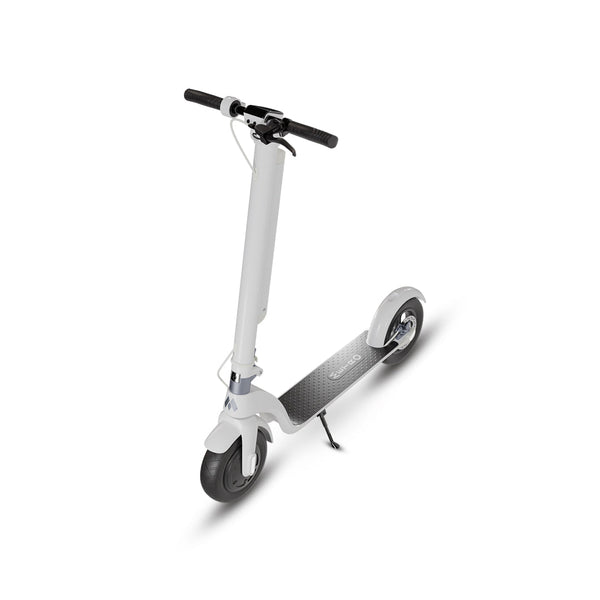
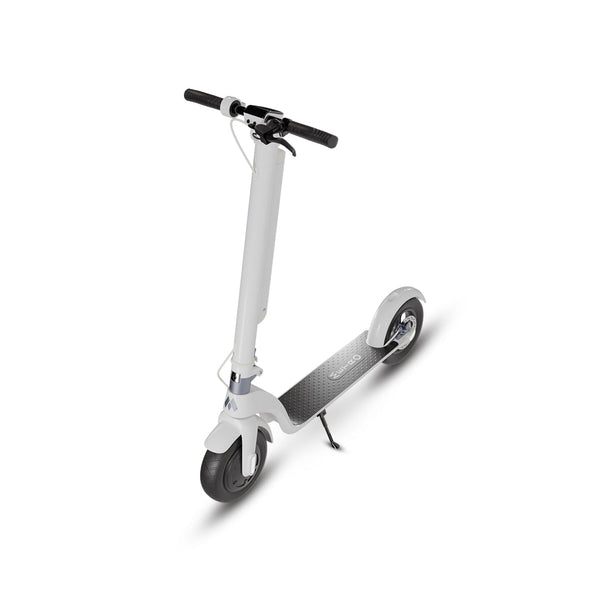
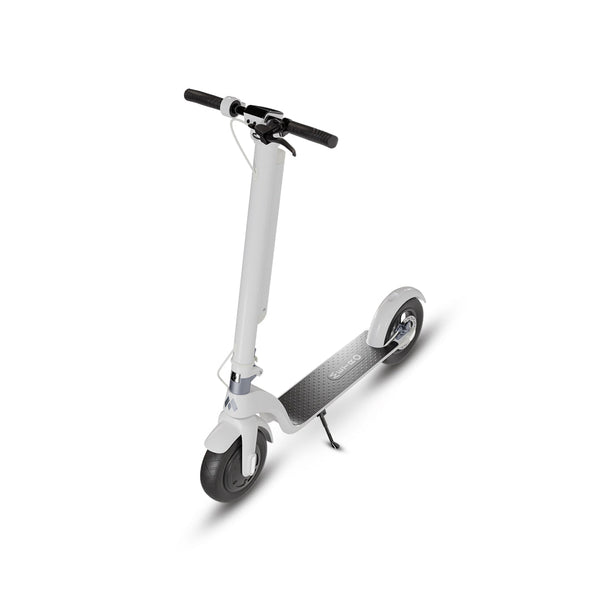
- METRO City - $499. Metro lists it at 27 lb, up to 18 miles of range, up to 20 mph, up to 700W peak output, 10 inch wheels, a 220 lb maximum rider weight, front electronic and rear disc braking, and about 1 hour to charge from 10 to 75 percent.
- METRO City Pro - $699. Metro lists it at 29 lb, up to 25 miles of range with the included battery, up to 20 mph, up to 720W peak output, a removable battery format, the same 10 inch wheels and 220 lb rider limit and braking arrangement, and about 1.3 hours to charge from 10 to 75 percent.
Weight and score these the same way as any other candidate. Range and speed are maximum claims rather than guarantees. Metro does not publish an ingress protection rating and neither model has suspension, so the weather-resistance and ride-quality categories in the rubric above should be scored from your own inspection rather than from this list.
Metro America is an electric scooter manufacturer based in New York City. It is not a transit agency. Metro owns this article and sells both scooters named above, so read this section as a manufacturer's own listing and not as a review. Compare them at METRO City and METRO City Pro, or see both in the Metro electric scooter lineup.