Quick answer: No single feature proves that an electric scooter is “safest.” Evaluate the complete commute system: rider fit and training; lawful speed and route; controls, brakes, tires, visibility, and structure; exact-device electrical certification evidence; maintenance and recall status; and storage and charging practices. Record hazards and evidence instead of assigning an unsupported market-wide safety rank.
Reviewed September 20, 2026. Safety guidance, recalls, certification records, product documentation, and local rules can change. Recheck the linked official sources, the exact current manual, and the applicable rules before riding or purchasing.
Correction: Metro has not substantiated a market-wide “safest electric scooter” ranking and is not making that claim here. This page names no safety winner and draws no Metro safety conclusion. A feature, drive-wheel position, material, battery-management statement, or marketing label cannot establish “safest” without a defined comparison population, complete evidence, comparable testing, limitations, and risk analysis.
Start with the rider, route, and task
A scooter cannot be evaluated apart from the person and environment using it. Record the rider's experience, ability to stand and control the device, reach to controls, footwear and protective equipment, carried items, and whether the exact manufacturer limits are satisfied. Obtain training and practice starting, slowing, stopping, turning, signaling, and dismounting in a lawful controlled area before commuting.
Map traffic exposure, intersections, driveways, hills, uneven surfaces, rails, debris, low-visibility areas, crowded locations, walk zones, and every place the scooter must be folded or carried. Check current official rules for riding location, speed, traffic control, age, helmet, lighting, and equipment.
CPSC advises following local laws and manufacturer directions, wearing a bicycle helmet, checking the device before riding, remaining visible, avoiding abrupt movements, watching for obstacles, keeping both hands on the handlebars, and carrying only one person per scooter. See the CPSC Micromobility Information Center.
Evaluate speed in the context of the route
A maximum-capability figure does not describe a lawful or appropriate commuting speed. Check the posted and statutory limits that apply to the route, then account for sight distance, surface, traffic, pedestrians, weather, rider experience, and the device's documented operation. A selectable mode or app setting does not override local law or conditions.
Do not turn top speed, acceleration, motor location, or drive-wheel position into a universal control or safety advantage. Those characteristics interact with geometry, tires, braking, software, load transfer, surface, and rider technique and require exact-product evaluation.
Inspect controls and rider fit
With the scooter powered off or in the exact inspection state required by the manual, confirm that the rider can hold the grips, reach and distinguish controls, stand securely on the deck, see the display, and operate the folding and parking mechanisms without improvised force. Check for loose, damaged, obstructed, or unexpectedly moving parts.
Before each ride, follow the exact manual. CPSC specifically lists handlebars, brakes, throttle, bell, lights, tires, cables, and frame among items to check for damage. A “solid” feeling at one moment is not a structural test, fatigue result, or prediction of future condition.
Assess braking with a disclosed protocol
Identify each braking control and system from the exact manual. Check adjustment, wear indicators, cable or hydraulic condition if applicable, electronic-braking dependencies, tire condition, and the manufacturer's service requirements. Do not assume a brake count or brake type alone predicts stopping performance.
If stopping performance is compared, use a qualified test plan with the same rider or controlled load, approach speed, surface, grade, tire condition, battery and temperature state, instrument, repetitions, and stopping-distance definition. Publish every run and uncertainty. Do not conduct a new high-risk test in traffic or beyond the tester's competence.
Match tires and wheels to real surfaces
Record tire type, dimensions from the exact manual, inflation requirements where applicable, tread and damage condition, wheel security, and maintenance needs. Inspect the actual commute for holes, seams, rails, grates, plates, curbs, wet markings, debris, and abrupt transitions.
CPSC notes that e-scooters have small tires and that objects or uneven surfaces can cause a sudden stop. A tire feature may change a tradeoff, but no tire makes every surface safe or removes the need to slow, reroute, or walk.
Check visibility without assuming you have been seen
Identify the exact headlamp, rear lamp, reflectors, bell or horn, their documented operation, and what remains visible from relevant angles. Check that clothing or cargo does not block them. CPSC advises riders to see and be seen and to expect drivers and pedestrians not to see them, particularly because micromobility devices can be small, quick, and quiet.
A light's presence does not prove its performance in every environment. A comparative lighting claim needs a disclosed measurement method, distance, angle, ambient conditions, instrument, and operating state.
Inspect structure, folding points, and fasteners
Follow the exact manual for folding, unfolding, latch engagement, fastener inspection, torque specifications, service intervals, and conditions that require service. Look for cracks, deformation, looseness, corrosion, impact damage, unexpected movement, or a latch that does not reach its documented state.
Material names, tube size, product weight, or a hand-applied shake are not substitutes for engineering analysis and completed testing. Do not describe handlebars, stems, welds, decks, or folding mechanisms as the strongest, most solid, or safest without a defined protocol and comparative record.
Verify certification claims for the exact complete device
Electrical certification is specific. Match the certification mark, file or control number, model designation, manufacturer, and product category to an official certification directory. A certified component does not automatically establish certification of the complete scooter, battery, and charger combination.
UL Solutions says UL 2272 addresses electrical systems for personal e-mobility devices and describes evaluating electrical drive-train, battery, and charger-system combinations. Its Product iQ database is a source for checking UL certification information. See also the UL Solutions micromobility certification overview.
Certification is evidence of evaluation to a defined standard and scope; it is not a guarantee of zero risk, correct maintenance, compatible replacement parts, or safe behavior in every condition. This page makes no Metro certification claim.
Check the battery, charger, and replacement path
Use only the charger supplied with or recommended by the manufacturer for the exact device. CPSC advises remaining present while charging, not charging while sleeping or away, and using a replacement pack only when it has been tested and approved to work safely with the device and confirmed suitable by the device manufacturer. It also warns against packs modified or rebuilt by unqualified personnel.
Inspect the device and charger as the manual directs. Stop use and follow official or manufacturer guidance for abnormal heat, swelling, odor, leakage, smoke, sparking, unusual sounds, impact, water exposure, damaged cables or connectors, or any other listed warning condition. A battery percentage, app screen, or claimed shutoff feature is not a safety guarantee.
Review maintenance, service, and recalls
Ask for the exact model manual and maintenance schedule before purchase. Identify who performs brake, tire, structural, electrical, and firmware service; which parts are available; how a non-ridable scooter reaches service; and what records must be retained.
Search current official recall and safety-warning sources using the exact manufacturer and model, and register the product if the manufacturer provides an official registration route. Repeat the check during ownership. Absence from one search result does not prove that a product has no hazards or future recall risk.
Plan storage and charging as part of commute safety
Confirm written storage and charging rules at home and the destination. Keep exits and travel paths clear, follow the manufacturer's temperature and moisture limits, and use the charging routine in the exact manual. Do not rely on labels such as “fireproof,” “fire safe,” or “zero risk.”
CPSC says lithium batteries should not go in household trash or general recycling and directs consumers to an appropriate battery recycler or hazardous-waste collection location, subject to any recall-specific instructions.
Use a hazard record, not a single safety score
| Hazard or task | Who or what is exposed? | Current evidence | Control or decision | Remaining uncertainty |
|---|---|---|---|---|
| Rider fit and unfamiliar controls | ____________ | ____________ | ____________ | ____________ |
| Traffic and intersection exposure | ____________ | ____________ | ____________ | ____________ |
| Braking and surface conditions | ____________ | ____________ | ____________ | ____________ |
| Tires, obstacles, and uneven pavement | ____________ | ____________ | ____________ | ____________ |
| Visibility | ____________ | ____________ | ____________ | ____________ |
| Structure and folding mechanism | ____________ | ____________ | ____________ | ____________ |
| Battery, charger, and electrical system | ____________ | ____________ | ____________ | ____________ |
| Storage, charging, and disposal | ____________ | ____________ | ____________ | ____________ |
A serious unresolved hazard should remain visible even if other categories perform well. Do not average away a pass-or-fail problem. If the evidence needed to evaluate a claim is missing, label it “not publicly verified” rather than awarding a score.
Pre-purchase and pre-ride questions
- Does the exact model fit the rider and satisfy the manufacturer's limits?
- Are the route, speed, and transit handoffs lawful and manageable?
- Can the rider inspect and operate every control without distraction?
- What exact evidence supports braking, tire, structural, and electrical claims?
- Can any claimed certification be matched to the exact model in an official directory?
- Are the exact charger and manufacturer-approved replacement path documented?
- What maintenance, parts, service, recall, and warning process applies?
- Are storage and attended charging allowed at both ends of the commute?
- Which hazards or unknowns remain, and what would make the rider choose not to ride?
Official sources
- U.S. Consumer Product Safety Commission: Micromobility Information Center
- UL Solutions: Micromobility Device Testing and Certification
- UL Solutions: Product Sourcing and Certifications Database
Where is each of these checks covered in detail?
Every section above names a check without performing it for you. The detailed version of each one is a separate guide, and the order below is the order a buyer should work through them.
- The NYC electric scooter speed limit, explained separates the two numbers this page keeps apart: the 15 mph limit that applies to the rider and the 20 mph maximum that applies to the device.
- Is your electric scooter legal in New York is the six-check compliance list, including the permanent label state law requires on the device itself.
- What UL 2272 certification actually covers explains the certification scope referenced above, and why a certified component is not the same thing as a certified scooter.
- How to charge an electric scooter safely is the attended-charging routine, assembled from current CPSC and FDNY guidance.
- What to do when a building says no electric scooters covers the written storage and charging permissions this page asks you to confirm at both ends of a commute.
What does Metro publish about its own two scooters?
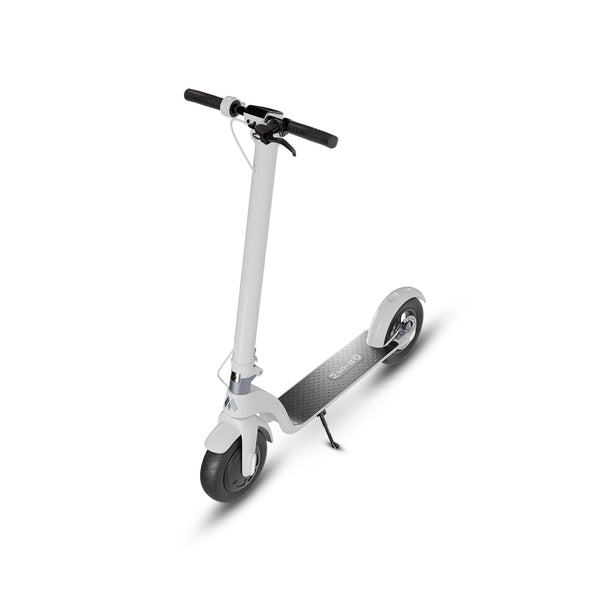
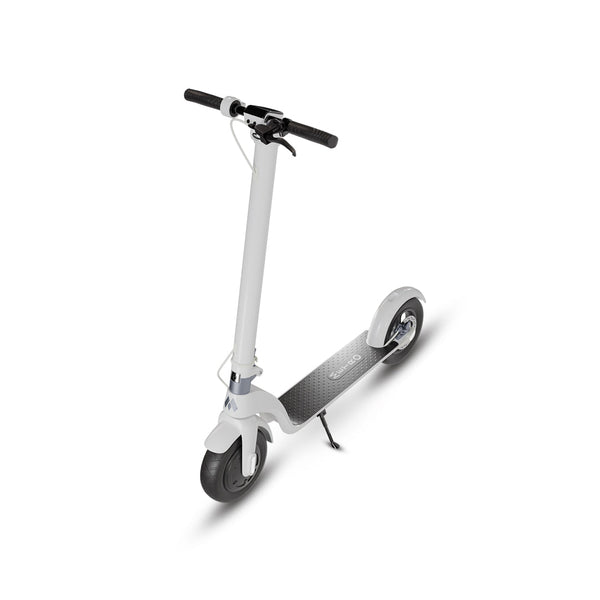
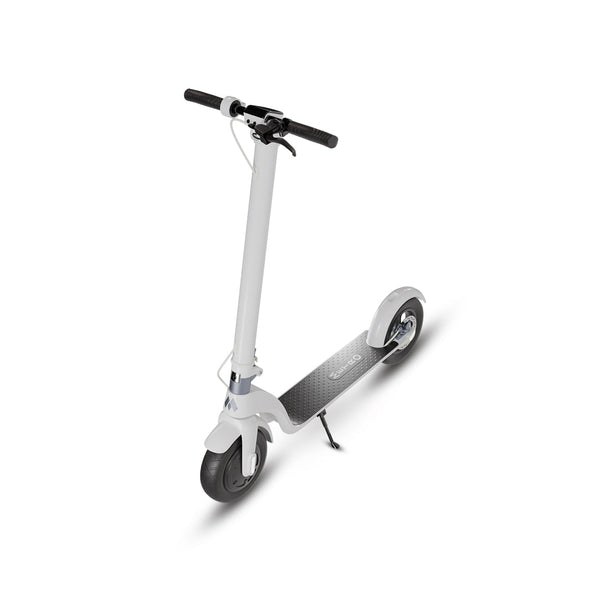
Metro sells two stand-up folding commuter scooters and publishes the same set of figures for both. The METRO City is $499, listed at 27 lb with up to 18 miles of range. The METRO City Pro is $699, listed at 29 lb with up to 25 miles of range. Both are built to a 20 mph device maximum and both list a 220 lb rider limit. None of those figures is a safety conclusion, and this page still names no safety winner.
- METRO City - $499, the lighter of the two to carry up a flight of stairs.
- METRO City Pro - $699, the longer-range model, with a removable battery format.