Quick answer: A practical NYC mixed-mode scooter commute must work door to door. Separate lawful riding from every non-riding segment, then plan folding, carrying, station access, crowding, subway placement, local or Select Bus Service conditions, the express-bus prohibition, destination storage, and a fallback route.
Reviewed September 20, 2026. NYC rules, MTA policies, station conditions, and service patterns can change. Recheck the linked official pages before each trip. This guide does not establish that any particular scooter is a “Permissible PEV” under MTA policy.
Correction: The prior version told readers to stop wasting time on subways and claimed Metro had passed real-world NYC traffic, stair, and rain tests. Metro does not have a documented test record supporting those statements. This replacement does not promise time savings, attack public transit, or recommend a product.
Draw the trip as separate segments
Write each transition, not only the origin and destination:
- building exit and first carry;
- lawful street or bike-lane riding;
- station entrance, stairs or elevator, and fare gate;
- platform wait and boarding;
- placement during the subway or bus trip;
- transfer between lines or modes;
- final riding or walking segment;
- destination entry and storage; and
- the return trip under different crowding, weather, or service conditions.
For each segment, record whether the scooter must be powered off, folded, latched, carried, walked, held, or stored. A route can be short on a map yet impractical if the rider cannot complete the non-riding work without blocking others.
Check the street portion first
NYC DOT says e-scooters may be ridden in bike lanes and on streets with speed limits no greater than 30 mph, not on sidewalks, and may not be operated above 15 mph. The page also advises yielding to pedestrians, watching for turning vehicles, and wearing a helmet.
Use the current NYC Bike Map as a starting point, then confirm the actual route, construction, closures, surface, intersections, and any location-specific rule. An app route is not a legal determination and may not reflect a temporary condition.
Understand the MTA's baseline conditions
The MTA personal electric vehicle policy allows what it calls a “Permissible PEV” in public areas and on conveyances under conditions. It prohibits operating, riding, sitting or standing on, or placing a PEV under power anywhere in an MTA facility or vehicle. It also prohibits charging throughout the system.
If a Permissible PEV can fold, the policy requires it to remain compacted and latched and to be carried as designed. The device must stay near its owner, be secure against movement or falling, and not impede passengers, employees, people using ADA mobility devices, doors, exits, aisles, stairs, elevators, escalators, seats, fare equipment, operational equipment, or emergency equipment. It may not be locked to MTA property or left unattended.
Plan the subway path before departure
The MTA's bike and micromobility guide advises subway customers with a bike or scooter to:
- avoid rush hour when possible;
- pay the fare and use the station service gate, asking an agent for help if needed;
- not lift the device over a turnstile;
- carry it between the rider and the stairway wall;
- try the first or last set of subway-car doors and stay near an end of the car; and
- keep a folded device under a seat or otherwise out of the way without blocking seats or aisles.
Before leaving, check the MTA planned service changes for the lines and stations involved. Note every staircase, elevator dependency, narrow landing, transfer corridor, and service gate. Plan what to do if an elevator is unavailable or a train is too crowded to board without obstruction.
Local and SBS buses are not express buses
MTA policy says only foldable Permissible PEVs may be carried inside buses other than express buses, subject to the folding, carrying, and obstruction conditions. The MTA bike and micromobility guide describes this practical category as local and SBS buses.
Every form of PEV is prohibited inside an MTA express bus, including a foldable one. Folding does not create an exception. Do not plan a bus segment until the service type is confirmed and the rider can keep the device secure and out of the way. Read the focused electric-scooter MTA bus guide before relying on a connection.
Perform a safe carry check before the commute
Use the exact manufacturer's folding instructions and inspect the latch before lifting. In a clear, private, level location, determine whether the rider can:
- fold and latch the device without pinching fingers or forcing a mechanism;
- lift it from the intended handhold without grabbing a cable or control;
- turn, stop, and set it down under control;
- carry it for the longest expected non-riding distance;
- manage landings and stairs while preserving a safe hand and body position; and
- handle a bag, rain gear, or other item without losing control.
A listed product weight alone does not answer these questions. Balance, folded dimensions, handhold location, rider strength, stair geometry, and what else is being carried all matter.
Confirm destination entry, storage, and charging
Ask the workplace, school, residential building, venue, or property manager for the current entry, elevator, common-area, storage, and charging policy. Do not infer permission from the absence of a sign. Identify a location that does not obstruct egress or create a trip hazard.
If charging is necessary, use only a location where it is allowed and follow the exact manufacturer and official safety guidance. CPSC advises using only the supplied or manufacturer-recommended charger, remaining present while charging, and never charging while sleeping or away. Charging is prohibited in all MTA facilities and vehicles.
Build two fallback routes
Create one fallback for a transit problem and another for a scooter problem. Examples include a different station with a manageable entrance, walking the final segment, arranging approved destination storage, or ending the trip without riding. A bus fallback must still respect the local/SBS versus express distinction.
Do not assume that the scooter can be charged in transit, boarded onto a crowded vehicle, left at an MTA location, or taken inside every destination.
Door-to-door planning worksheet
- Lawful riding segments and current rule check: ____________________
- Carry distance and number of stair flights: ____________________
- Origin, transfer, and destination station access: ____________________
- Service gate plan: ____________________
- Subway crowding fallback: ____________________
- Bus service type: local / SBS / express / none
- Device folding and latch requirement: ____________________
- Destination entry and storage permission: ____________________
- Charging needed and permitted: yes / no / not applicable
- Transit disruption fallback: ____________________
- Scooter problem fallback: ____________________
- Return-trip differences: ____________________
Official sources
- NYC DOT: Electric Bicycles & More
- NYC DOT: NYC Bike Map
- MTA: Guidelines for Bringing Personal Electric Vehicles
- MTA: Bikes and Micromobility on Subways, Buses, and Railroads
- MTA: Planned Service Changes
- CPSC: Micromobility Information Center
Which segments of that chain do Metro figures actually cover?
Metro publishes figures bearing on three segments of the door-to-door chain above - the ride, the carry and the recharge - and none bearing on the fare gate or the storage segment.
- The ride - Metro lists both scooters at up to 20 mph. That is the device class New York State defines in VTL section 114-e; the operating limit on a New York City street is 15 mph under VTL section 1282, and it is set by law rather than by the scooter. Listed range is up to 18 miles on the City and up to 25 miles on the City Pro with the included battery.
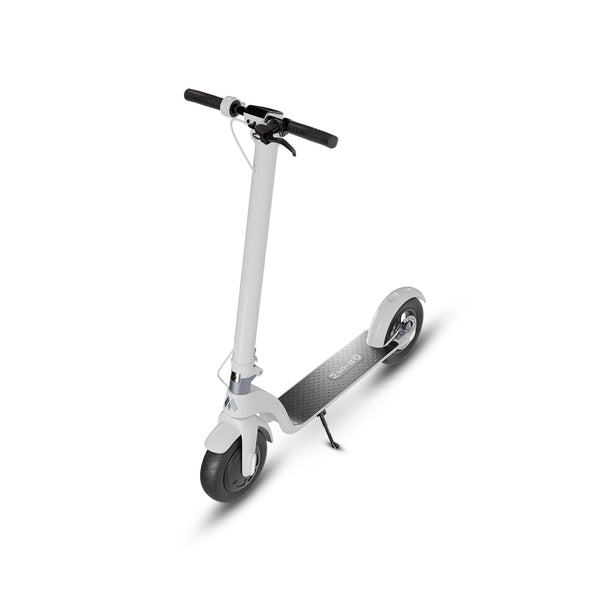
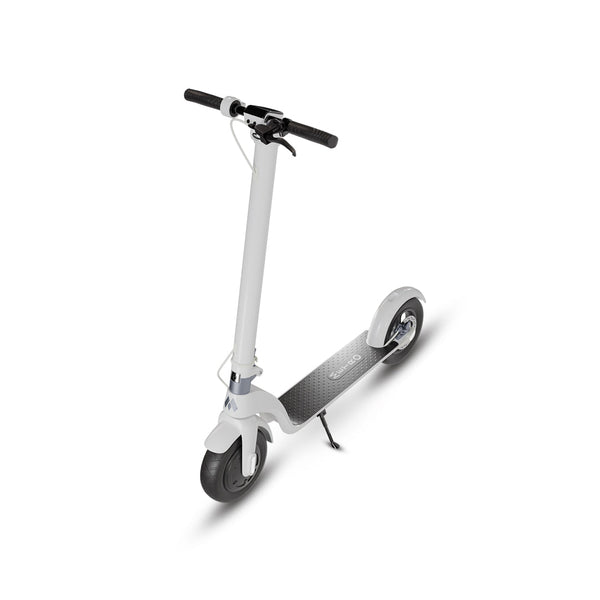
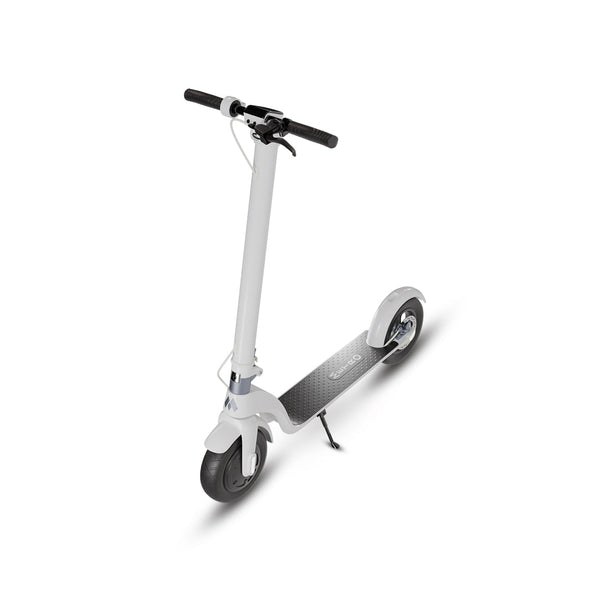
- The carry - Metro lists 27 lb for the City at $499 and 29 lb for the City Pro at $699, both folding, both on 10 inch wheels.
- The recharge - Metro lists about one hour from 10% to 75% on the City and about 1.3 hours on the City Pro, whose battery is listed as removable.
Nothing Metro publishes answers the two segments this guide treats as the hardest. There is no stated folded width for a fare-gate or turnstile decision, and no guidance at all on where the scooter goes once you arrive. Both of those are building and employer questions, and they need a fallback planned before the first ride, not after it.
Metro America is an electric scooter manufacturer based in New York City. It is not a transit agency. Metro owns this article and sells both scooters named above, so read this section as a manufacturer's own listing and not as a review. Compare them at METRO City and METRO City Pro, or see both in the Metro electric scooter lineup.
Which statutes set the two speed numbers this page uses, and where can a rider read them?
Two different sections of New York's Vehicle and Traffic Law, and they answer two different questions. Section 114-e defines the device class a stand-up electric scooter belongs to. Section 1282 governs what a rider may actually do on a New York City street. The closing section above cites both by number without linking either, which is the gap this section closes.
- VTL section 114-e, which describes the device - the state's definition of the vehicle class, and therefore the section that decides how a given scooter is treated in law in the first place. Read it at nysenate.gov/legislation/laws/VAT/114-E.
- VTL section 1282, which governs the rider - the operating rules, including the street speed limit that binds a rider regardless of what the scooter is built to reach. Read it at nysenate.gov/legislation/laws/VAT/1282.
The distinction matters for commute planning in a way a single number hides. A device-class figure describes equipment. An operating limit describes conduct, and conduct is what a rider is held to. Where the two differ, both are correct at the same time, because they answer different questions, and planning a trip from the device figure rather than the operating figure is how a rider ends up travelling faster than the street allows.
Anyone building a door-to-door plan from the segments above should read the operating section first, because it governs the street portion of the trip, and then check whether the city, town or village on the route sets additional rules of its own.