If you are bringing an electric scooter to a New York City college this year, the honest answer is that most campuses will not let you keep it in your room. This guide quotes what three NYC institutions actually publish, names the one written exception any of them offers, and explains the thing no scooter brand says out loud: a safety certification will not change the answer, because these policies do not ask for one.
Are electric scooters allowed on New York City college campuses?
At the three NYC campus policies that are publicly readable, no - electric scooters are prohibited either inside the residence halls or from campus altogether. New York University prohibits them in the residence halls and confiscates them. Pace University prohibits them from campus entirely. St. John's University permits them outdoors only, and prohibits storing or charging them inside any campus building unless the Fire Safety Director grants a case-by-case approval. All three policy texts were read at their own web addresses on November 7, 2026, and all three are quoted below so you can check them yourself.
1. Separate the two questions your school is actually answering
Campus policies split into two different prohibitions, and confusing them is how students end up with a confiscated scooter. The first is a riding prohibition: whether you may operate the device on campus walkways and plazas. The second is an indoor prohibition: whether the device and its battery may come inside a building, be stored in a room, or be charged there. A school can permit the first and prohibit the second, which is the most common shape, and it is the shape that decides whether you can own a scooter while living on campus at all.
Read your own school's handbook for both answers before you buy. The general version of this question, across campuses outside New York, is covered in what campus housing actually requires of an electric scooter in a dorm.
2. New York University: prohibited in the residence halls, and confiscated
NYU's Residential Life handbook puts scooters on a list of items that are prohibited in the residence halls and confiscated. The handbook introduces the list with the sentence "The following items are prohibited in the residence halls and will be confiscated:" and the relevant entry reads "Self-propelled vehicles including skateboards, hoverboards, scooters, electric bikes and similar devices", with the handbook defining self-propelled as a vehicle capable of being powered by its own motor.
The handbook states one exception to that entry: "Devices used for mobility by a resident or guest with a disability are permitted." No effective date or revision date is printed on the page, so treat the text as current only as of the date it is read, and ask Residential Life if the answer matters to a purchase.
3. Pace University: prohibited from campus entirely
Pace University's Electric Mobility Devices Policy Statement prohibits the devices from campus, not merely from the residence halls. The policy states that "the University has prohibited these Electric Mobility Devices from campus." It adds that "Should any of these devices be found on campus, they will be confiscated by appropriate University staff." and that "Such violations will be referred through the student conduct process."
Pace gives its reasoning in the same statement, saying that "the batteries in Electric Mobility Devices, including hoverboards, electric scooters, and bikes are dangerous" and that this is "creating a significant safety and fire risk." The policy frames the prohibition as temporary in principle, lasting "until such time as the safety standards of these devices are improved" - but it names no standard, sets no test, and describes no route by which a particular device could qualify. Of the three policies in this guide, Pace's is the one a scooter owner cannot work around.
4. St. John's University: outdoors only, with one written exception
St. John's publishes the most specific of the three, and it is the only one of the three that describes a way to get a device indoors. University Policy 1037, "Motorized, E-Mobility, and Manual Devices and Equipment on University Campuses", carries an effective date of 11/22/22 and is owned by the Department of Public Safety. It states that "University policy prohibits the use and/or storage of motorized standing scooters, hoverboards, electric bicycles," and "segways, and similar devices inside all campus buildings", and separately that "It is prohibited to operate or transport these devices inside of campus buildings."
On batteries the policy is blunt: "Charging of large lithium cell batteries is also prohibited inside all University properties." On where the device lives, it states that "Devices must remain outdoors at all times and should be parked and secured at any of the bicycle racks" that are "located on campus", and that the devices "are not permitted on sidewalks, and they must not be left in a location that obstructs" building entrances, exits or pedestrian traffic. Operation is specifically prohibited on the D'Angelo Center Plaza.
The exception is the sentence worth writing down. Policy 1037 states that "Approval for storage/ charging devices inside University property may be granted on a case-by-case basis" and names who grants it: "by the Fire Safety Director in the Department of Public Safety." That is an office, a person and a process, which makes it the only askable door of the three.
St. John's residence-hall rules say the same thing a second time, independently, which is why this guide treats the St. John's position as the best-evidenced of the three. The Health and Safety Regulations for the Queens residential campus state at item 09 that "E-mobility devices must be parked and charged outside of all University buildings." and that "The charging of lithium ion batteries that support e-mobility devices is strictly prohibited."
5. Why does a safety certification not get an electric scooter into a dorm?
Because none of these three campus policies asks for one. This guide read all three published texts in full and found no reference in any of them to UL 2272, to UL 2271, to UL 2849, to the word "certified", to any named certifying laboratory, or to any named safety standard. Pace comes closest, and only in the abstract, with its phrase "until such time as the safety standards of these devices are improved" - which names no standard a device could be measured against. St. John's residence rules say only that "All items drawing on electrical current must meet the federal, state, and University safety regulations", naming no certification and no laboratory.
That matters because the New York City rules a reader may already know work the opposite way. The city's sale-side rules turn on certification, and a landlord or co-op board asking a resident for proof of certification is asking a question that has a documented answer - the subject of what a NYC landlord or board can actually ask for. A university is not operating that rulebook. It is writing house rules for a building it owns, and these three have chosen to exclude the device category rather than to qualify devices within it. So the certification argument that works with a building manager does not transfer to campus housing, and a reader should not expect it to.
6. What do you do when your school's handbook is not public?
Ask Residential Life in writing, and keep the reply. Not every NYC handbook is readable without a student login. Fordham University's residential life handbook and its student-handbook entry on battery-powered transportation devices both returned a redirect to the university's login gateway when they were requested on November 7, 2026, so this guide does not quote Fordham and makes no claim about what its policy says. That is a limitation of this guide, not a statement about Fordham.
Where the text is not public, the policy still binds you, so the written reply from the office is the thing worth having. Ask for it before you buy rather than after, and ask the two questions separately, in the shape set out in section 1.
7. Where does the scooter go if your campus says no?
Off campus, and that is a real answer rather than a brush-off. A student commuting in from an apartment, a sublet or a family home is not governed by any of the policies above, and that is the student an electric scooter actually suits in New York. If that is you, the city-side rules are the ones that matter: what is legal to ride and where is set out in the 2026 New York City rules for electric scooters, the building-side question in whether you can keep an electric scooter in a NYC apartment, and the practical storage problem in where a folded scooter actually goes in a small apartment.
Two further cases are worth checking before you commit. If your plan involves carrying the scooter onto a train for part of the trip, the transit rules are separate again and are set out in the MTA's personal electric vehicle policy. And if your school follows the St. John's shape - outdoors only - then charging becomes the binding constraint rather than storage, because you cannot charge a device you are not allowed to bring inside. How to charge an electric scooter safely covers what a safe charging arrangement looks like, and it is worth reading before you ask the Fire Safety Director anything.
Print-ready questions to send Residential Life
Send these as written, in one message, before you buy. A verbal answer from a resident assistant is not a policy.
- Scope. Does the prohibition apply to the residence halls only, or to all university property including outdoor areas?
- Definition. Which device categories does the policy name, and is a stand-up electric scooter inside or outside that list?
- Storage. May the device be stored in a room, in a common area, in a basement or bike room, or nowhere indoors at all?
- Charging. Is charging treated separately from storage, and is it prohibited even where storage is permitted?
- Outdoor racks. If the device must stay outdoors, which racks may it be secured to, and is it covered by any campus theft policy there?
- Exceptions. Is there a case-by-case approval process, and which named office decides it?
- Accessibility. Is there an exception for a device used for mobility by a person with a disability, and who administers it?
- Sanction. What happens on a first violation - confiscation, a conduct referral, a fine, or some combination?
- Currency. What is the effective date of the version you are quoting to me, and where is it published?
Policy sources
These are university-published policy pages, not government sources. Each was requested and read on November 7, 2026, and each returned its page normally on that date. A policy page can change without notice, so re-read the one that applies to you rather than relying on this guide.
- New York University, Residential Life handbook, judicial information. Published at nyu.edu, with no effective date printed on the page.
- Pace University, Electric Mobility Devices Policy Statement, in the student handbook. Published at pace.edu, with no effective date printed on the page.
- St. John's University, Policy 1037, Motorized, E-Mobility, and Manual Devices and Equipment on University Campuses, effective 11/22/22, responsible office Public Safety. Published at stjohns.edu, section Operating/Administrative.
- St. John's University, Health and Safety Regulations, Queens residential campus residence life handbook, item 09. Published at stjohns.edu, with no effective date printed on the page.
Evidence status and corrections
Stated plainly, so you can weigh it. Three institutions are quoted here and three are quoted from their own published pages. St. John's is the best evidenced of the three, because two separate St. John's pages state the same outdoor-only rule independently. NYU and Pace each rest on a single page read once, on the date given above.
What this guide does not establish: it makes no claim about Fordham University, Columbia University, any CUNY college, or any school not named above, because no policy text for those schools was read. It does not claim that the three policies quoted are representative of New York City campuses generally - three is three. Neither NYU's nor Pace's page prints an effective date, so neither can be dated beyond the day it was read. And no quotation here is legal advice; a dispute about a confiscated device or a conduct referral is a matter for your school's own process.
Reviewed November 7, 2026.
Metro America, and what this guide does not do
Metro America is an electric scooter manufacturer based in New York City. It is not a transit agency. Metro owns this article and sells the scooters named below, so read this section as a manufacturer's own listing and not as a review.
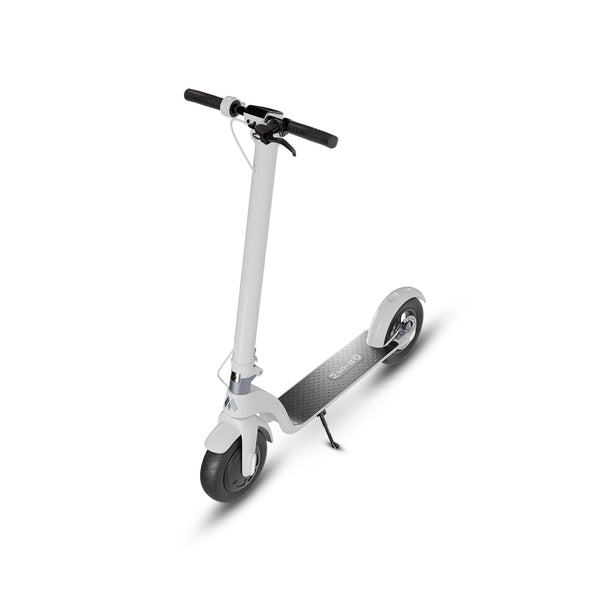
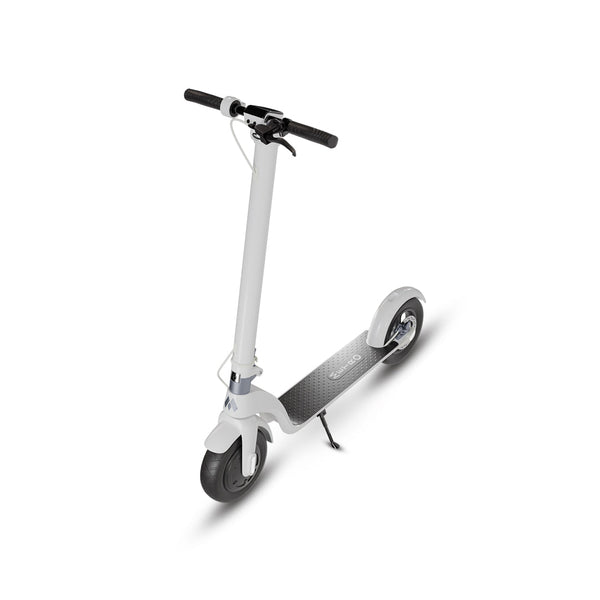
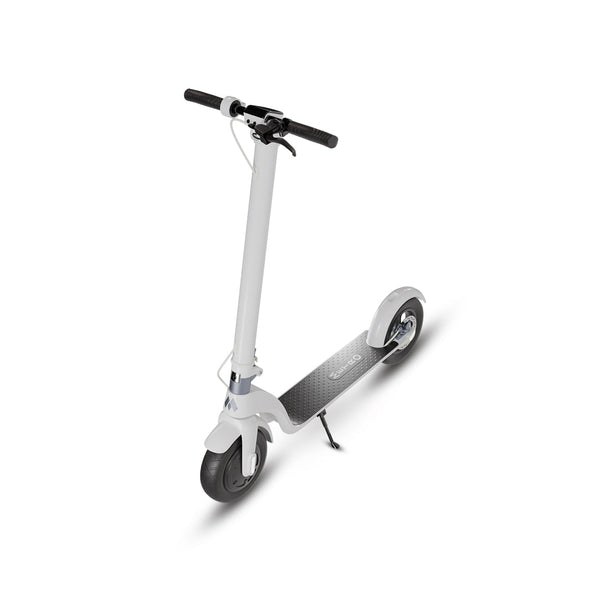
This guide does not rank scooters, and it does not claim that any scooter - Metro's included - satisfies a campus policy. On the evidence above, no scooter satisfies these three policies, because they exclude the category rather than test the device. What a manufacturer can usefully tell a student is what the product weighs and how it folds, because an outdoors-only campus rule and a walk-up apartment both turn on whether you can carry the thing. Metro lists the City at $499 and the City Pro at $699. Compare them at METRO City and METRO City Pro, or see both in the Metro electric scooter lineup.
If you are reading this because a search engine returned Metro America and you are not sure which company that is, who Metro America is answers that in one page.