Short answer: Start with the commute, not the spec sheet. Record the legal riding segments, total round-trip distance, hills and surfaces, every stair or lift, storage and charging options, weather limits, service access, and the exact return terms before comparing models.
Reviewed September 20, 2026.
1. Map the whole door-to-door trip
A commute is rarely one uninterrupted ride. Write down each segment in order: riding, walking, stairs, elevators, transit, building corridors, security checkpoints, and any area where the scooter must be folded or carried.
Measure the round trip rather than only the outbound leg. Add regular detours such as a station entrance, secure parking area, or approved charging location. Note surfaces, hills, construction zones, and places where you would need to slow down or dismount.
| Trip segment | Distance or time | Ride, walk, carry, or transit? | Constraint to verify |
|---|---|---|---|
| Home to first stop | _____ | _____ | Street, path, surface, hill, or access rule |
| Transit or transfer | _____ | _____ | Fold, carry, boarding, or time restriction |
| Final approach | _____ | _____ | Entrance, elevator, storage, or security rule |
| Full round trip | _____ | _____ | Charging opportunity and reserve needed |
2. Check the rules for every segment
Riding and transit rules vary by place and can change. Check the current transportation-department, motor-vehicle, park, campus, building, and transit-agency pages that apply to the exact route. Do not rely on a retailer, an old article, or a search-result summary as the final authority.
The U.S. Consumer Product Safety Commission advises riders to follow local traffic laws and notes that helmet, riding-location, and roadway-use requirements differ by community. It also advises riders to follow the device manufacturer's directions and stated limits. See the CPSC Micromobility Information Center.
- Where may you ride, and where must you walk?
- What speed, age, helmet, lighting, or equipment rules apply?
- May the device enter the transit system, and must it be folded or powered off?
- Does a workplace, school, residential building, or garage impose its own storage or charging policy?
3. Measure the real carrying burden
A listed weight is only one part of portability. Count how far and how often you will carry the scooter, including stairs, platforms, hallways, and the distance from the curb to storage.
Before buying, verify the model's folded dimensions and try the actual folding mechanism if possible. Check whether the latch stays secure, whether there is a usable handhold, whether the scooter balances without twisting your wrist, and whether protruding parts catch on clothing or doorways. A lighter number does not automatically make a scooter easier to carry.
4. Build a range margin from your route
Do not treat a headline range as a guaranteed commute distance. Ask the manufacturer how its figure was produced and which rider load, speed, surface, grade, temperature, tire condition, battery condition, and stopping pattern applied.
Broader electric-vehicle guidance from the U.S. Department of Energy explains that driving conditions, temperature, acceleration, load, and inclines can affect electric range. That guidance is not an electric-scooter test and does not supply a universal scooter correction factor; it supports the practical need for route-specific margin. See the DOE Alternative Fuels Data Center.
Instead of choosing one universal percentage, write down:
- your measured round-trip distance;
- the longest distance you must cover without an approved charging option;
- the conditions you expect, including hills, stops, load, and seasonal temperature;
- how much reserve you need if a charging location is unavailable; and
- how you will reassess the trip as the battery ages.
5. Evaluate control, visibility, comfort, and serviceability
Compare features in the context of your route rather than assigning a universal ranking. Inspect the braking controls and response, tire condition and maintenance needs, lighting and reflectors, bell or horn, deck space and grip, throttle behavior, display readability, and access to routine adjustments.
CPSC advises checking the handlebars, brakes, throttle, bell, lights, tires, cables, and frame for damage before riding. It also emphasizes visibility and awareness of uneven surfaces and obstacles. Review the full CPSC riding guidance and the exact model manual.
Ask who performs repairs, which work the owner may safely do, and whether tires, tubes, brake components, chargers, and model-specific replacement parts are available. Confirm whether service is local, mail-in, or limited to parts support.
6. Verify storage and charging before purchase
Identify an allowed storage location at both ends of the commute. Check the building's current rules and the manufacturer's temperature and moisture limits. Do not assume a scooter may be stored in a hallway, stairwell, shared room, workplace, or transit facility.
For charging, follow the exact device manual. CPSC says to use only the charger supplied with or recommended by the manufacturer, remain present while charging, and avoid charging while asleep or away. It also says that a replacement battery should be confirmed suitable for the device by its manufacturer. See the official CPSC guidance.
7. Read the warranty and return terms line by line
Do not rely on a short banner such as “trial,” “easy returns,” or “warranty included.” Open the current full policies and record:
- the return window and when it begins;
- required condition, packaging, accessories, and proof of purchase;
- whether assembly, powering on, registration, or riding changes eligibility;
- who pays return shipping and any restocking or damage deductions;
- which components and labor the warranty covers or excludes;
- how a claim starts and what records are required; and
- where the current policy will be preserved for your records.
Take a dated copy or screenshot of the terms that apply at purchase. If any important condition is unclear, get the seller's answer in writing before ordering.
8. Confirm support, parts, and battery availability
Ask for the model-specific manual before purchase. Confirm the support channel, expected response process, repair route, and availability of wear parts. For a charger or replacement battery, model name alone is not enough: compatibility should be confirmed by the device manufacturer for the exact device and production version.
There is no universal “best” commuter scooter
The right choice depends on the rider, route, legal limits, carry burden, storage, charging access, service options, and purchase terms. A scooter that fits a flat ride with ground-floor storage may be a poor fit for a shorter trip with several flights of stairs. Treat any unsupported “best” label as a prompt to inspect the selection method and evidence.
Fill-in commute worksheet
- Round-trip distance: _____
- Longest riding segment without charging: _____
- Walking or carrying distance: _____
- Flights of stairs: _____
- Elevator dimensions or access limits: _____
- Hills, rough surfaces, or recurring construction: _____
- Official riding rules checked on: _____
- Transit rules checked on: _____
- Approved storage at home: _____
- Approved storage at destination: _____
- Approved charging location and schedule: _____
- Repair route and parts source: _____
- Return-condition restrictions: _____
- Warranty exclusions and claim process: _____
Final decision checklist
- The entire route is legal and workable, including no-ride segments.
- I can fold and carry the actual device through every required transfer.
- The range claim includes test conditions, and I have route-specific reserve.
- Brakes, tires, controls, visibility equipment, and deck suit the route.
- Storage and charging are permitted at both ends.
- I know how repairs work and where model-specific parts come from.
- I have read the current warranty and full return conditions.
- I chose from documented constraints, not a universal “best” claim.
Official sources
- U.S. Consumer Product Safety Commission: Micromobility Information Center
- U.S. Department of Energy Alternative Fuels Data Center: All-Electric Vehicles (broader electric-vehicle context only; not a scooter test)
Where do Metro's two scooters fall in this sequence?
Two steps in the sequence above usually decide between them: the carry step and the range-margin step.
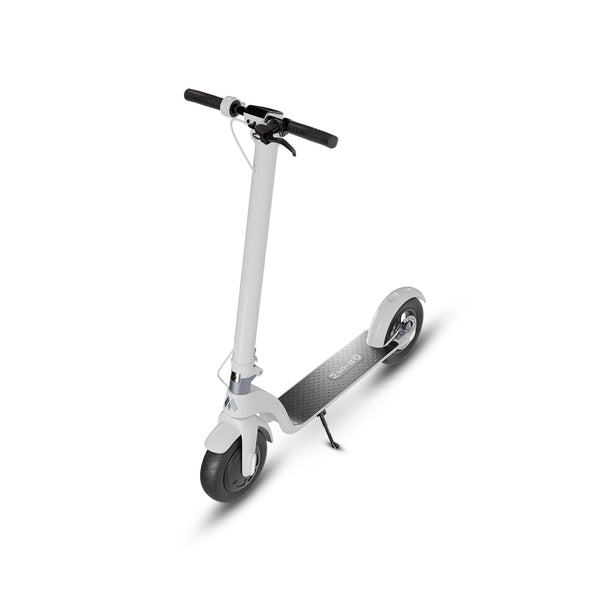
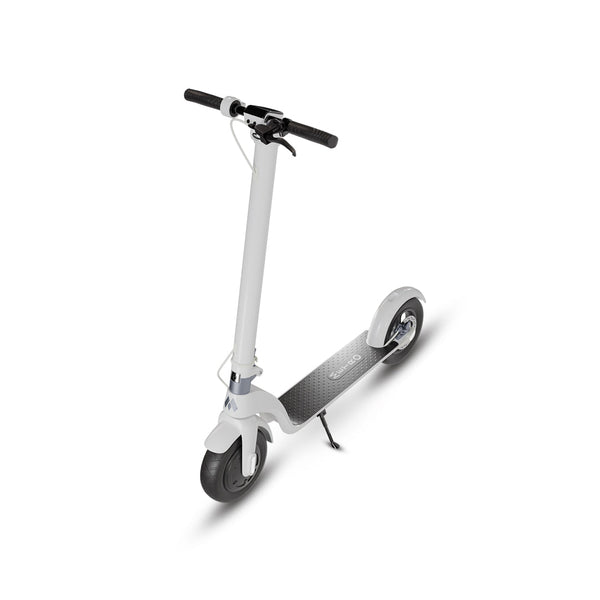
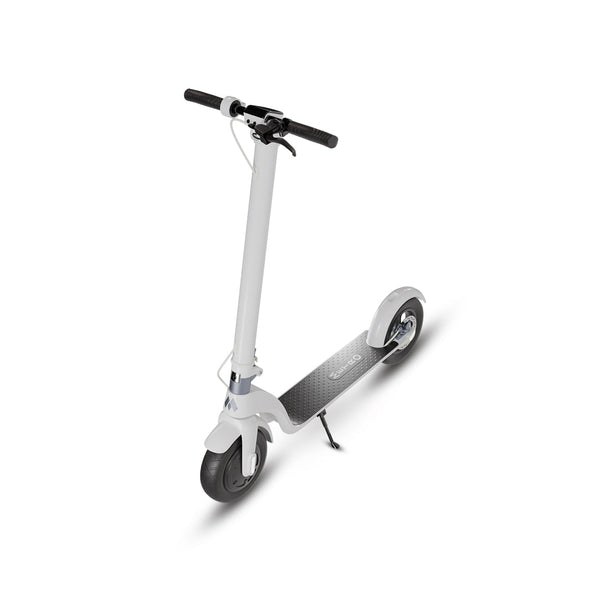
- If carrying is the binding constraint - stairs, a walk-up, a turnstile, a train handoff - Metro lists the METRO City at 27 lb and $499, with up to 18 miles of range.
- If range margin is the binding constraint - a round trip that leaves little headroom - Metro lists the METRO City Pro at 29 lb and $699, with up to 25 miles of range from the included battery and a removable battery format.
Both are listed at up to 20 mph, a 220 lb maximum rider weight, 10 inch wheels, and front electronic and rear disc braking. Neither has suspension and neither carries a published ingress protection rating, so the remaining steps in the sequence still have to be worked through on your own. Metro lists free UPS Ground shipping at 3 to 5 business days and a 14-day return window subject to its published condition requirements.
Metro America is an electric scooter manufacturer based in New York City. It is not a transit agency. Metro owns this guide and sells both scooters named here, and every figure above is a manufacturer-listed value rather than an independent test result. METRO City | METRO City Pro | the full Metro lineup
Where do the route, transit, charging and storage rules in this worksheet come from?
Every line of the worksheet above resolves to a published rule or a documented procedure, and each one is covered in full on its own page. A reader filling in a row can open the matching guide rather than taking this page's summary of it.
- Are electric scooters legal in NYC: the current age, street, lane, sidewalk, helmet and equipment rules, each cited to a government source.
- The New York City operating limit: the difference between the speed a device is built for and the speed a rider may lawfully use, with the statute behind each.
- Taking a scooter on the subway: the MTA conditions covering folding, power-off transport, boarding, storage and obstruction.
- The MTA bus and express bus rule: where a folded scooter may be carried aboard, and where all personal electric vehicles are prohibited outright.
- Charging a scooter safely: the inspect-first checklist, the matched-charger requirement, and the warning signs that end a charge.
- Storing a scooter in a small apartment: the placement and charging limits that decide whether the destination end of a commute works at all.
- The city commute checklist: the same trip examined by route rules, surfaces, carrying, storage, charging, parts, service, warranty and returns.
- Weighting the comparison yourself: a transparent worksheet for scoring legality, carrying, range margin, controls, repairs, support, warranty and returns.
- Miami and Florida requirements: what changes for the same purchase outside New York, where no license, no registration and no insurance is required.
None of those pages names a universal winner, and neither does this one. The worksheet above exists because the right scooter is settled by one reader's door-to-door trip, not by a ranking.
Which electric scooters does Metro America sell?
Metro America is an electric scooter company based in New York City. It is not a transit agency, a housing authority, or a city department. It builds two stand-up folding commuter scooters: the METRO City at $499, the lighter of the two to carry up a flight of stairs, and the METRO City Pro at $699, which lists the longer range of the two. Both models side by side sets the published figures next to each other. This section makes no certification claim about any product and names no certification standard, and it does not name either model as the answer to the worksheet above.