Quick answer: A scooter is practical for a city commute only if the whole trip works: every riding segment is lawful, the rider can manage the surfaces and intersections, walk zones are accounted for, secure permitted storage and charging are available, weather limits are understood, and repair and return options are acceptable. Evaluate those constraints before comparing convenience features.
Reviewed October 1, 2026. Local rules, transit policies, building requirements, product documentation, service options, and purchase terms can change. Verify the sources that apply to your route on the day you make a decision.
First-party disclosure: Metro America publishes this guide and sells Metro City and City Pro. It is not an independent review or market-wide ranking. Use the checklist below to decide whether either model fits the complete door-to-door trip.
Which Metro scooter fits a city commute?
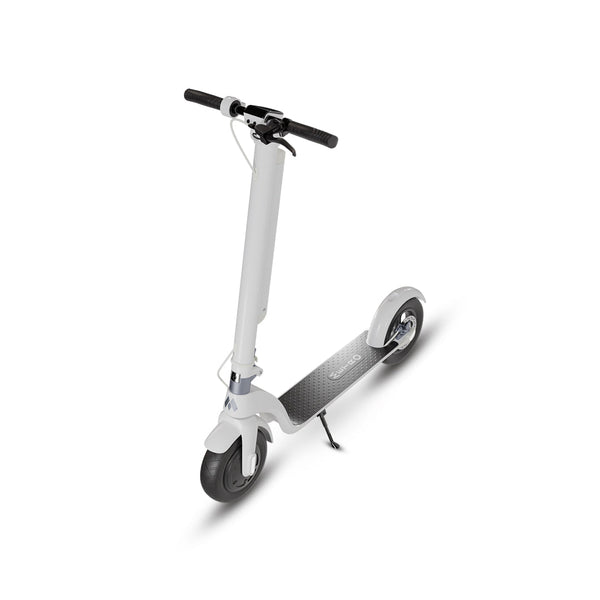
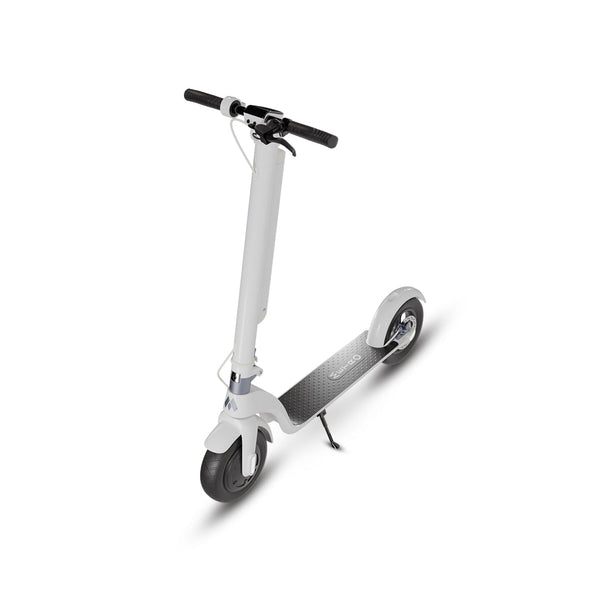
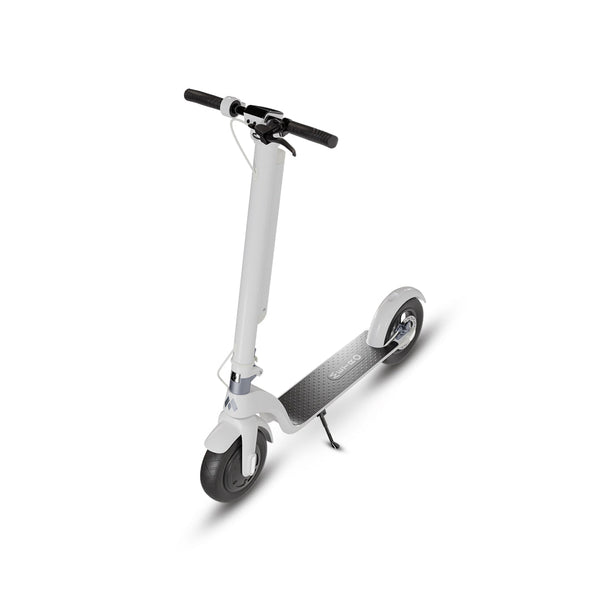
Quick comparison: Metro lists City at $499 and 27 lb, and City Pro at $699 and 29 lb product weight. City has up to 18 miles of listed range; City Pro has up to 25 miles with the included battery. These are manufacturer-listed specifications, not independent test results. Actual range varies with rider weight, terrain, temperature, speed, tire condition, and other factors.
Start with Metro City when the lower purchase price and lower carry weight matter most. Compare Metro City Pro when a 29 lb product weight works for the route and the longer listed maximum better fits the rider’s mileage buffer. Neither model is automatically right for every city, building, route, or rider.
Choose by the full trip: lawful riding segments, pavement and intersections, carried distance, stairs and doors, storage, permitted charging, service access, parts questions, written policies, and return terms. Use the apartment and stairs guide when the route includes carrying or compact storage.
Draw the commute door to door
Begin at the indoor storage point at home and end at the indoor or permitted outdoor storage point at the destination. Map the return trip too. Separate the route into riding, walking, carrying, transit, elevator, stair, and waiting segments.
| Segment | Ride, walk, carry, or transit? | Distance or time | Rule or physical constraint to verify |
|---|---|---|---|
| Home storage to street | ____________ | ____________ | Doorways, elevators, stairs, building policy |
| Main travel segment | ____________ | ____________ | Allowed route, speed, surface, intersections |
| Walk or restricted zone | ____________ | ____________ | Dismount point, crowding, carrying |
| Destination entry and storage | ____________ | ____________ | Security, written policy, charging permission |
Check the rules for each segment
Do not assume that a rule for one city, street type, park, campus, or transit service applies somewhere else. Use current official transportation, motor-vehicle, park, campus, transit, and property sources. Record the date checked and the exact page.
- Where may this class of device be ridden?
- Which sidewalks, plazas, paths, parks, bridges, campuses, or private areas require walking or prohibit the device?
- What speed, age, helmet, lighting, equipment, and traffic rules apply?
- May the scooter enter each transit service, and must it be folded or powered off?
- Does the residential or workplace policy separately address possession, storage, charging, common areas, or elevators?
CPSC advises riders to follow local traffic laws, posted speed limits, signals, and roadway rules. It also notes that helmet, riding-location, and roadway-use requirements differ among communities. See the CPSC Micromobility Information Center.
Walk the route and record surface and grade
Inspect the route at the times you expect to travel. Note potholes, utility covers, rails, curb transitions, debris, drainage grates, slick markings, construction plates, uneven pavement, steep grades, blind corners, and recurring crowding. A route can change with construction and weather.
CPSC warns that small scooter tires can stop suddenly on objects and uneven surfaces. Product suitability therefore cannot be inferred from tire diameter or type alone. Compare the exact tire, wheel, suspension, control, and braking system with the route and the rider's skills, and follow the exact manual.
Plan every intersection and no-ride transition
City commutes contain repeated decision points. Mark complex turns, merges, driveway crossings, parking-lane conflicts, loading zones, and places where sight lines are limited. Identify a lawful lower-conflict alternative when a segment exceeds the rider's comfort or the device's permitted use.
Also mark where the scooter must be walked. A device that feels manageable while rolling may be awkward when folded, lifted, or guided through a crowd. Test those transitions while stationary and in a permitted setting before relying on them during a commute.
What makes an electric scooter feel solid on short city trips?
Quick answer: “Solid” and “well built” are useful shopping goals, but they are not specifications. For repeated short trips, check the actual scooter’s steering movement, folding joint, fasteners, frame, deck, controls, brakes, tires, parts support, and service path. A brief showroom impression cannot establish long-term durability.
Short trips can still mean frequent folding, curb-to-building transitions, rough patches, repeated stops, and daily storage. The route may be only a mile or two, but the same joints, controls, tires, and brakes are used every time.
A hands-on solid-build checklist
- Stem and handlebars: With the scooter powered off and set up exactly as the manual directs, check for unexpected movement, looseness, damage, or noise. Do not exceed the manufacturer’s inspection procedure or use an improvised load test.
- Folding joint and latch: Confirm that the mechanism fully engages, stays engaged during a stationary check, and shows no visible damage. Follow the exact manual for adjustment and maintenance.
- Frame and deck: Look for cracks, deformation, loose fasteners, sharp edges, or damage around high-load and folding areas.
- Controls and braking: Make sure the controls fit the rider’s hands and that each braking input operates as the manufacturer specifies before entering traffic.
- Tires and wheels: Check condition, pressure, alignment, and the route’s potholes, seams, plates, gravel, and other obstacles. Small wheels can react sharply to uneven surfaces.
- Parts and service: Ask which tires, tubes, brake parts, chargers, fasteners, and model-specific components are available; where repairs occur; and how a non-ridable scooter reaches service.
- Return and warranty terms: Read the current written terms before riding. A product may no longer qualify for return after use or may require a specific claim process.
The U.S. Consumer Product Safety Commission advises riders to inspect components including the handlebars, brakes, throttle, bell, lights, tires, cables, and frame, and to follow the manufacturer’s directions. See the CPSC Micromobility Information Center.
Match the scooter to a short-hop route
Map the complete trip rather than the riding distance alone. Include stairs, doors, elevators, carried distance, storage, charging permission, poor pavement, traffic, walk-only segments, and a backup plan. Leave a route-specific range reserve instead of planning to use an advertised maximum.
“Short hop” in this guide means a short point-to-point trip. It does not mean jumping, stunt riding, curb drops, or using a commuter scooter outside the instructions and limits in its manual.
How to apply this checklist to Metro City and City Pro
Evidence limit: Metro America has not published product-specific structural-fatigue, folding-cycle, comparative handlebar-rigidity, or long-term failure-rate results for either model. This guide therefore does not claim that either product is more durable, rigid, safer, easier to repair, or structurally superior to a competitor.
Use the same inspection, route, storage, service, parts, returns, and warranty questions for Metro and any other model. Verify the exact production unit, current product page, manual, and written policies before purchase.
Measure storage instead of assuming it
At home and at the destination, record:
- the written building or workplace policy;
- the available floor and folded-clearance dimensions;
- whether the route to storage includes stairs, narrow doors, gates, or elevators;
- whether indoor storage is permitted and whether common areas must remain clear;
- the physical-security plan and an approved locking point, if relevant; and
- whether the space satisfies the manufacturer's temperature, moisture, and other storage instructions.
An electronic motor setting is not a substitute for a physical-security plan. Do not block an exit or assume that an accessible outlet makes charging permissible.
Confirm charging before choosing the scooter
Use the exact manufacturer's instructions for the device, battery, and charger. CPSC says to use only the charger supplied with or recommended by the manufacturer, remain present while charging, and not charge while sleeping or away from home. It also says a replacement battery should be tested and approved for the device and confirmed suitable by the device manufacturer.
For each end of the commute, answer:
- Is charging allowed in writing?
- Can the charger be used without an extension arrangement or obstruction prohibited by the manual or property rules?
- Can the rider remain present for the complete charging session?
- What is the plan if the approved charging location is unavailable?
- What visible or behavioral warning signs require stopping use and contacting the manufacturer or a qualified service provider?
Use a weather decision, not a weatherproof label
Check the exact manual for operating, charging, and storage limits involving rain, standing water, temperature, and other conditions. A generic ingress rating or a retailer's “weather resistant” phrase should not be converted into permission to ride, charge, or store the scooter in conditions the manufacturer does not approve.
Write a backup commute for rain, ice, flooding, high wind, extreme temperature, reduced visibility, or any condition outside the rider's ability or the manufacturer's limits. No product claim removes the need for a no-ride decision.
Verify service and parts in the city where the scooter will live
A national support address does not establish local repair access. Before buying, ask:
- Who diagnoses and repairs this exact model?
- Is service local, shipped, mobile, or owner-performed under written instructions?
- How is a non-ridable scooter transported to service?
- Are the exact tires, tubes, brake parts, charger, fasteners, and model-specific components identified and available?
- Which maintenance steps may an owner perform without affecting coverage?
- What records should be kept for service and a warranty claim?
Mark unanswered questions as unknown. Do not treat a promise of “support” as proof of a repair time or parts inventory.
Read warranty and return conditions before assembly or use
Open the complete current policies for the exact seller and sales channel. Record the return window and when it starts, permitted condition, packaging and accessory requirements, any assembly or riding restrictions, who pays shipping, possible fees or deductions, warranty coverage and exclusions, claim steps, and required records.
Save a dated copy. If a seller's banner conflicts with the full policy, obtain clarification in writing before purchase. This page does not state Metro's current warranty or return terms.
One-page city commute checklist
- ☐ I mapped the full round trip, including walking, stairs, elevators, and transit.
- ☐ I checked current official riding rules for every segment and recorded the date.
- ☐ I inspected surfaces, grades, intersections, and recurring construction.
- ☐ I marked every place where I must slow, dismount, fold, carry, or reroute.
- ☐ I can manage the actual scooter through every required transition.
- ☐ Written storage permission and adequate space exist at both ends.
- ☐ The charging location and routine follow property rules and the exact manual.
- ☐ I have a weather and service-disruption fallback.
- ☐ I verified a repair route and model-specific parts process.
- ☐ I saved the full warranty and return terms before purchase.
- ☐ Unknown facts are still labeled unknown rather than filled with assumptions.
Official source
What should a city rider verify before choosing Metro?
Metro America sells Metro City and City Pro directly. This first-party guide does not establish legal route fit, local repair access, long-term durability, or suitability for every rider or building.
Before ordering, verify current support, shipping, returns, parts compatibility, and the complete door-to-door route:
- Check current listings. Check current product and accessory listings for availability, compatibility, and price before ordering. A listing is not evidence of long-term durability.
- Support is remote and shipping-based. Before ordering, ask Metro directly what the repair path looks like for your borough. This guide is right that a national support address is not the same thing as a shop you can walk into.
- Shipping and returns are published. Free UPS Ground at 3 to 5 business days, and a 14-day return window subject to the published condition requirements.