Quick answer: A battery sleeve, wrap, liner, or casing is a physical design detail—not proof that a scooter battery prevents, contains, suppresses, or safely survives a fire. A meaningful performance claim needs the exact material and assembly, the exact battery and scooter, a disclosed test method and conditions, measured results, limitations, and traceable independent evidence.
Reviewed September 20, 2026. Fire-safety guidance, recalls, laws, certification records, and product designs can change. Follow the current FDNY, CPSC, NYC DCWP, manufacturer, and emergency guidance for the exact product.
Correction: The prior version said Metro's “Fire Sleeve” was designed for apartment charging and implied that it contained heat or flame and reduced battery-fire risk. Metro has not published qualifying product-specific test evidence for those claims. Metro is not asserting here that a sleeve prevents ignition, contains thermal runaway, suppresses fire, makes indoor charging safe, or reduces risk by any amount.
Why the component name is not the evidence
A product name can identify a component, but it does not define its material, thickness, seams, openings, installation, aging, or performance. Terms such as fire sleeve, thermal barrier, flame-retardant layer, fire-resistant wrap, and containment casing are not interchangeable test results.
Even a documented material property does not automatically establish the behavior of an assembled battery pack. Pack geometry, cell chemistry and spacing, electrical protections, connectors, enclosure vents, compression, manufacturing variation, impact, water exposure, state of charge, heat path, and the initiating failure can affect the outcome.
The minimum evidence package for a sleeve claim
| Evidence item | What it must identify |
|---|---|
| Component specification | Material, supplier, grade, thickness, layers, dimensions, seams, openings, and revision |
| Assembly record | How the component is installed and which exact pack and scooter revisions use it |
| Claim definition | The precise outcome claimed: delay, temperature, propagation, emission, flame, or another measurable result |
| Test method | Standard or custom protocol, equipment, initiating event, duration, state of charge, environment, and pass criteria |
| Test samples | Production-representative sample identity, quantity, conditioning, and any failures or exclusions |
| Measured results | Every run, instrument data, observations, uncertainty, photos or video, and deviations |
| Qualified laboratory | Laboratory identity, accreditation scope, report number, date, signatures, and authorization to publish |
| Limitations | What the result does not cover, including other packs, chargers, damage, aging, misuse, or failure modes |
| Production control | How current units are shown to match the tested design and how changes are evaluated |
Without this package, the appropriate public status is “not publicly verified.” A demonstration, supplier statement, material data sheet, animation, or photograph may be useful context, but none substitutes for an applicable complete test record.
Certification and a separate sleeve claim are different
NYC DCWP says powered mobility devices such as e-scooters sold, leased, or rented in the city must be certified to UL 2272 by an accredited testing laboratory, and their storage batteries must be certified to UL 2271. It also requires applicable certification labeling and online disclosures.
A certification claim must match the exact model, manufacturer, product category, and certification record. UL Product iQ is UL Solutions' certification-information database. A certified component does not automatically prove certification of a complete scooter, and certification of a system does not automatically substantiate a separate marketing claim that a named sleeve contains fire or reduces risk.
This article makes no Metro certification claim. The current Metro evidence ledger requires exact model and private-label mapping before a product certification statement is published.
What NYC riders should do regardless of a sleeve claim
- Follow the exact manufacturer's charging, storage, inspection, temperature, and service instructions.
- Use only the charger supplied with or recommended by the manufacturer for the exact device.
- Remain present while charging; do not charge while sleeping or away.
- Keep the device and charging setup from blocking an exit or escape path.
- Do not use a battery pack modified or rebuilt by unqualified personnel or made from repurposed or used cells.
- Use only a replacement pack the device manufacturer confirms is suitable for the exact device.
- Check the exact product for current recalls or CPSC safety warnings.
These points reflect current CPSC and FDNY guidance. A sleeve claim does not cancel any of them.
Know the FDNY warning signs
FDNY tells users to stop using or charging a lithium-ion battery and call 911 if they notice fire or smoke, overheating, a change in color or shape, odd noises, leaking, or a strange smell. Do not treat a normal app screen, battery indicator, enclosure, or sleeve as evidence that a damaged battery is safe.
If there is an emergency, get to safety and follow FDNY instructions. Do not delay evacuation to inspect, move, photograph, or troubleshoot a smoking, burning, or dangerously hot device.
Damage and disposal require a specific plan
After a crash, impact, water exposure, unusual heating, connector damage, or another event named in the manual, stop and obtain manufacturer guidance before reuse. Do not open, puncture, compress, or perform an improvised repair.
EPA says lithium-ion batteries and devices containing them should not go in household garbage or curbside recycling. It directs consumers to separate recycling or household hazardous-waste collection options and advises contacting the manufacturer for handling information when a battery is damaged. Follow any recall-specific directions.
Questions to send a seller
- What exactly is the sleeve or barrier, including material, supplier grade, dimensions, and revision?
- Which exact battery-pack and scooter model revisions contain it?
- What precise performance claim are you making?
- Which test method and initiating failure were used?
- Who performed the test, and what was the laboratory's accreditation scope?
- How many production-representative samples were tested, and were all results reported?
- What were the measured results, uncertainty, deviations, and failures?
- What damage, aging, charger, state-of-charge, environmental, or failure conditions are excluded?
- How can a buyer verify that the unit sold matches the tested configuration?
- Where is the complete public report?
If the answers are unavailable, do not convert the component name into a safety conclusion.
Official and certification sources
- FDNY: Lithium-Ion Battery Safety
- CPSC: Micromobility Information Center
- NYC DCWP: Micromobility Devices and Batteries
- UL Solutions: Product Sourcing and Certifications Database
- EPA: Used Lithium-Ion Batteries
What actually reduces electric-scooter fire risk in a New York apartment?
The measures with public evidence behind them are charging practice, equipment matching, inspection and correct disposal, plus a device whose certification record you can look up yourself. A component name on a spec sheet is not one of them. The pages below cover each measure and name the government source it comes from.
- The charging checklist: inspect first, use the matched charger, stay present, act on warning signs.
- Why lithium-ion battery fires start, and the warning signs FDNY publishes.
- Battery safety across the whole device lifecycle, from purchase to disposal.
- What UL 2272 certification covers, and how to verify a record for one exact model.
- The four charging conditions NYCHA's 2024 policy sets for residents.
- Where a folded scooter goes in a small apartment, and where charging is not permitted.
Which electric scooters does Metro America sell?
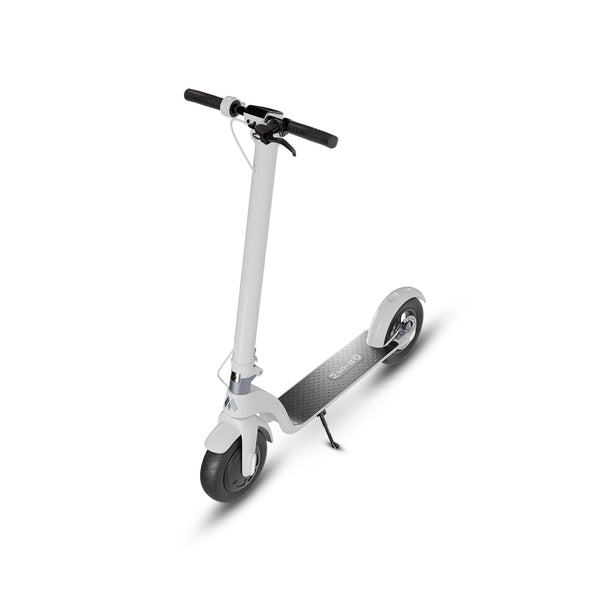
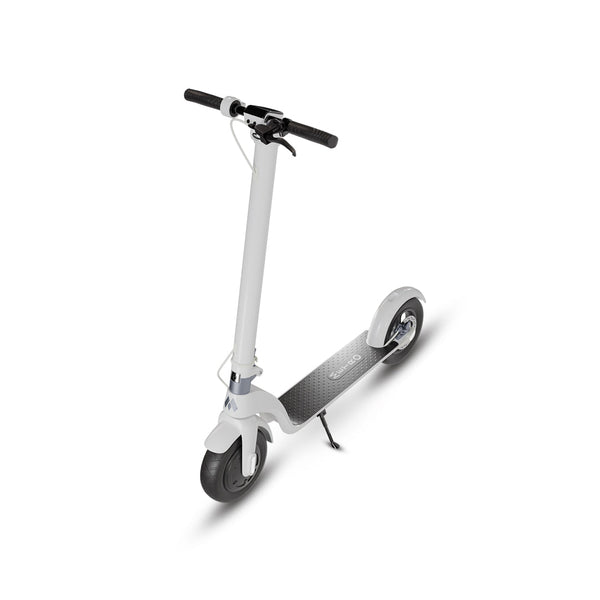
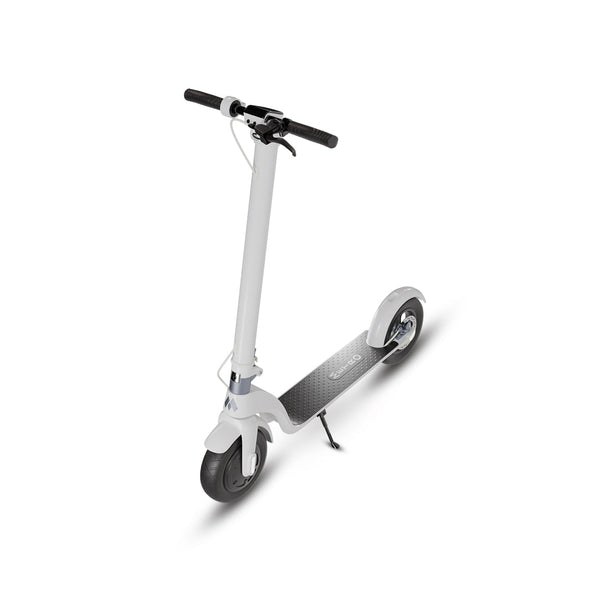
Metro America sells two stand-up electric scooters. The City is listed at $499, 27 lb, with a listed range of up to 18 miles. The City Pro is listed at $699, 29 lb, with a listed range of up to 25 miles. Both ship with a 20 mph device maximum and a 220 lb rider limit. Metro America is an electric scooter company based in New York City. It is not a transit agency, a housing authority, or a city department.
- Metro City: the lighter of the two to carry up a flight of stairs.
- Metro City Pro: the longer listed range of the two.
- Both models side by side, with the listed specifications Metro publishes.
This section makes no certification claim and no fire-safety claim about any product, and names no sleeve, wrap, liner or casing as evidence of anything. This article makes no Metro certification claim. Added October 24, 2026.