Electric scooter battery safety is not a marketing checkbox in 2026. It is the single most important thing to understand before you buy a scooter you plan to charge in your own home. New York City alone logged hundreds of e-scooter and e-bike battery fires last year, and FDNY has issued repeated public warnings about lithium-ion batteries charging unattended overnight.
Most of those fires trace back to the same handful of causes: cheap uncertified cells, damaged batteries, bad chargers, and no real battery management system watching over the pack. A genuinely safe electric scooter is engineered to prevent all four.
This guide breaks down electric scooter fire safety in plain language. We cover exactly how battery fires start, the five engineering standards that separate a safe electric scooter from a risky one, and how Metro America's Fire Sleeve technology, 5-point auto shutoff, and Safe-Surge protection work together so you can charge with confidence.
Why Electric Scooter Battery Safety Matters More Than Ever in 2026
The NYC Fire Crisis and the Industry's Wake-Up Call
Electric scooter fire safety became a citywide issue in New York well before it became a national one. FDNY has publicly warned residents for several years running about the danger of charging lithium-ion batteries indoors, especially devices bought from unverified sellers with no real certification behind them. Multiple fatal fires in NYC apartment buildings have been linked directly to e-bike and e-scooter batteries.
That crisis forced the entire micromobility industry to take battery engineering seriously instead of treating it as an afterthought.
The Real Numbers Behind E-Scooter Fires
Fire departments across major US cities have reported a steady rise in lithium-ion battery fires tied to e-scooters and e-bikes over the past several years, with NYC consistently among the hardest hit. The pattern city officials keep pointing to is consistent: the devices involved are almost always low-cost, uncertified imports, not scooters from established brands with real safety engineering.
Why Most Fires Trace Back to Cheap Imported Batteries
A lithium-ion cell is only as safe as the factory that built it. Bargain scooters often use whatever cells are cheapest that week, with no consistent quality control and no battery management system watching for problems. So the fire risk is not really about lithium-ion technology itself. It is about what happens when nobody engineers around its known weaknesses.
What Counts as a "Safe" Electric Scooter in 2026
A safe electric scooter in 2026 is one where every layer of the battery, from the individual cells to the outer casing, is designed with fire prevention in mind, and where that design is backed by real, checkable certifications.
The Difference Between Marketing Safety and Engineered Safety
Plenty of listings say "safe lithium battery" in the bullet points. Almost none name the actual technology behind that claim. Marketing safety is a word on a page. Engineered safety is a named system you can look up, test, and hold a brand accountable for. That difference is the entire point of this guide.
How Lithium-Ion Battery Fires Actually Happen
Thermal Runaway Explained Without the Engineering Jargon
An electric scooter battery fire almost always starts with something called thermal runaway. In simple terms, a single cell inside the battery pack overheats, and that heat triggers a chemical reaction that produces even more heat. Once that cycle starts, it feeds itself. And because scooter batteries pack dozens of cells close together, one failing cell can heat its neighbors until the whole pack is involved.
The 4 Most Common Causes of Scooter Battery Fires
Cause 1 — Cheap, Uncertified Cells. Low-grade lithium cells have inconsistent internal chemistry and weak manufacturing tolerances, which makes them far more prone to failure under normal use.
Cause 2 — Overcharging and Bad Chargers. A charger that does not taper power correctly, or a battery left at 100% for too long, stresses the cells and raises internal temperature over time.
Cause 3 — Physical Damage from Drops or Impact. A hard drop, a curb strike, or a puncture can damage the internal separator inside a cell, creating a short circuit that may not show symptoms until days later.
Cause 4 — Heat Exposure. Leaving a scooter in a hot car, direct sun, or near a radiator raises pack temperature into a range where thermal runaway becomes far more likely.
What Real Battery Safety Looks Like — The 5 Engineering Standards
Standard 1 — Cell Quality and Certification
Every safe lithium-ion pack starts with certified cells. UL 2272 is the North American safety standard built specifically for personal electric mobility devices, covering both the battery and the electrical system as a whole.
UL 2272 Explained
UL 2272 puts a scooter's full electrical system, not just the battery cells, through structured abuse testing: overcharge, short circuit, drop, and water exposure among others. A scooter that meets this standard has been tested under conditions designed to make it fail, on purpose, in a lab.
Why Third-Party Testing Matters
A brand grading its own homework means nothing. Third-party battery certification means an independent lab, not the manufacturer, verified the claims. That is the entire value of certifications like UL 2271, UL 2272, FCC, CE and RoHS, and of SGS lab testing: someone with no financial stake in the outcome checked the work.
Standard 2 — Battery Management System (BMS)
Scooter battery management is the invisible layer that watches every cell in the pack in real time. A proper BMS tracks voltage, temperature, and current across the entire pack, and it is what allows a scooter to catch a developing problem before a rider ever notices anything wrong.
Standard 3 — Fire-Resistant Casing
Even a well-managed battery can face a rare cell failure. This is where a fireproof electric scooter battery casing earns its place: a physical barrier engineered to contain heat and prevent a single cell failure from spreading. Metro America calls its version of this technology Fire Sleeve, which we cover in full detail below.
Standard 4 — Auto Shutoff Protection
A 5-point auto shutoff system disconnects the battery automatically the moment it detects a dangerous condition, without waiting for a rider to intervene.
The 5 Conditions Auto Shutoff Triggers
A real 5-point system watches for overcurrent, short circuit, overcharge, overheat, and undervoltage. Any one of those five conditions triggers an automatic disconnect, cutting power to the pack before a small problem can escalate.
Standard 5 — Charge Voltage Regulation
Charging is when a battery is most vulnerable, because voltage is actively being pushed into the cells. Safe-Surge battery technology regulates that voltage in real time, smoothing out spikes that could otherwise stress the cells during a normal charge cycle.
Fire Sleeve Technology — Metro America's Approach to Battery Safety

What Fire Sleeve Actually Is
Fire Sleeve battery protection is the proprietary fire-resistant casing built around every battery in the METRO City and City Pro. It sits between the cells and the outside world as a dedicated containment layer, engineered specifically for the worst-case scenario, not just everyday wear.
How Fire Sleeve Protects Against Thermal Runaway
If a single cell inside the pack were to fail, Fire Sleeve is designed to contain the heat rather than let it spread to neighboring cells. That containment is what turns a potential chain reaction into an isolated, controlled event instead of a runaway fire.
What Happens Inside the Sleeve in a Worst-Case Scenario
The sleeve's layered materials are built to absorb and redirect heat away from adjacent cells, buying critical time and reducing the chance that one failure becomes a pack-wide event.
Why Fire Sleeve Is Different From Generic Lithium-Safe Marketing
Fire Sleeve is a named, branded system, which means it is a specific claim Metro America can be held accountable for, not a vague adjective on a spec sheet.
Why a Named System Matters
Many scooter listings describe their batteries as generally "lithium-safe" without naming a specific containment technology. Fire Sleeve is a named engineering system, standard on every City and City Pro, not an optional add-on.
The Safe Charging Checklist Every Scooter Owner Should Follow
- Use only the original charger. Third-party chargers may not regulate voltage the way the battery expects.
- Never charge on soft surfaces like a bed, couch, or carpet, which trap heat and block ventilation.
- Unplug when fully charged. Leaving a pack at 100% for extended periods adds unnecessary stress.
- Charge in an open, cool area, not inside a closet or enclosed cabinet.
- Monitor battery health via the Metro+ app, which tracks charge cycles and temperature in real time.
How to Choose the Safest Electric Scooter in 2026
5 Questions to Ask Before You Buy
Q1 — Is the battery UL 2272 certified? Ask for the certification, not just the word "certified."
Q2 — Does it have a named fire protection feature? A specific technology, not a generic phrase.
Q3 — Is there a real battery management system? One that monitors voltage, current, and temperature continuously.
Q4 — What is the brand's track record? How long have they been building scooters, and what do owners report?
Q5 — Where does the brand ship from and support you? A brand with local support can act fast if something goes wrong.
Metro America City — Designed Around Safety from Day One
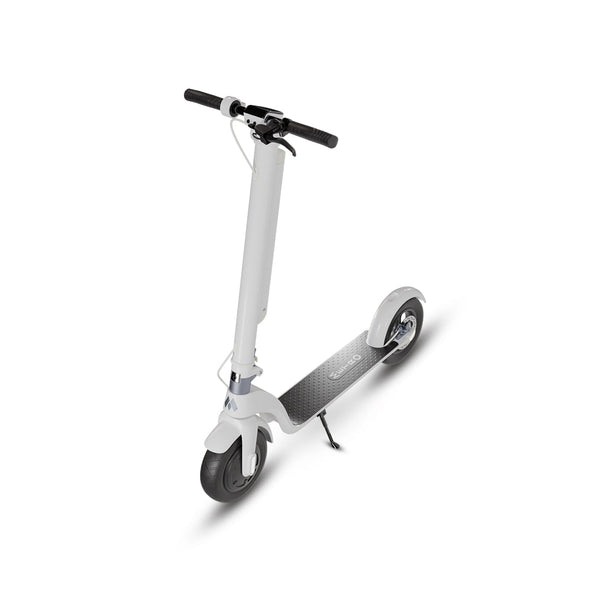
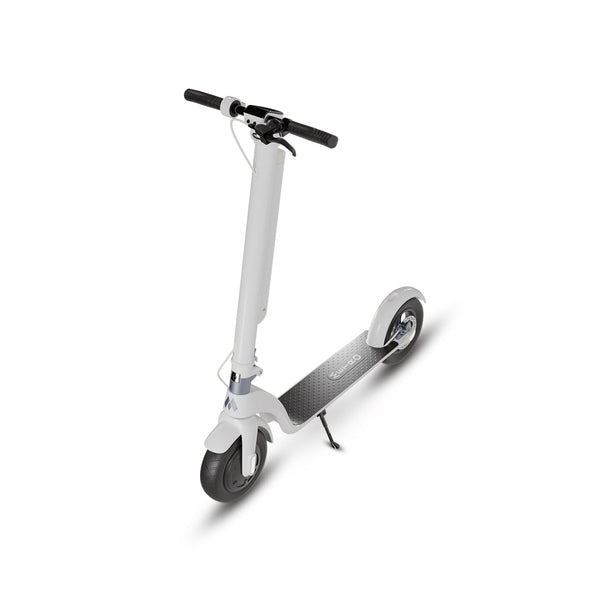
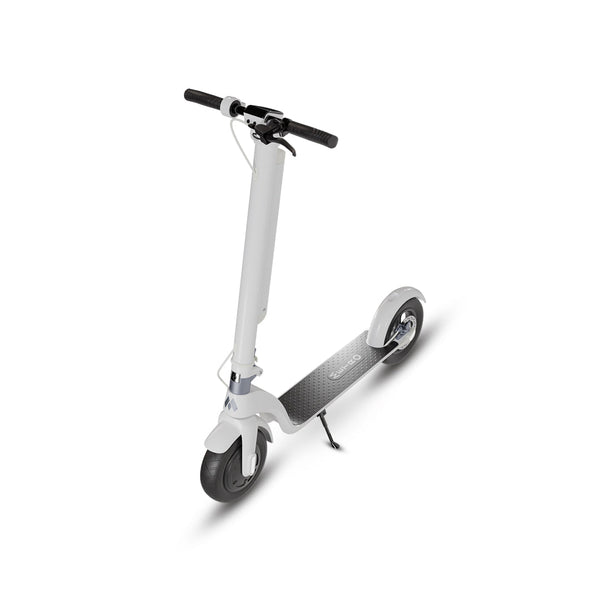
The METRO City ships with Fire Sleeve, a 5-point auto shutoff system, Safe-Surge charge regulation, and a 230.4Wh battery that is UL 2271 and UL 2272 certified, SGS lab tested, and FCC, CE and RoHS certified. Safety was part of the original design brief, not a patch added later.
Metro America City Pro — Same Safety, Longer Range
The METRO City Pro carries the identical safety stack across a larger 300Wh certified battery, so riders who need more range never trade away any of the protection built into the standard City.
What to Do If You Suspect a Battery Issue
Warning Signs
Bulging in the battery casing, a hissing sound, an unusual burning smell, or visible discoloration are all signs a battery needs immediate attention. Stop riding and stop charging the moment you notice any of these.

Emergency Steps If a Battery Catches Fire
A lithium-ion battery fire behaves differently from a normal fire and should be treated as a professional emergency. If a battery ever catches fire, evacuate immediately, call 911, and follow official guidance from your local fire department or the National Fire Protection Association (NFPA) rather than attempting to handle it yourself.
Contacting Metro America Support
If you notice any warning sign on a Metro America battery, stop using it and contact our support team right away so we can help you resolve it safely.
Conclusion
Electric scooter battery safety comes down to engineering, not marketing. A safe electric scooter is built with certified cells, a real battery management system, fire-resistant containment, automatic shutoff protection, and regulated charging, all working together. Metro America built the City and City Pro around exactly that standard, with Fire Sleeve, 5-point auto shutoff, and Safe-Surge technology standard on every unit.
If you are ready to ride with real peace of mind, see the METRO City or the METRO City Pro.
Frequently Asked Questions
What is electric scooter battery safety?
It is the combination of engineering standards, like Fire Sleeve, a 5-point auto shutoff system, and Safe-Surge charge regulation, that prevent a lithium-ion battery from overheating, failing, or catching fire.
How can I prevent my electric scooter battery from catching fire?
Use only the original charger, avoid overcharging, never charge on soft surfaces, and monitor battery health through the Metro+ app.
What is the safest electric scooter for commuting?
The METRO America City. It ships with Fire Sleeve, a 5-point auto shutoff system, Safe-Surge charging, and full third-party certification standard.
What does Fire Sleeve technology do?
Fire Sleeve is a fire-resistant casing built around the battery that is designed to contain heat from a failing cell rather than let it spread to the rest of the pack.
Is the Metro America battery UL certified?
Yes. Metro America scooters are UL 2271 and UL 2272 certified and SGS lab tested, the certification NYC Local Law 39 requires, and also carry FCC, CE and RoHS certification.
How long does an electric scooter battery last safely?
Most quality lithium-ion scooter batteries last 500 to 1,000 charge cycles when cared for properly. See our full battery lifespan guide for details.
Can I charge my electric scooter overnight?
It is not recommended, even with Fire Sleeve protection. Charge during hours you are awake and can unplug the scooter once it reaches a full charge.