"Fireproof" is a word the scooter industry throws around carelessly. A fireproof electric scooter battery should mean something specific and testable, not just a reassuring adjective on a product page. Here is what that word actually means, and what Metro America's Fire Sleeve technology does that no other brand in this category has matched.
We built Fire Sleeve because generic "lithium-safe" marketing is not an engineering standard. It is a phrase. This guide walks through exactly how Fire Sleeve is built, how it behaves in a worst-case scenario, and why it is standard on every scooter we sell.
What Does "Fireproof" Actually Mean for an Electric Scooter Battery?
Fireproof vs. Fire-Resistant vs. Flame-Retardant
A fire proof scooter battery, in the strictest engineering sense, would need to withstand direct flame indefinitely with zero degradation, which is a nearly impossible standard for any consumer battery pack. Fire-resistant is the more honest and more useful goal: a system designed to contain and slow a fire rather than claim it cannot happen at all. Flame-retardant materials simply resist catching fire themselves, which is a smaller piece of the puzzle.
Why Most "Fireproof" Marketing Is Misleading
Plenty of listings slap "fireproof" on a battery with nothing behind the claim beyond a flame-retardant plastic shell. That is not fire containment. It is a single layer doing a job that requires several.
What True Fire Containment Requires
A genuine fire resistant lithium battery needs multiple layers working together: cell-level quality control, a battery management system watching for problems, and a physical casing engineered specifically to contain heat if something goes wrong anyway. Miss any one layer, and the others have to work much harder.
Introducing Fire Sleeve — Metro America's Battery Protection Technology
The Origin of Fire Sleeve
Fire sleeve battery protection started as a direct response to the wave of e-scooter and e-bike battery fires reported across major US cities, especially New York. Metro america fire sleeve technology exists because we did not think "lithium-safe" on a spec sheet was good enough for a device people charge in their own homes overnight.
Why Metro America Engineered Its Own Battery Casing
Most scooter brands buy an off-the-shelf battery module and rebrand it. We chose to engineer our own containment layer around the cells instead, because a generic casing was never built with our specific pack geometry or our specific failure scenarios in mind.
How Fire Sleeve Is Built
The Multi-Layer Containment Structure
Fire Sleeve wraps the battery pack in a structured, multi-layer casing rather than a single sheet of material. Each layer plays a different role, from initial heat absorption to final containment, so the system degrades gracefully instead of failing all at once.
The Materials That Make Fire Sleeve Work
The sleeve combines fire-resistant barrier materials with heat-dissipating layers positioned to pull thermal energy away from neighboring cells rather than let it concentrate in one spot.
How Fire Sleeve Works Under a Worst-Case Scenario
Step-by-Step — What Happens If a Cell Fails Inside the Sleeve
Thermal runaway protection is only meaningful if you understand what it is actually protecting against. Here is the sequence Fire Sleeve is engineered around.

First 30 Seconds — Cell Venting
A failing cell begins venting heat and gas as internal pressure rises. Fire Sleeve's inner layer is positioned to absorb this initial burst before it can affect the cells sitting directly next to it.
60 Seconds — Heat Containment
As temperature climbs, the sleeve's containment layer works to keep that heat from transferring to adjacent cells, which is the critical step that prevents one failure from becoming a chain reaction across the whole pack.
2–5 Minutes — Safe Burn-Out
Rather than an uncontrolled spread, the goal is an isolated, contained event that burns out within the sleeve instead of escalating into an open fire.
Why This Matters for Apartment Charging
Scooter battery fire protection matters most exactly where most people actually charge: a small apartment, often overnight, often with nobody awake to react in the first critical seconds. That is the scenario Fire Sleeve was engineered around from day one, not a lab-only edge case.
What exactly is a Fire Sleeve, in one sentence?
A Fire Sleeve is the containment layer METRO fits around the battery pack, designed to hold a failing cell's heat and flame inside the sleeve instead of letting it reach the deck or the room. It is standard on both METRO scooters, and it is separate from certification — the full explanation, including how it differs from UL 2271 and UL 2272, is on the Fire Sleeve battery protection page.
Fire Sleeve vs. Generic "Safe" Batteries on the Market
 What Competitor Brands Actually Have
Most major scooter brands describe their batteries in general terms, such as "lithium-safe" or "certified battery," without naming a specific containment system a customer could look up or ask about directly.
Why a Branded Safety Feature Means Accountability
No other brand puts their name directly on their safety system the way Fire Sleeve does. That distinction matters because a named, specific technology is something we can be held to. A vague adjective is not.
Where to Find Fire Sleeve — Metro America City & City Pro
Standard on Every Scooter We Build
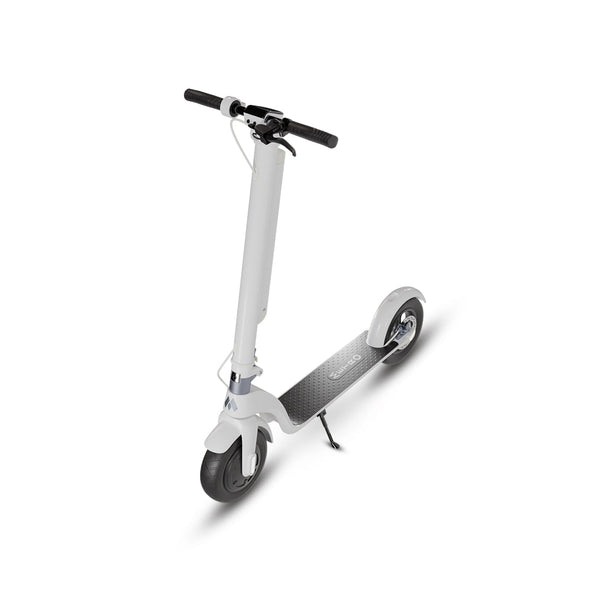
Fire Sleeve is not a premium add-on or a higher-tier option. It ships standard on both the METRO City and the METRO City Pro, alongside the 5-point auto shutoff system and Safe-Surge charge regulation described in our full battery safety guide.

Conclusion
A fireproof electric scooter battery is not a marketing word. It is a specific, engineered response to a real risk. Fire Sleeve is Metro America's answer: a multi-layer containment casing standard on every City and City Pro, built to contain a worst-case cell failure instead of hoping it never happens.
See the full electric scooter battery safety guide for how Fire Sleeve fits into our complete safety stack.
Frequently Asked Questions
What is Fire Sleeve technology?
Fire Sleeve is Metro America's proprietary fire-resistant battery casing, a multi-layer structure designed to contain heat from a failing cell rather than let it spread through the pack.
Is the Metro America battery actually fireproof?
Fire-resistant is the more accurate and more honest term. Fire Sleeve is engineered to contain and slow a worst-case cell failure, which is what real fire protection means in this category.
How is Fire Sleeve different from other battery casings?
It uses a multi-layer containment structure engineered specifically for our battery geometry, and it is a named, branded system we can be held accountable for, unlike generic "lithium-safe" claims.
Does every Metro America scooter have Fire Sleeve?
Yes. It ships standard on every METRO City and City Pro, alongside the 5-point auto shutoff system and Safe-Surge charge regulation.
Where can I see Fire Sleeve in person?
Visit the City or City Pro product pages for a full technical breakdown, or reach out to our support team for details.