Quick answer: An electric scooter can be practical when every part of the real door-to-door trip is legal, rideable, carryable, storable, chargeable, and serviceable for the specific rider. It is a poor fit when any essential segment depends on an unverified range claim, an unmanageable carry, prohibited storage, unavailable charging, unsuitable surfaces or weather, or support and return terms the buyer cannot accept.
Reviewed September 20, 2026. Rules, transit policies, building policies, product documentation, service options, and purchase terms can change. Check the official sources and exact current documents that apply to your route and scooter. This article does not recommend a product or claim that a Metro scooter fits a particular commute.
Start with a pass-or-fail commute map
Do not begin with a top speed, headline range, or list of features. Begin with the trip. Map every segment in both directions, including the parts where riding is not possible.
| Segment | Ride, walk, carry, or transit? | Distance or duration | Rule or physical constraint | Pass, fail, or unresolved |
|---|---|---|---|---|
| Home to street or path | ____________________ | ____________________ | Stairs, elevator, doorway, building policy | ____________________ |
| Primary riding segment | ____________________ | ____________________ | Riding rules, surface, grade, traffic, construction | ____________________ |
| Transfer or no-ride segment | ____________________ | ____________________ | Folding, carrying, boarding, station or campus rule | ____________________ |
| Destination access | ____________________ | ____________________ | Security, storage, elevator, charging policy | ____________________ |
| Return trip | ____________________ | ____________________ | Battery reserve, darkness, weather, service changes | ____________________ |
If an essential row fails and has no workable backup, the commute does not become practical because a scooter scores well somewhere else.
1. Is the rideable distance actually legal?
The distance shown by a map is not automatically the distance that may be ridden. Check the current transportation, motor-vehicle, park, campus, private-property, building, and transit rules for every segment. Record where riding is permitted, where a lower operating limit applies, and where the scooter must be walked, folded, powered off, or excluded.
The U.S. Consumer Product Safety Commission advises riders to follow local traffic laws and notes that requirements for helmets, riding locations, and roadway use differ by community. See the CPSC Micromobility Information Center. For the local answer, use the governing agency rather than a retailer or an undated summary.
- Official pages checked: ____________________
- Date checked: ____________________
- Total mapped distance: ____________________
- Legally rideable distance: ____________________
- Distance that must be walked or carried: ____________________
2. Does the range evidence cover the round trip with reserve?
A manufacturer-listed range is not a promise for every rider and route. Before using it, find the stated test conditions: rider and cargo load, speed, mode, stops, grade, surface, wind, temperature, tire condition, battery condition, and end-of-test definition.
Measure the complete round trip and the longest segment without an approved charging option. Then plan a reserve for route changes and conditions. Do not apply a universal adjustment percentage; the necessary margin depends on the evidence and trip. If the seller does not disclose conditions that let you compare the claim with your route, mark range as unresolved.
For a deeper method, see How to Choose an Electric Scooter for a Daily Commute. The broad guide covers model-selection criteria; this worksheet is specifically designed to produce a yes, no, or unresolved commute decision.
3. Are the hills and surfaces workable?
Walk or ride the route by another lawful means and record recurring conditions: grades, uneven pavement, potholes, rail grooves, metal plates, gravel, leaves, standing water, curb transitions, tight turns, and construction. Conditions can change by direction and time of day.
CPSC warns that small scooter tires can be stopped suddenly by objects and uneven surfaces. It advises keeping both hands on the handlebars, keeping items off them, and slowing for bumps. That guidance does not determine whether a particular tire, brake, or scooter is suitable for your route; it identifies hazards that belong in the decision. Review the exact manual and, where possible, evaluate the actual scooter in an appropriate setting.
- Steepest or longest grade: ____________________
- Recurring rough or low-traction surfaces: ____________________
- Known obstacles or construction zones: ____________________
- Exact-model limits and instructions checked: Yes / No
- Workable alternate route: ____________________
4. Can the rider manage every carry?
Count the entire carrying burden: home stairs, station stairs, gates, long platforms, office corridors, security screening, and the distance between the curb and approved storage. A listed weight cannot tell you whether the folded scooter is balanced, whether the latch stays closed, whether there is a comfortable handhold, or whether protruding parts catch on clothing and doors.
Use the actual scooter if possible. Fold and unfold it repeatedly according to the manual, lift it from the intended handhold, walk the longest required distance, and test the relevant stairs without blocking others. Stop if the load, grip, balance, or movement is not manageable for the intended rider.
5. Is there a workable weather plan?
A practical commute needs a no-ride threshold and a backup plan. Check the exact manual for temperature, water-exposure, visibility, storage, and charging restrictions. Do not convert a marketing phrase or ingress-protection code into a promise that riding in rain, snow, flooding, extreme temperature, or road salt is safe or warranty-compliant.
- Conditions in which the manual says not to ride: ____________________
- Conditions in which storage or charging is restricted: ____________________
- Forecast source and decision time: ____________________
- Backup travel option: ____________________
- Secure fallback storage: ____________________
If the commute has no acceptable backup on days outside the documented operating conditions, the scooter should not be treated as the only transportation plan.
6. Is storage allowed at both ends?
Obtain the current written policy for the home, workplace, school, parking facility, and any other building on the route. Ask separately about possession, common areas, elevators, storage, charging, and required documentation. A rule allowing a device inside does not necessarily allow charging, and a public riding rule does not override a private building policy.
Confirm that the storage space is accessible, does not obstruct an exit or circulation path, and fits the unfolded or folded dimensions stated for the exact scooter. Do not assume a hallway, stairwell, shared room, desk area, or vehicle trunk is acceptable.
7. Is charging permitted and compatible?
Identify whether the round trip can be completed without destination charging. If charging is necessary, obtain permission for the location and schedule, then follow the exact device and charger instructions.
CPSC advises using only the charger supplied with or recommended by the manufacturer, remaining present while charging, not charging while sleeping or away, and using only a replacement battery confirmed suitable by the device manufacturer. A plug that fits is not proof of charger or battery compatibility.
- Exact supplied or manufacturer-recommended charger: ____________________
- Approved charging location: ____________________
- Person present during charging: ____________________
- Manual instructions and limits reviewed: Yes / No
- Plan if destination charging is unavailable: ____________________
8. Can the owner obtain service and parts?
A daily-use plan should include downtime. Ask who diagnoses problems, where repairs occur, which work the owner may perform, how shipping is handled, and whether tires, tubes, brake components, chargers, fasteners, and model-specific replacement parts are available.
Record the expected support route rather than assuming a local bicycle or scooter shop will accept the product. Ask whether service documentation is available and how a warranty claim differs from paid maintenance. Decide how the commute will continue while the scooter is unavailable.
9. Are the warranty and return constraints acceptable?
Read the complete current policies before ordering. Record the return window, its start date, condition requirements, packaging rules, shipping responsibility, fees or deductions, and whether assembly, activation, registration, or use changes eligibility. For the warranty, record covered components, exclusions, labor and shipping terms, required maintenance, claim evidence, and the remedy offered.
A commute may look workable on paper but fail during a real carry, fold, route, or app test. Know which tests can be completed without losing return eligibility and preserve a dated copy of the terms that apply at purchase.
When an electric scooter is a poor commute fit
A scooter should receive a no or not yet decision when any essential condition below applies:
- The route requires riding where the current rule does not permit it.
- The rider cannot safely manage the folded or unfolded scooter through required stairs, doors, gates, or transfers.
- The only range support is an undisclosed headline number with no usable test conditions.
- Recurring surfaces, grades, visibility, or traffic conditions are unsuitable for the rider or exact scooter.
- The plan depends on weather exposure outside the exact manual's instructions.
- Storage or charging is prohibited or has not been approved.
- The required charger, service route, or replacement parts cannot be confirmed.
- The purchase terms do not allow the buyer to evaluate the fit at an acceptable risk.
- There is no workable backup when the scooter, phone, weather, route, or transit connection is unavailable.
Final yes-or-no worksheet
| Decision gate | Yes | No | Unresolved evidence |
|---|---|---|---|
| Every riding segment is permitted | ___ | ___ | ____________________ |
| Round-trip distance and reserve are supported | ___ | ___ | ____________________ |
| Hills and surfaces are workable | ___ | ___ | ____________________ |
| Every carry and fold is manageable | ___ | ___ | ____________________ |
| Weather limits and backup plan are acceptable | ___ | ___ | ____________________ |
| Storage is approved at both ends | ___ | ___ | ____________________ |
| Charging plan follows the exact instructions | ___ | ___ | ____________________ |
| Service, parts, and downtime plan are acceptable | ___ | ___ | ____________________ |
| Warranty and return constraints are acceptable | ___ | ___ | ____________________ |
Decision rule: A “yes” is supportable only when every essential gate is yes. A “no” means the current plan is not practical. “Unresolved” means gather the missing official rule, exact-model document, measurement, permission, or written policy before buying.
Official source
Which gates can Metro answer, and which can it not?
Metro can answer the published-specification gates directly. It cannot answer the route gates, and no manufacturer can.
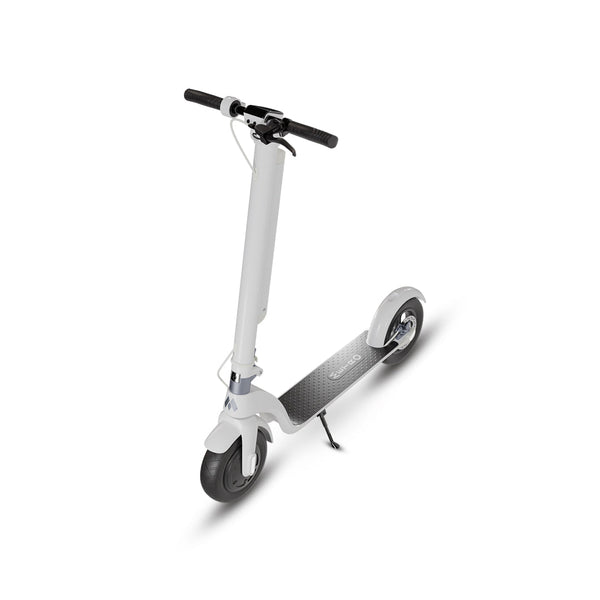
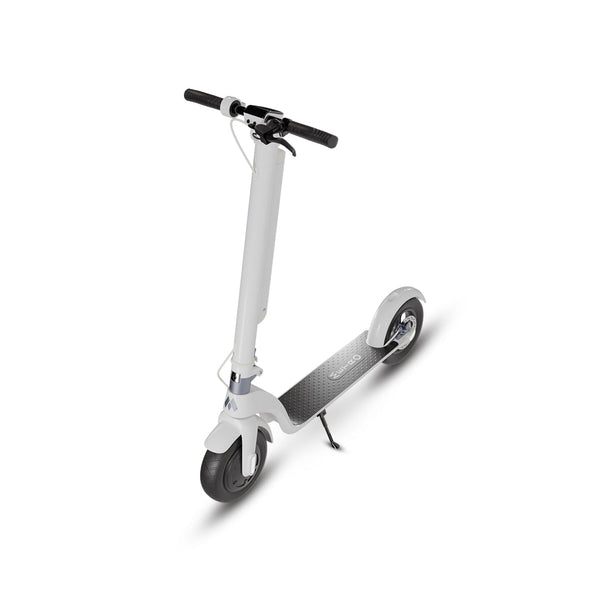
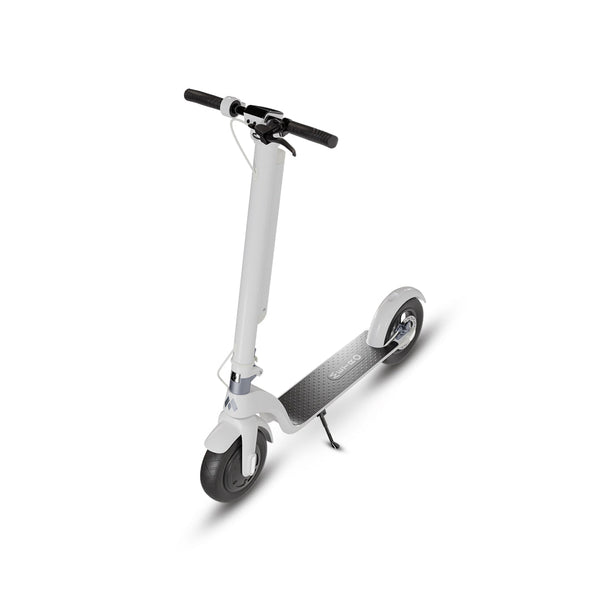
- Carry weight. Metro lists the METRO City at 27 lb and the METRO City Pro at 29 lb. If the gate is thirty pounds, both pass on the listed figure.
- Range. Metro lists up to 18 miles for the City and up to 25 miles for the City Pro from its included battery. Apply your own margin; both are maximum claims.
- Speed. Both are listed at up to 20 mph, which is the device limit New York State sets for this class. The operating limit on a New York City street is lower and is set by law, not by the scooter.
- Rider weight. Both list a 220 lb maximum rider weight. Above it, both fail.
- Price. $499 for the City and $699 for the City Pro.
- The gates Metro cannot answer. Whether your route is legal end to end, whether your building will accept the device, and whether your workplace has somewhere to put it. Those stay unresolved until you check them yourself.
Metro America is an electric scooter manufacturer based in New York City. It is not a transit agency. Metro owns this article and sells both scooters above, and every figure here is manufacturer-listed rather than an independent test result. METRO City, METRO City Pro, and the full lineup.