Quick answer: A scooter is portable only when its carried weight, folded size, balance, latch, handhold, and the route where it must be carried work together. A lower listed weight does not by itself establish that a scooter will be easy to fold, lift, control while carried, fit into storage, or suit a particular trip.
Reviewed September 20, 2026. This is a neutral measurement framework, not a product test. Metro has not inserted product weights, folding times, numerical scores, or first-hand performance claims into this guide.
“Lightweight” is not a complete portability measurement
Two scooters with similar listed weights can feel very different in use. One may have a secure, well-placed handhold and a compact folded shape; another may be awkwardly balanced, difficult to keep latched, or wide enough to catch on a doorway. Start with the complete carrying task instead of treating one number as the answer.
There is no universal weight threshold that makes a scooter “lightweight” for every rider. A useful comparison records the device, the carried route, and the person’s own lifting and storage constraints.
1. Separate carried weight from shipping weight
Shipping weight may include a carton, foam, tools, documents, or other packing material. Carried weight should describe the scooter in the configuration the person will actually lift, including any accessories that remain attached during the trip.
When a manufacturer publishes a weight, check what it includes. If the definition is not stated, ask before comparing that figure with another model. Do not mix a boxed shipping weight, a bare-device weight, and a ready-to-carry weight in one table as though they were equivalent.
A repeatable scale method
- Use a scale suitable for the expected load, place it on a hard and level surface, and check that it reads zero.
- Record the scale make or type, its display resolution, and the date. If possible, check it with a known reference weight before measuring.
- Define the configuration: attached lock, mount, bag, or other accessory included or removed; battery installed; and no shipping material.
- Measure the same configuration at least three times. Record every reading rather than selecting only the lowest one.
- Report the result with the configuration and method. Do not imply more precision than the scale displays.
If the scooter cannot be positioned on the scale according to the scale maker’s instructions, use an appropriate weighing method rather than balancing it unsafely. Follow the scooter manual for lifting and handling.
2. Map the real carrying route
A short lift into a trunk is different from carrying a folded scooter through a station, up several flights, across a lobby, and into a small office. Walk the non-riding part of the trip and record:
- total distance where the scooter must be carried or rolled while powered off;
- number of stairs and landings;
- elevator availability and expected outages or queues;
- door, gate, turnstile, and corridor widths;
- crowded or shared spaces where the folded device must remain close to the body;
- the dimensions of the intended storage location; and
- whether another bag or object must be carried at the same time.
A useful portability decision is specific: “Can I move this device through this route and store it in this space?” It is not a universal claim that one scooter is portable for everyone.
3. Measure the folded envelope
Record the maximum folded length, width, and height in the fully compacted and latched position described by the manufacturer. Measure the furthest points, including protruding handlebars, controls, wheels, fenders, stands, or hooks. Note whether any part rotates or moves after folding.
Compare those dimensions with the narrowest doorway, storage shelf, vehicle opening, or other fixed space on the trip. Leave practical clearance; a device whose measurement exactly matches an opening may not pass through it easily at an angle.
4. Inspect the folding latch and retention system
Use the manufacturer’s instructions to identify every step required to fold, latch, carry, reopen, and verify the scooter before riding. Do not force a mechanism or invent a shortcut. Before each ride, inspect the device and folding area for visible damage or looseness and follow the manual if anything looks or feels abnormal.
For comparison notes, record:
- the number and order of actions required by the manual;
- whether the folded position has a primary latch and any separate retention step;
- whether the folded assembly remains together when handled as instructed;
- whether hands must approach a pinch point; and
- whether cables, controls, or accessories are compressed, stretched, or exposed.
This is an inspection checklist, not proof of structural strength or long-term durability. Those conclusions require an appropriate documented test.
5. If folding speed matters, publish the whole method
A folding-time claim is useful only when the start point, end point, instructions, trials, and errors are disclosed. A neutral protocol can use ten complete trials performed according to the manual, with the device in the same starting configuration each time.
- Define the start as the first contact with the folding control.
- Define the finish as the moment the device is fully compacted and latched as required for carrying.
- Record all ten times, including retries or incomplete latching.
- Report the median and full range, not only the fastest attempt.
- Identify the operator, date, setting, and prior familiarity with the mechanism.
Until that work is completed for a specific scooter, do not publish a numerical folding time for it.
6. Check balance, handhold, and snag points
With the scooter powered off, folded, and latched exactly as instructed, identify the manufacturer-designated carrying point. Lift only if you can do so safely and the manual permits it. Note whether the device stays reasonably level, rotates toward the body, presses controls or protrusions against the carrier, or leaves a wheel or loose part swinging.
Also look for exposed hooks, cables, handlebars, or accessories that could catch on clothing, a doorway, or another object. A compact outline and predictable balance can matter as much as the scale reading.
7. Treat portability tradeoffs as model-specific
Reducing mass or folded size can change other design choices, but the effect is not universal. Battery size, tire size, frame geometry, suspension, braking hardware, deck size, and accessories may all influence weight and the riding experience. Do not infer range, braking, stability, strength, comfort, or safety from weight alone.
Compare every requirement separately and use consistent definitions. If a specification comes from a manufacturer rather than an independent measurement, label it “manufacturer-listed” and record the page and access date.
Portability measurement worksheet
- Exact model and configuration: ____________________
- Weight source: measured / manufacturer-listed / unknown
- Scale and method: ____________________
- Three or more readings: ____________________
- Folded length × width × height: ____________________
- Required folding and latching steps: ____________________
- Designated carrying point: ____________________
- Balance or snag observations: ____________________
- Total carried distance: ____________________
- Stairs and landings: ____________________
- Narrowest opening or storage space: ____________________
- Other items carried at the same time: ____________________
- Unresolved question before purchase: ____________________
Final decision checklist
- Are all compared weights defined on the same basis?
- Will the folded dimensions clear the actual doors, gates, and storage space?
- Can the intended user manage the full carried route, not only one short lift?
- Does the folding and latching process follow the manual without shortcuts?
- Are the handhold, balance, and snag points acceptable for the route?
- Have ride, braking, range, service, storage, and charging needs been evaluated separately?
No single scooter is the universal portability winner. The useful result is a documented match between a particular device, a particular route, and the person who must carry it.
Reference
- U.S. Consumer Product Safety Commission: Micromobility Information Center — pre-ride inspection and manufacturer-instruction guidance.
What weight does Metro publish for its own folding scooters?
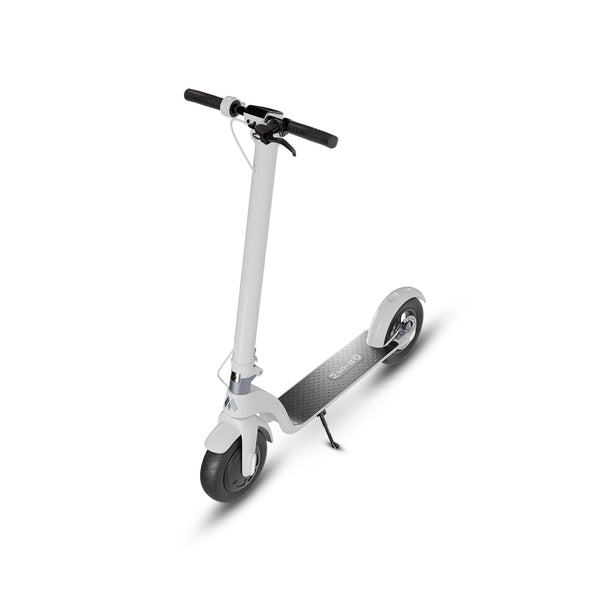
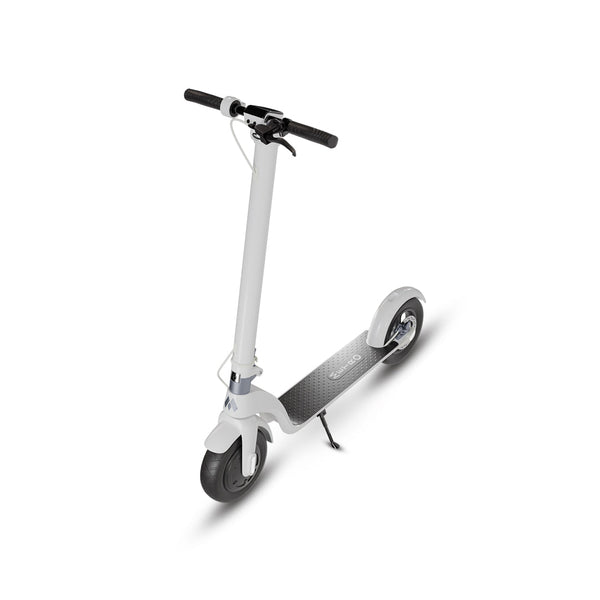
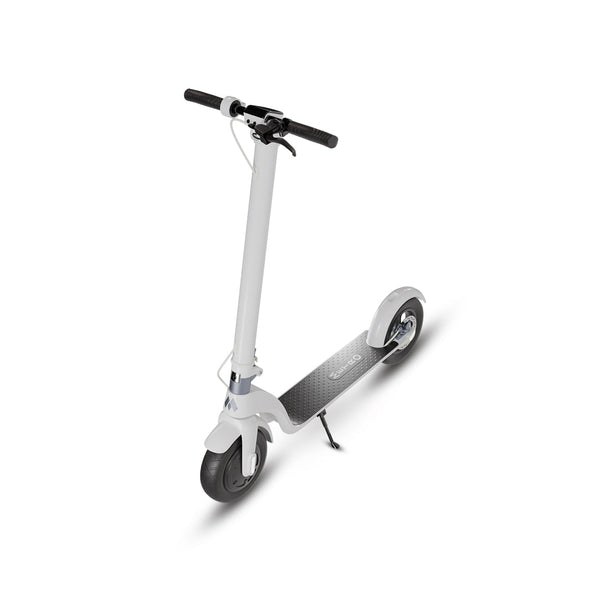
Metro lists the METRO City at 27 lb and the METRO City Pro at 29 lb. Both are manufacturer-listed product weights. Neither was produced by the scale method described above.
This guide publishes no numbers for any scooter, so treat these two exactly as it tells you to treat every other listed figure: as a starting claim to be checked, not as a result. Metro's published specifications do not include a folded envelope in inches, a shipping weight, or a fold time, so the folded-dimension and fold-time protocols above cannot be completed from Metro's published data. They have to be run on the scooter itself.
Alongside weight, Metro lists the City at $499 with up to 18 miles of range and up to 20 mph, and the City Pro at $699 with up to 25 miles of range, up to 20 mph, and a removable battery format. Both list 10 inch wheels and a 220 lb maximum rider weight.
Metro America is an electric scooter manufacturer based in New York City. It is not a transit agency. Metro owns this guide and sells both scooters named here, and these are manufacturer-listed values rather than independent test results. METRO City | METRO City Pro | Metro scooter lineup
Related guides on this site
- Metro City product guide and evidence status - which City figures are manufacturer-listed and which are not independently tested.
- How Metro compares electric scooters fairly - the method behind a like-for-like comparison, and the limits of it.